Bangladesh has recorded steady growth in vegetable production, with output rising more than 15% over the past five years, according to the Bangladesh Bureau of Statistics (BBS). Despite the increase, prices remain high for lower-middle and poor households, which experts attribute to marketing inefficiencies, profiteering, and transportation costs.
BBS data estimates vegetable production in the 2024/25 fiscal year at 17.09 million tons, 15.29% higher than five years ago. In FY2021, production stood at 14.82 million tons, reflecting consistent year-on-year growth. The BBS Statistical Book 2025 notes that vegetable production has outpaced cereal production, indicating a gradual shift in diets toward more diverse foods.
The United Nations Food and Agriculture Organization (FAO) ranks Bangladesh as the world's third-largest vegetable producer, behind China and India. FAO also reported that during the first decade of the 21st century, Bangladesh posted one of the highest year-on-year increases in production, after Uzbekistan and Nepal.
Research by Dr Muhammad Shafiullah of the University of Nottingham Malaysia Campus and Dr Faridul Islam of Morgan State University, USA, indicated that rising demand has driven higher prices, which in turn encouraged farmers to expand vegetable production. Profitability from vegetables has surpassed that of rice, fueling the shift.
Production has more than doubled in just over a decade. Officials attribute the increase to improved seed quality, technology adoption, hybrid seeds, home gardening, and year-round cultivation, rather than expansion of farmland. The Department of Agriculture Extension also cites policy support as a contributing factor.
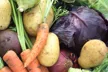
Vegetables are cultivated on about 1 million hectares, producing around 17 million tons annually. Commonly grown crops include aubergines, tomatoes, cabbage, cauliflowers, gourds, pumpkins, cucumbers, radishes, beans, carrots, spinach, amaranths, yard-long beans, and arums.
Emeritus Professor and agricultural economist Dr MA Sattar Mandol said, "Vegetables have now become a cash crop, driving higher production." He noted that rising demand, repeated farming cycles, high-yield seed varieties, and changing diets have supported growth. Exports have also increased year-on-year, adding further incentives.
However, cereals still occupy more than 75% of Bangladesh's 8.5 million hectares of arable land, limiting further expansion of vegetable cultivation. Experts suggest that future growth will require broader dietary changes away from a rice-dominated diet.
Source: The Financial Express