Last summer, Kees Oskam sold his three companies to Van Kessel Fruit Velddriel. Since then, the fruit business has been on the back burner for the first time in his career. "After getting my Havo diploma, I worked full-time and with great satisfaction in fruit for 49 years, and those ten years before that I always worked in the family business. I'm 66 now, but I have had 60 years of meritorious drudgery. It has been a great time, but now it is also time for other things."
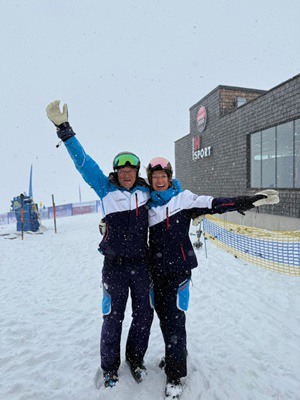 © Kees OskamFor instance, Kees and his wife have obtained their licence to teach skiing in Austria in winter. "We have enjoyed skiing for 45 years. Our daughters also taught skiing lessons during their gap year, and we are looking forward to teaching alongside all those young guys next winter," says the former fruit trader. "When we sold the business, we said to each other that there would be some gaps in the schedule, especially on winter days. So we made plans and were able to go straight to Bramberg in Austria from the end of January to mid-March last year."
Helping out with picking here and there for a day
Incidentally, he still regularly spends a day picking here and there with befriended growers in the area. "That's labour of love, but I like walking among the pickers," Kees says. "Because of the skiing lessons, I have to miss Fruit Logistica in Berlin in the coming years, but the hard fruit sector naturally continues to hold my interest. So I am always present at Apple Day or at a fruit trader's event. I also still regularly visit both former Oskam locations and keep in good contact with my former employees."
At the same time, I have also taken some distance. Especially since my cycling accident, but also because of Corona and Long Covid, I have come to realise that there is more to life than just work," Kees continues. Last summer, for instance, he and his wife followed Bruce Springsteen's European tour. "And in three weeks, we are about to travel around Australia and New Zealand for just under three months. That is just in time for the new ski season."
Beacons set
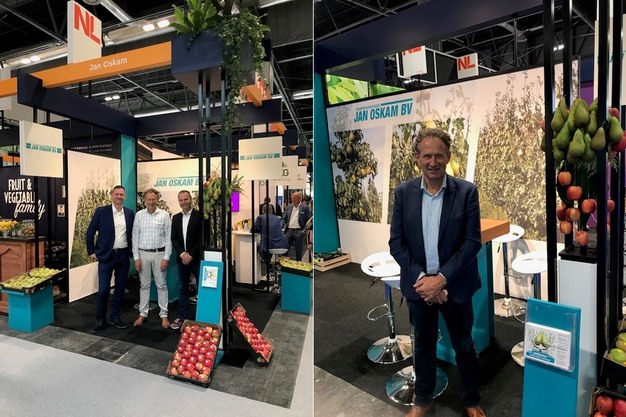
When asked what his best years in the fruit trade were, Kees replied: "I thought that was the period from 1990 to the early 2000s. The time when Europe expanded, borders opened up, and many opportunities arose. I have always considered the fall of the Berlin Wall a milestone. As a company, we were able to live entirely off the German market until 2000. After that, the country became more and more self-sufficient, and we adjusted our course, starting to operate across Europe. That pioneering work, visiting and manning the trade fairs, is something I always greatly enjoyed."
 © Kees Oskam
A loyal trade show attendee
"The most I have learned has been from my own mistakes. You make them in the daily grind, and you often feel it immediately in your wallet, but that was a good lesson," Kees reflects. "I was active in equestrian sport between the ages of seven and 17, and the first lesson was that if you fell off a pony, you had to climb back on immediately, otherwise you might become afraid. As a child, although vaccinated, I contracted polio and had to fight hard to survive. Those experiences shaped my perseverance."
Specialisation in top fruit
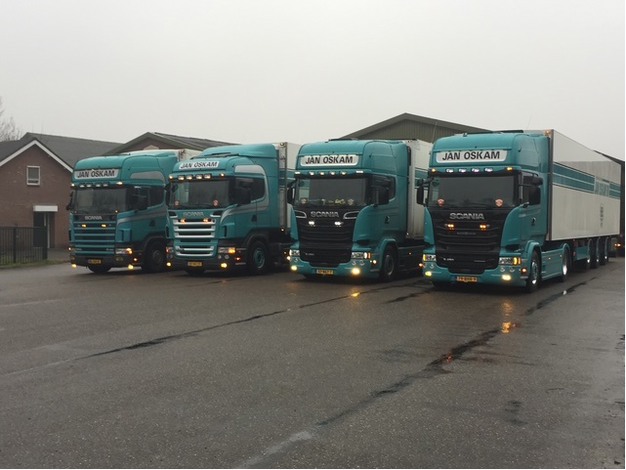
"Until 2007, we were also active in vegetables and imported fruit, but as cooperatives started serving end customers more and more directly, even with smaller volumes, this became impossible. Then we concentrated purely on top fruit, with a 60/40 ratio between pears and apples. We always combined cultivation and trading, though the trading side always beat a little stronger in my heart. But having our own cultivation was important to keep people interested. In late summer, visitors would come to see the harvest, creating the impression that everything came from our own orchards."
 © Kees Oskam
The general perception facing the fruit sector concerns Kees. "It hurts me when I read how fruit growers are dismissed as vulgar poisoners. I see that political parties on the left had to find new themes once Dutch labour policy, including fringe benefits, was well managed. That became 'climate,' and that scores like a jackpot."
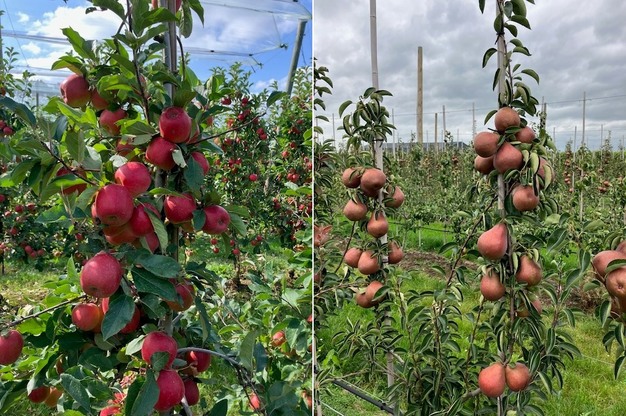
That the club varieties have taken off like this, Kees can well understand. "We participated in that ourselves with the Bonita apple. Unfortunately, it was never really picked up by the big supermarkets, even though in our experience it was very suitable for north-western Europe. But retailers all have their own varieties these days. Albert Heijn has the Sprank, Lidl has the Evelina, and more club varieties will be added in the coming years. At the same time, I do expect that Elstar, Jonagold, and Red Prince will definitely last the next 20 years. A variety like Elstar may be free, but it is one with name and fame."
 © Kees Oskam
Market access Brazil for Conference pears
"And the Conference pear, with its exceptional qualities, is Europe's grandest pear variety for a reason. With all the developments in Italian pear production, opportunities for Dutch exports are opening up again. At the time, I was quite busy trying to secure market access for Dutch Conference pears in Brazil. That cost me a lot of time and energy, but unfortunately, due to opposition from the ministry, I did not succeed. That was a bitter pill to swallow, but perhaps it will be on the agenda again now that Portuguese Rocha pear cultivation is under heavy pressure."
On the sale of his cultivation and trading company to Van Kessel Fruit, Kees looks back with satisfaction. "We did have brief discussions with other parties, but Van Kessel was really our first choice and was also seriously interested. So we handed over a start-up-ready company with an excellent reputation at home and abroad. I can look everyone straight in the eye, which I have always found very important."
For more information:
Kees Oskam
Mob: +31 (0) 6 53 371 003
[email protected]