Almeria's 2025/2026 agricultural season starts with a forecast of later plantings and a redistribution of the land used for major crops. According to preliminary data from the Territorial Delegation of Agriculture of the Andalusian Regional Government, cucumber and zucchini production is expected to rise, while the area allocated to peppers will decrease slightly.
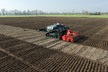
The first plantings began in early August in Berja, Dalías, and El Ejido, and more recently expanded to Roquetas de Mar, Vícar, and Níjar. Although a large portion of the seedlings, especially zucchini, cucumber, and tomato, remain in the seedbeds, initial estimates indicate that around 37,600 hectares will be planted this season.
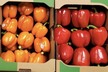
Pepper production will decrease by 2.5% (about 300 hectares less) to 12,400 hectares. In contrast, the area dedicated to cucumbers will increase by 2.2%, or an additional 150 hectares, reaching 6,800 hectares. The zucchini area will also grow by 150 hectares (1.9% more) to 7,750 hectares. Aubergine will remain stable, with a slight 1.9% increase (+50 hectares), totaling 2,600 hectares. Tomato, however, may decrease slightly by 1.8%, down to 8,050 hectares.
The 15 to 20-day delay in planting compared to the previous year is mainly due to growers' strategy to avoid peak virus incidences in September and October. Additionally, the milder winters of recent years support crop development in December, January, and February, leading the sector to expect higher production during these months.
Thrips parvispinus, commonly known as tobacco thrips, remains the primary pest under surveillance. The Board highlighted the rapid control of outbreaks through the immediate release of auxiliary insects and the increased use of biological control, which is viewed as a positive development.
The previous season (2024/2025) ended with a positive balance: total revenue reached €4,501 million, a 10.1% increase, driven by a production of four million tons of vegetables (+3.2%). Exports totaled €3,450 million, representing approximately a 9% growth.
Source: lavanguardia.com