Fig trees are among the best when it comes to coping with drought and extreme heat. However, figs are one of the most perishable fruits, and plenty of care is needed during harvesting and transport. Developing new varieties that combine all the necessary characteristics demanded by the market, producers, and consumers is becoming increasingly important.
"Only traditional fig varieties are available; there are no new developments. Some of them crack, others open at the ostiole, and others are soft. There's a significant varietal disorder. We are researching to develop a new fig variety," says Francisco Balas, head of production and R&D at Higos Fiki.
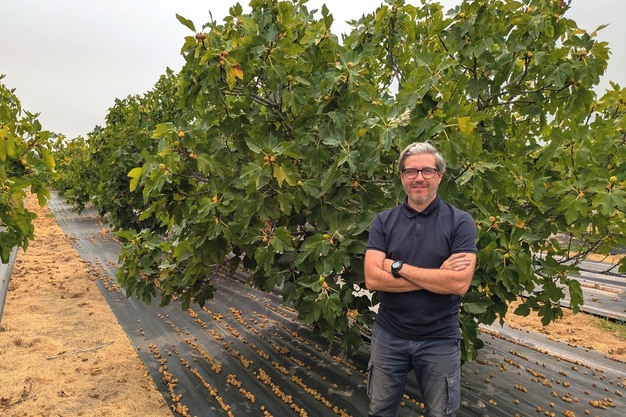 © Higos Fiki
According to Balas, "it would be interesting to create new genetically strong varieties to avoid the use of phytosanitary products. It is more environmentally friendly to identify resistance genes than to use pesticides to fight pests. For example, with molecular markers, we would save a lot of time and money in the research of new varieties."
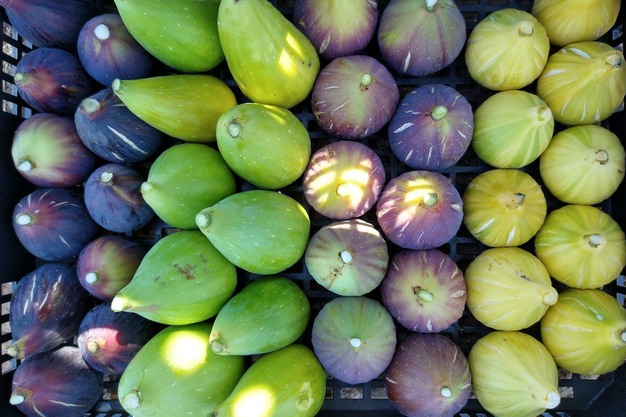
For this reason, their R&D department's flagship project is "the fig tree genetic improvement program, which aims to obtain a variety, or a group of varieties, with a longer shelf life, firmer fruit with a more resistant skin and a closed ostiole," says Balas.
According to the manager, "another important aspect would be to adapt the production schedules so that they are staggered. As far as dried figs are concerned, we want to boost productivity, because we are growing the Calabacita, which is not a very productive variety, and to improve the genetic resistance."
As in all developments, a balance has to be found between all these agronomic, biotic, and abiotic factors and the fruit's organoleptic qualities. According to Balas, "there is still a lot of work ahead, because there have been no new fig varieties since the 50s of the last century."
"We try to make good use of 100% of what we produce; that is why we have an R&D department. For example, the figs that are not suitable for sale can be used to produce jams or preserves. We have zero waste. We even make an essential oil from the fig leaves that is used in the pharmaceutical industry. We must strive to make the most of everything the fruit gives us, and that's just what we are doing."
 © Higos Fiki
The crop seems to be arousing more and more interest. "In countries such as Chile, Canada, the United Kingdom, or the Netherlands, its cultivation is gaining ground, partly because it can withstand the drought caused by the rising levels of CO₂ in the atmosphere."
"In Spain, it is normal for people to have a fig tree nearby and not need to buy them. That's why we grow fresh figs mainly for France and Belgium and dried figs for the domestic market," says Balas.
Lower water consumption than olive trees
Water saving is one of its best features. In this regard, fig trees are unbeatable. According to Balas, "depending on the plot and soil, a fig tree will only need between 1,500 m³ and 2,000 m³ per year; even less than olive trees. Thanks to this low consumption, we can afford to irrigate all our crops, even dried figs."
Fig trees are strong, but "in our almost 10 years of operation, we have been witness to the appearance of three new pests in the Extremadura area. The fly that used to attack the crops in Valencia has arrived here. Moths were not considered a pest before, but now they are, and soil nematodes are also increasingly present."
Fortunately, "we have access to some tax incentives, but I think there should be more public support, as our sector needs 10 years of research to get results. It is crucially important to strengthen support for R&D to allow us to make the most of the talent we have in our region," says the manager.
Higos Fiki is a company from Extremadura, founded in 2017 and devoted to the production and marketing of fresh, dried, and industrial figs. A total of 250 hectares is used for the production of Calabacita, Cuello de Dama Blanco, and Toro Sentado figs.
For more information:
Francisco Balas
Higos Fiki
Tel.: +34 638 96 12 27
[email protected]
www.higos-fiki.es