The carrot harvest in North Rhine-Westphalia has gotten off to a particularly good start this year. "We've had relatively little rain lately, but we were able to irrigate our fields accordingly. Otherwise, the weather has played right into our hands, so we are finding consistently stable quality," reports Carsten Abenhardt, carrot producer and managing director of the vegetable growing company of the same name, based in Datteln. "However, the quantity is still somewhat low, which in turn has had a positive effect on prices. We are now seeing a satisfactory price level that allows us to meet demand without putting any significant pressure on the markets."
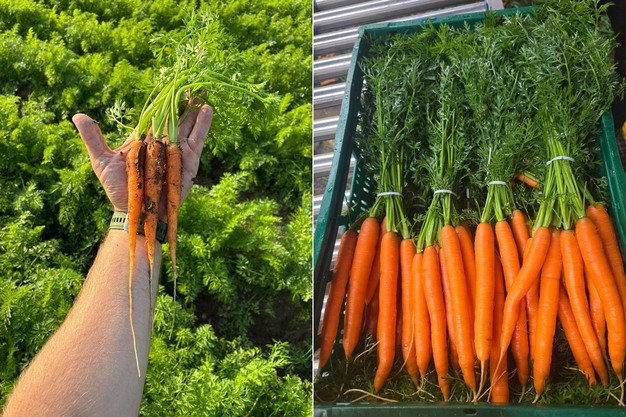 © Abenhardt GemüsebauAbenhardt was already able to supply his customers entirely with carrots from his own new harvest in week 26. Due to the long marketing window, there were only brief imports from Spain, Italy, and France this year.
In addition to the German domestic market, Abenhardt also exports its carrots. "We have already received inquiries from countries such as Slovenia, Greece, and Italy, which is rather unusual so early in the season. These inquiries are for medium-sized carrots (20-40), which we are currently harvesting. Oversized carrots (40+) remain scarce and in demand. Otherwise, we are extremely satisfied with the current gross yields of 55-60 tons per hectare. The same applies to the flow of goods: as soon as a plot is ready for harvest, it is harvested immediately, as the produce is needed on the market."
 © Abenhardt Gemüsebau
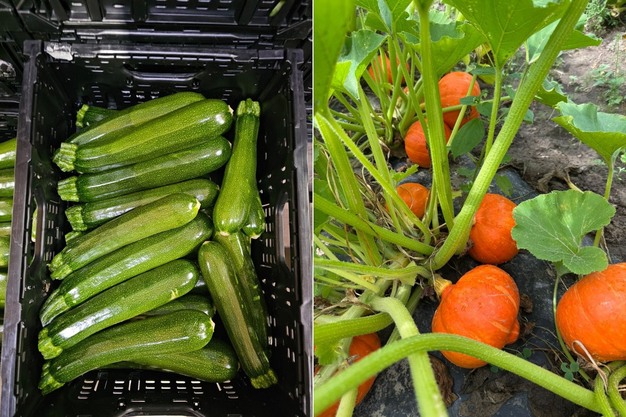
Zucchini and Hokkaido squash
Both conventional and organic carrots grow and thrive on the Abenhardt farm. In the latter branch of the business, quality issues partly influence operations. "The high temperatures are leading to increased disease pressure, especially in organic cultivation, so unfortunately, not all crops have come through unscathed. In contrast to last year, there will therefore be a normal supply of organic carrots at most this year." Depending on the weather, there could also be problems later during storage. "Currently, the stored carrots are looking good across the board, but if the high temperatures and dry weather continue, the situation could become critical at some point." The main harvest usually lasts until mid-November, but on selected plots, harvesting continues in the field until February. German storage carrots are generally available from October to May.
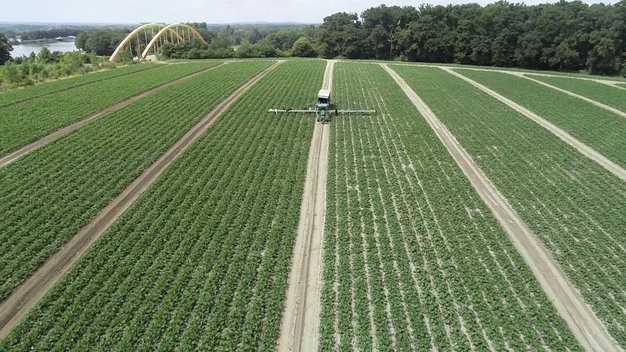 © Abenhardt GemüsebauInsight into the zucchini cultivation: From the producer's perspective, the main task is to get rising costs under control. To cope with the cost increases, Abenhardt has invested in optical carrot sorting lines, banding machines for zucchini, and automated agricultural technology, among other things.
Volatile zucchini market
Meanwhile, the zucchini harvest is in full swing. At the start of the season in June, it was sometimes difficult to meet market demand because only limited quantities were available from Spain, and the new German harvest got off to a somewhat bumpy start. "In July, the situation completely reversed, and there was almost too much produce available at times. Prices were adjusted downwards accordingly. In the past two weeks, the situation has returned to normal: current availability is relatively balanced in relation to demand. Due to the heat in week 33, it is quite possible that we will harvest more zucchini again. Here, it is important to work with our marketing partners to generate new momentum and plan appropriate campaigns so that we can place the additional quantities accordingly. Of course, it helps that German zucchini has become firmly established in recent years."
 © Abenhardt Gemüsebau
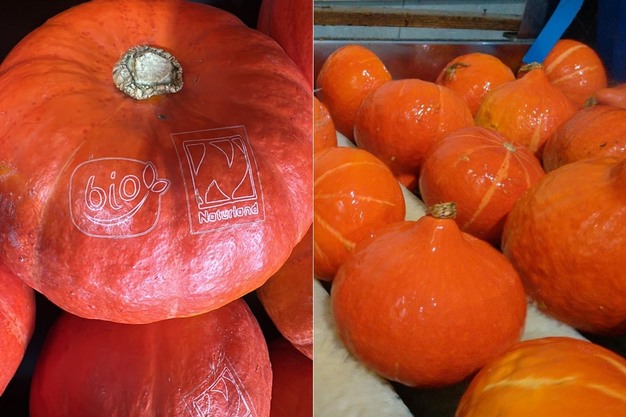
Homegrown Naturland pumpkins
Mosaic virus threatens German Hokkaido harvest
Finally, this year's pumpkin harvest has already begun. "We have been harvesting Hokkaido pumpkins since week 31, but demand is still somewhat subdued at the moment. Like other producers in the region, we are experiencing increased problems with the pumpkin mosaic virus, which is transmitted by aphids. The key question now is how the later crops will react to it. However, I could imagine that 10-20 percent of the regional pumpkin supply will fall victim to this virus."
For more information:
Carsten Abenhardt
Abenhardt GmbH & Co KG
Markfelder Straße 15
D - 45711 Datteln
Tel: +49 (0) 2363 / 3659870
Fax: +49 (0) 2363 / 8362
[email protected]
www.abenhardt.de