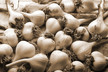
Farmers estimate that garlic can be up to four times more profitable than potatoes, making it one of Ukraine's most lucrative crops. Vitalii Kuleba, a combat veteran and farmer from the Poltava region, cultivates two hectares of the variety Liubasha and plans to expand production.
Kuleba calculated that while one square meter can produce up to 10 kg of potatoes worth about €0.07/kg, the same area can yield roughly 4 kg of large, early Liubasha garlic, selling from around €0.70/kg wholesale. "That makes the crop four times more profitable than potatoes, depending on volumes and marketing channels," Kuleba explained.
The Liubasha variety, bred in Ukraine, produces large heads weighing 100–120 g with 4–9 cloves, matures in about 120 days, and stores well for up to 10 months. It is known for its winter hardiness, drought tolerance, and transport resilience.
However, the high potential of garlic production is not immune to weather risks. This season, drought severely damaged crops in the Mykolaiv region, where farmer Tymur Lievda of FOP "Lievda" lost six hectares, managing to harvest only a small amount of planting material. Practising organic farming without chemicals, Lievda relies on manual labour for most operations, using machinery only for inter-row and pre-plant tillage.
"In the dry climate of Mykolaiv, growing garlic is only viable with proper irrigation," Lievda stressed. His farm cultivates the Ukrainian Kharkiv Purple variety, using moisture-retaining treatments and a combined harvesting method, mechanical loosening followed by manual collection.
While Kuleba's results highlight garlic's strong economic potential, Lievda's experience shows the challenge for Ukrainian producers, that without a stable water supply, even the most profitable crop can turn into a risky venture.
Source: www.seeds.org.ua / agroportal.ua