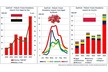
A revision of the Deep and Comprehensive Free Trade Area (DCFTA) enhances export opportunities for Moldova in the EU market, as per an announcement by the European Commission. Export quotas for plums, apples, table grapes, and cherries will escalate, while imports of grape juice, tomatoes, and garlic will undergo full liberalization, aside from certain technical specifications for tomatoes, reports IPN.
The agreement stipulates Moldova's alignment of production standards to European norms, with an option for invoking protection mechanisms if imports impact domestic markets. A reassessment of the agreement is slated for 2027, contingent upon advancements in European integration.
The European Commission statement indicates reinforcement of trade connections between the EU and Moldova, aiming for a balanced reflection of mutual interests. The update substitutes the autonomous trade measures that expired on July 24, 2025, which had accommodated Moldova's export redirection following the Ukraine conflict. Moldova's exports to the EU grew from 1.8 billion euros in 2021 to 2.2 billion euros by 2024.
Prime Minister Dorin Recean remarked on the development, highlighting, "This is excellent news for farmers, producers, and exporters from the Republic of Moldova". The agreement presents new economic prospects amid regional uncertainties.
Source: IPN