The first carrots from the Rhineland were harvested in the first week of July. "We could have even started harvesting our fleece-covered crops a little earlier," reports Maximilian Coenen, a carrot grower in Bedburg in the Rhineland. "We have had very good growing conditions so far and have been largely spared from severe weather. However, a small portion of our crops were damaged by hail at the beginning of June. If we are spared another prolonged dry spell, I expect an average to good carrot harvest."
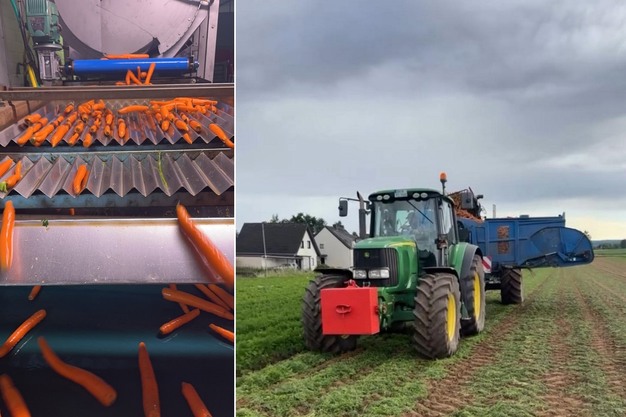 © Coenen MöhrenA look at the washing facility (left) and the harvest. In recent years, Coenen's cultivation capacity has remained almost constant.
In weeks 30/31, the transition from fleece to open-field produce will take place, according to Coenen, whose washed carrots are delivered to grocery store shelves via a packaging plant. Demand for newly harvested, washed carrots has been satisfactory across the board. "Our stocks from last year's harvest were cleared around Easter. In some places, however, German produce from last year was still on offer until mid-June, which is rather unusual. Imported produce – mainly from Spain – was also still being traded actively until a few weeks ago."
 © Coenen Möhren
Upcoming summer slump
Nevertheless, the early, newly harvested produce is selling well so far, Coenen continues. However, like many other fruit and vegetable products, carrots are also subject to a traditional summer slump. "Sales are still at a good level, as only a few states have started their vacations. But when the surrounding states also go on vacation in a few weeks, sales usually drop noticeably." The producer expects the first promotions in food retail to start during the vacation period. It is not yet clear how the price structure will develop during this year's season, he adds.
Alternatives to herbicides
The Coenen family business has been based at its current location in Bedburg since 1988 and grows carrots on approximately 60 hectares. "Next year, an important herbicide will be discontinued, so we will be forced to seek alternatives. Labor costs are also a concern, although we have the advantage of being dedicated to a crop that is largely machine-cultivated and harvested, and we do not package the produce ourselves," he concludes.
For more information:
Maximilian Coenen
Möhrenbetrieb Coenen
[email protected]
https://www.instagram.com/moehren_coenen/