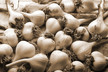
Since Croatia joined the European Union, there has been a steady decrease in domestic vegetable production with a rise in imports. Over the past decade, the value of these imports, including garlic, has increased by over 150 per cent. However, not all is deterred, as demonstrated by the efforts of the Puškarić family in Moslavina.
The family, located in Kaniška Iva near Garešnica, operates over 300 hectares of land comprised of garlic, red onions, and potatoes. A critical element in their operational framework is an advanced irrigation system that spans several kilometers. As reported by HRT, Filip Puškarić explains, "Fields with better irrigation gave us significantly higher yields. We are planning to drastically expand our irrigation capacity for the next season. Honestly, if we cannot irrigate it, it's not worth planting."
Their garlic endeavors have seen particular success, now supplying around 25 per cent of the Croatian market. Marijo Puškarić, head of the family business, states, "We started growing garlic back in 2014...One day, it is entirely possible that we replace all imported garlic. The question is whether we will have access to enough quality land to achieve that."
This approach raises questions about repurposing agricultural land in Croatia for vegetable production. The Puškarić family's methodology indicates that a combination of land access, infrastructure, and supportive measures could curtail reliance on imports and bolster domestic agriculture.
Source: Croatia Week