As an eleven-time winner of the title 'Best Supermarket in Fruit and Vegetables' and with the slogan "The best quality for the lowest price," Lidl has built a strong reputation. But how sustainable is that position when demands for sustainability, soil health, and climate impact are becoming increasingly urgent? Lidl is asking itself that question, and has decided to take action. With an ambitious pilot project, the supermarket aims to reduce its use of chemical crop protection agents.
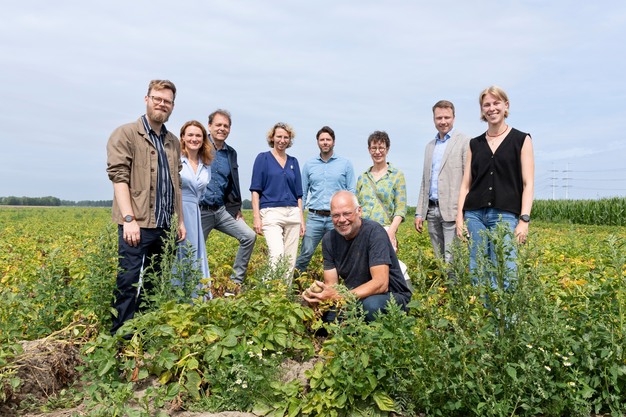 © Lidl Nederland Fltr: Rutger Westerhof, Natuur & Milieu. Esmée van Veen, Lidl. Peter Leendertse, CLM. Berthe Brouwer, Natuur & Milieu. Maurits Wösten, Lidl. Ellen Klein, CLM. Joost Renirie, Lidl. Imre ter Hedde, Lidl. Jan Ham, potato grower Gebr. Ham.
Together with Natuur & Milieu, research agency CLM, growers, and the Ministry of Agriculture, Lidl will spend the next two years exploring how strawberries, apples, and potatoes can be grown using as few chemicals as possible. "We want to show that sustainable agriculture is not only necessary but also feasible and scalable," says Esmée van Veen, sustainability manager at Lidl. "That's why we are launching this pilot entirely on our own initiative, because we believe sustainable agriculture is needed now, not only when regulations make it mandatory. This investment in knowledge, innovation, and soil health directly contributes to the quality of life for future generations."
Three model crops
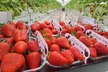
The pilot focuses on three commonly purchased fruit and vegetable products: Strawberries, apples, and potatoes. Each of these crops has distinct cultivation methods and challenges. Environmental pressure, biodiversity, water and soil quality, and yields are being closely monitored. This provides widely applicable insights for outdoor crops, orchards, and greenhouse horticulture.
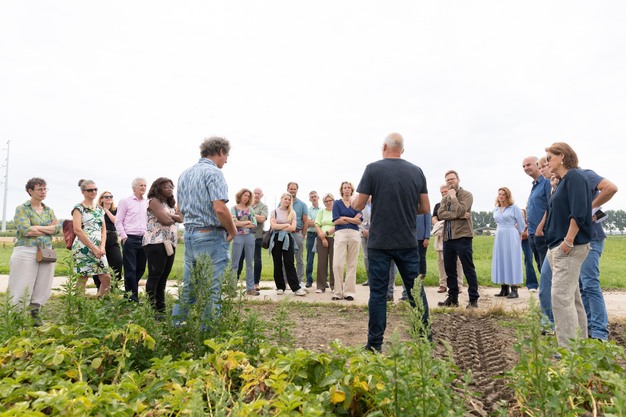 © Lidl NederlandDiscussion in the potato field on challenges and risks
A major focus is on avoiding the use of substances listed on the European 'Candidates for Substitution' list, chemicals considered risky for humans, animals, and the environment. Under expert guidance, growers are applying innovative techniques such as using UV light to combat mildew, mechanical mowing instead of chemical weed control, and an eco-plough that preserves soil life.
Covering risks
Nature and environmental organisations are critical of the use of crop protection products, but they also want to contribute ideas for doing things differently. Berthe Brouwer, agriculture programme lead at Natuur & Milieu, says: "The use of pesticides in the Netherlands is still far too high. It harms nature, pollutes our water, and affects our health. That's why it's so important to build knowledge on how to reduce their use. This is not just an experiment, it's the way forward. Buyers and the government play a crucial role, especially when it comes to investing and covering risks for growers. Together, we're exploring how things can be done differently, a bold step toward healthier agriculture that protects both nature and ourselves."
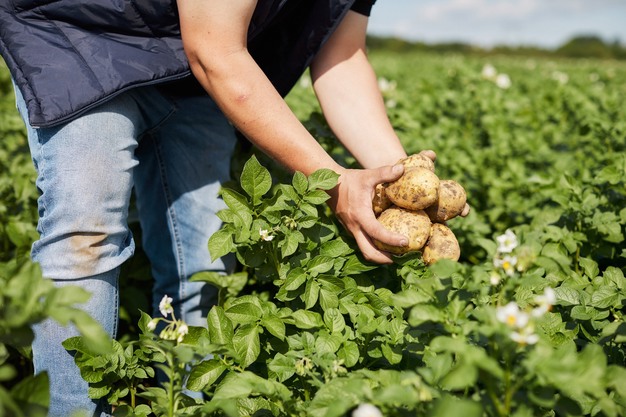 © Lidl NederlandPotatoes from Ham Brothers are almost ready for harvest
Many growers want to farm more sustainably, but the use of crop protection products is seen as necessary to prevent losses. "If you can't take action, you won't have a harvest. That's not just painful for the grower, it's financially devastating," says Jan Ham, potato grower at Gebroeders Ham. "But this collaboration allows us to experiment and learn. Monitoring, insights, and expert guidance help us make different choices." CLM and Natuur & Milieu support this with cultivation advice, risk assessments, and critical feedback. This creates an open learning environment where growers, advisers, and researchers can discover together what works and what doesn't. Jan Ham: "Thanks to expert support and Lidl's involvement, we can try new approaches. Together, we're building a more sustainable future for agriculture."
Less chemistry on the shelf
Lidl already has a concrete target to double the share of organic fruit and vegetables, from 4% to 8% by 2026. For conventional fruit and vegetables, Lidl has had strict requirements on crop protection for years. For example, Lidl's policy stipulates that pesticide residues must not exceed one-third of the legal maximum, and it maintains a list of banned substances that it no longer wants in its supply chain. The pilot will run for two years. After each growing season, the results will be analysed. In November 2025, Lidl will host a national knowledge session, bringing together growers, policymakers, NGOs, and research institutions to share lessons learned. "We sell more than 200 fruit and vegetable products sourced directly from growers or grower associations," says Joost Renirie, senior purchasing manager at Lidl. "Ultimately, we aim to develop a sustainable alternative for as many crops as possible."