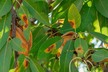
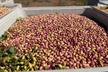
© Chris JamesIn Levubu, people still refer to the catastrophic flood of 2000, which spelled the end of avocados in the area. "The farm basically became unproductive. In 2001, I was taking out dead and dying avo trees," says Chris James of the farm Vreemdeling ('Foreigner'; right), close to Makhado (Louis Trichardt), Limpopo Province.
James has an affinity for bees, quipping that he inherited his parents' 'vices' of horses and bees. "The bees actually kept me alive in those years when I was recovering from the flood." For 25 years, he was moving his pollinating hives at night between pumpkin, avocado, macadamia, and mango farms in a 250-kilometre radius. "I was young and energetic, so I did a day shift on the farm, and then a night shift with the bees."
Macadamia trees, like the rich indigenous forest of the Soutpansberg Mountains, emerged unscathed from the floods, and it became Levubu's number one crop.
"I've only got 170 hectares, of which probably 90 hectares are not arable," he says of his mountaintop farm. He's proud that his farm provides habitat for both the common grey duiker and the scarce red duiker and all manner of cats and mustelids – caracal, serval, civet, honey badger, right up to leopards, observing: "I think there are more leopards here than people think."
Years ago, he recounts, farmers would shoot down raptors, enemies of domestic fowl, but now that is frowned upon and many raptor species have returned to the Soutpansberg Mountains. He reckons that farmers have become much more conservation-conscious.
 © Chris James
The morning newspaper printed on the ground
James initially studied wildlife management, and he had intended to enter academia when filial duty called him back to the farm where he grew up.
"When I walk around on the farm, I read my morning newspaper: the animal tracks left during the previous night. I know the individual groups of bush pigs that walk on my farm, I see the badger or the caracal was here, or the leopard crossed here last night."
He remarks that the easy pickings offered by orchards have, alas, turned some animals into "problem animals". "I'm talking about the monkeys, the baboons, the bush pigs, the porcupines, all the things that eat avocados and nuts. So their numbers are going through the roof. It's an overpopulation problem. I've got a sustainable use policy. I'll shoot bush buck to use and we'll allow hunters to shoot bush pig on a controlled basis."
 © Chris James Greening a macadamia orchard through flowering forbs & grasses in the interrows
Biodiversity in orchards a boon for chameleons
It's for the resident reptiles that Vreemdeling farm recently gained renown, and all as a result of James' approach that he calls 'greening'. "I started a practice three or four years ago of letting the grass and flowering forbs grow in the interrows. It was basically to help the bees survive because when you've planted a single crop like a macadamia, it's a monoculture and it becomes a green desert. There's no food for the bees."
Luminescent in the light of his torch, on his nocturnal anti-theft patrols with his dogs – the unavoidable nighttime duty on many South African farms – he started seeing scores of juvenile chameleons in the grass with some adults in the macadamia trees.
In preparation for the harvest, the grass needs to be cut and baled – a death sentence for the slow-moving chameleons. An off-the-cuff suggestion to hikers on the farm to help him relocate juvenile chameleons to safety ahead of harvest turned into a viral video. "There's been a lot of reaction after Barry Christie, the technical advisor of Green Farms Nut Company, to whom I deliver my nuts, posted it on a WhatsApp group. On my subsequent patrols and whenever I had people here, I said, okay, let's go and hunt chameleons and put them in my basil lands. They're safe there, it will not be slashed."
 © Chris James An adult flapnecked chameleon left, and juveniles after a night rescue
He stopped counting after a while at between 100 and 150 chameleons. "You don't see a lot of chameleons ever, you know." He hopes such actions can dispel a cultural phobia of chameleons. His staff knows his quirks: he doesn't kill snakes, not even the black mamba that drink at the farm dam. "We've had a couple of scary moments with them, but generally the mamba avoid us very successfully. They're actually very clever at avoiding contact with people."
Breeding bees for enzymatic resistance to chemicals
He is very worried about bee mortality on farms where they are pressed into pollination service. All beekeepers have experienced this. "Bees are being killed through spraying, while there is a shortage of them! My theory is that our losses due to poor pollination exceed our losses due to stink bug damage. I decided that I was going to try and do something about the bee problem instead of retiring."
 © Chris James African blue basil, beloved by bees and other insects, and home to the rescued baby chameleons (currently in winter hibernation)
James is preparing a podcast series to share his experience of farming using, instead of abusing, bees. People don't really know how to manage bees, he observes, and Northern Hemisphere advice is of no use when working with the feisty African bee (Apis scuttelata).
In his macadamia orchards, his team still sprays the full range of registered chemicals, even neonicotinoids, but at night only, or when bees are not present. He's fortunate, he acknowledges: he needs to spray less than farmers further down in the valley.
He breeds bees that demonstrate greater resilience to chemical sprays. It's become his passion project. "I am selecting bees that can cope, and I breed queens from them. I keep taking the best queens every year, and I leave them under those conditions where the guys are spraying for stink bug."
He weighs these hives every month to see which contain the most honey, an indicator of a thriving colony.
"I'm no way near the end goal. I haven't isolated immunity in any form, but I have isolated some genes showing resistance. Once I've isolated bees that cope well with those conditions, I want to make those resistant lines available commercially."
 © Chris James Queen bee cells with which James hopes to breed bees more resilient to chemical sprays
 © Chris James Proteas grown for the cut flower trade on Vreemdeling Farm
For more information:
Chris James
Vreemdeling Macadamia Farm
Barry Christie (Green Farms Nut Company): [email protected]