"The category is developing fast," begins Sebastiaan van Altena, blackberry, strawberry, and red currant buyer at the Dutch company, Berries Pride. He is referring to blackberries. "We see growth potential for these berries, and there's noticeable annual growth." Though blackberry consumption has lagged behind other soft fruit varieties' development, Sebastiaan expects ongoing variety development to boost the category.
 © Berries PrideSebastiaan van Altena
"Blackberries still offer plenty of potential. Many consumers who try blackberries find them to be one of the tastiest soft fruits. But their consumption is still lagging. The most important thing for blackberries is to develop a variety that tastes good and can be supplied consistently. We've recently seen increasing developments in that area," says Sebastiaan.
He says investments in cultivation areas help. "There used to be the traditional Mexican season, followed by a short period in Spain, and production from the Netherlands and Belgium. Now, more and more tasty blackberries are coming from Morocco and other parts of Southern Europe; there's a true shift. That's led to much more stability and the potential to supply tasty blackberries throughout the winter. Such stable, year-round production makes blackberries increasingly interesting for many more buyers."
Retail: significant progress needed
According to Sebastiaan, that is a crucial aspect for retailers too. "Blackberries are traditionally sold more through the wholesale channel. There's still significant progress to be made in the retail sector. For them, the stability and immediate availability that can be achieved with supplies from Morocco and Southern Europe are important. Also, blackberries from those countries can be transported by road, thus avoiding air travel," he says.
"That contributes to a more sustainable chain with less impact on the climate. That development aligns with Berries Pride's business operations and the retail sector's sustainability results. Retailers are paying increased attention to blackberries, which boosts sales and paves the way for further growth. Once that trend is established, we can take the next step."
Consumers, obviously, play a role, too. Van Altena sees that they know the product, but that stores give blackberries little shelf space. Price is also a factor. "Blackberries are often one of the most expensive soft fruit varieties. So, it's especially important that people become familiar with its flavor and quality, and thus make repeat purchases. That's why variety development is essential," he explains.
Next: local
Sebastiaan points out that much effort is already being put into flavor. "There have been significant investments in tasty varieties, and those developments continue." To take advantage of the opportunities that new varieties will offer, Berries Pride, too, is involved in variety development. "There are a lot of good things happening, with many developments in the pipeline. It's vital to follow that closely," he continues.
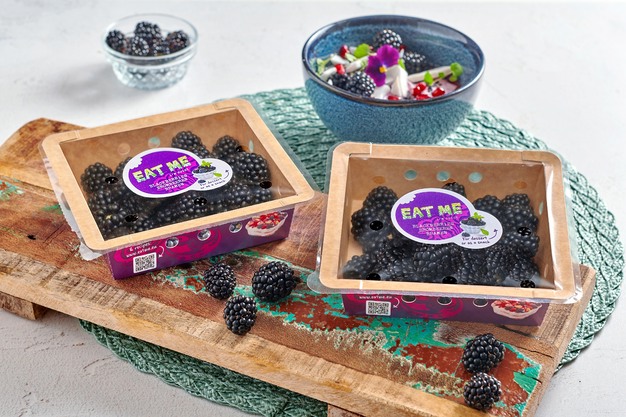 © Berries Pride
Though Sebastiaan sees potential, there are also challenges. "Along with the phasing out of crop protection products, which makes controlling pests and diseases trickier, rising labor costs are challenging for local growers. Costs are climbing in Southern Europe as well, but they remain lower there, making it difficult for Dutch and Belgian growers to compete. Especially since the quality from Morocco and Southern Europe is improving all the time."
Balance
Market developments are a critical aspect, the buyer adds. "The blackberry category is relatively small, and overproduction could paralyze the entire market. You can still sell, say, blueberries and raspberries at rock-bottom prices during periods of overproduction. Not blackberries. That's why it's important to expand cultivation in line with consumption, to keep the market balanced. If there's too much overproduction too often and growers don't earn anything, it will negatively affect the category's development," he points out.
Berries Pride, nonetheless, has good expectations. "In the next two to three years, more and more products should come from Morocco and Southern Europe, especially in winter and spring, and the demand for Mexican blackberries should gradually decline. There'll certainly still be a place for beautiful, delicious Dutch and Belgian blackberries. The category will keep growing, and we expect sales to receive a genuine boost when quality, flavor, and ease of cultivation come together. Ultimately, we see blackberries' potential as comparable to that of raspberries," Sebastiaan concludes.
For more information
Sebastiaan van Altena
Berries Pride
[email protected]
www.berriespride.nl