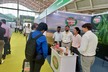
At the Interpera conference on 25 June, industry representatives examined current and future challenges facing pear production, including labour shortages, adapting to phytosanitary restrictions, water management, and declining consumption among younger consumers.
Flemish Minister of Agriculture Jo Brouns opened the congress by commending the sector's resilience and highlighting the importance of research and innovation, promotional efforts, and international cooperation. Delegates from the six main pear-producing countries—Belgium, Spain, France, Italy, the Netherlands, and Portugal—then reviewed the past season, which proved satisfactory overall despite mounting obstacles.
 © AREFLH
Growers noted that the loss of key crop-protection molecules has hampered disease and pest control, with no fully effective replacements available. Labour costs and shortages are driving increased interest in mechanisation and robotics. Water management remains a concern as storage capacity lags behind need, making supply erratic despite periodic rainfall. Meanwhile, consumption has fallen, particularly among young people, underscoring a need to refresh the pear's appeal.
During a round-table session, each country shared preliminary forecasts for the 2024–25 season. Spain anticipates a 31 percent increase over 2024's under-realised potential, while Belgium expects a 25 percent rise following last year's downturn. Portugal projects stable volumes, and France looks at a 9 percent drop, tempered by new plantings and varietal introductions. Italy's main late-harvest varieties may boost volumes, but confirmation awaits later in the season. Initial trends in the Netherlands suggest a recovery after a 10 percent decline in the previous year.
 © AREFLH
Later, the Eufrin 'Digital Orchards' working group outlined initiatives such as paired digital-real orchards for scenario simulation and explored agrivoltaic possibilities. Consumer research presentations detailed a 20-year decline in pear consumption and reviewed marketing best practices designed to re-engage shoppers.
The afternoon technical sessions featured post-harvest research on fruit preservation and quality, precision-cultivation techniques down to individual tree management, and sanitary control measures. A review of stink-bug management highlighted integrated strategies, while modelling tools for targeting pear-sucker controls demonstrated how research is translating into field solutions.
In closing, industry leaders emphasised that collective problem-solving and innovation are essential to meet the climatic, economic, and technical hurdles discussed at Interpera. They agreed that sharing ideas and working together remain critical for the sector's future.
 For more information:
Laetitia Forget
A.R.E.F.L.H
Tel: +33 (0) 5 33 89 10 19
Email: [email protected]
www.areflh.org