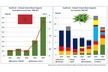
In the first quarter of 2025, Spain imported 188,076 tons of fresh fruits and vegetables from Morocco for 481 million euros. Imports from this country increased by 24% in volume and 23% in value, making it the supplier that grew the most.
In the first quarter, total Spanish fresh fruit and vegetable imports grew by 8% in volume and 15% in value, totalling 1.1 million tons and 1,442 million euros.
The growth of fruit and vegetable purchases from Morocco is continuous. According to Customs data processed by Fepex, in the last five years, the import volume has increased by 20%, going from 156,229 tons from January to March 2021, to 188,076 tons in January-March 2025. In the same period, the value increased by 54%, going from 311 to 481 million euros.
Spanish imports are led by Moroccan tomato, the vegetable that experienced the biggest growth in the analyzed period, going from 24,118 tons in the first quarter of 2024 to 32,313 tons in the first quarter of this year (+34%) and from 33.4 million euros to 52.5 million euros (+57%).
It is followed by peppers, with 32,046 tons (-2%) and 42.6 million euros (+4%). Green beans also stand out with 19,601 tons and 42 million euros. However, the import volume and value decreased by 17% and 12%, respectively.
According to Fepex, member state producers are becoming less and less competitive because they must comply with phytosanitary, labor, and social standards that producers of third countries are not required to comply with.
Moroccan tomato imports have led to a displacement of Spanish tomatoes. This is also because the entry prices, established in the EU's Association Agreement with Morocco, have not fulfilled their function of protecting the EU market and have become obsolete, boosting imports. That's why Fepex believes it's essential to reform them to ensure the viability of this crop, which is very important in the regions that produce it, and to ensure food sovereignty.
For more information:
Fepex
www.fepex.es