The Verna lemon campaign in Spain is entering its final phase ahead of schedule this year. Prices are profitable and higher than last year. Therefore, the sector expects a smooth transition between the Spanish and the southern hemisphere's production, with prices remaining high, even higher for overseas fruit.
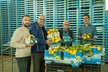
"Commercially speaking, the Verna lemon season is proving very positive, with high prices in line with supply, allowing farmers to obtain a fair return and compensating them for the high levels of waste," stated Antonio José Moreno, director of the Murcian cooperative El Limonar de Santomera.
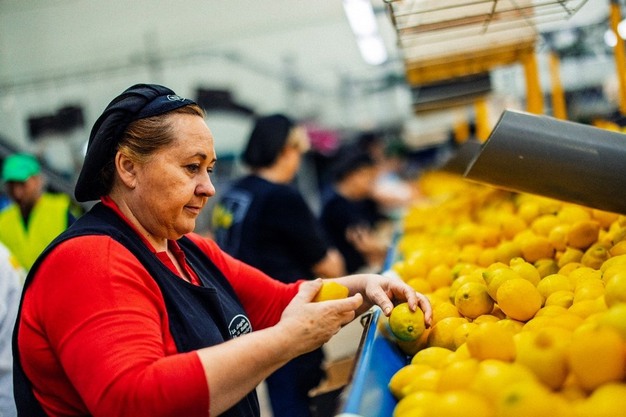 © El Limonar de Santomera
The Verna harvest started unusually early this year and is not expected to last beyond mid-June, as a direct result of what happened with its predecessor variety, Primofiori.
"The Primofiori lemon season was a bit unusual. We started too early, at the beginning of September, with fruit that was not the right size to be harvested. We paid dearly for that initial rush during the rest of the season. Since we didn't let the fruit reach the right size to be harvested, we didn't have enough product to extend the season into April. In addition, we were affected by frost and hail, as well as the thrips plague, which is very localized in our production area; all of which affected the Primofiori season," Antonio José Moreno stated.
"Thus, we had to start harvesting Verna lemons at the end of March, which is quite unusual for our company and the sector. As a result, we'll run out of this variety no later than mid-June. However, in general, demand is sustained and stable, with export figures very similar to those of the previous season," he stated.
According to the director of Limonar de Santomera, prices for both Primofiori and Verna have been significantly higher than in the previous season. However, the percentage of non-marketable fruit is increasing every year due to an increase in pests and inclement weather. "This means that, to maintain profit margins, prices must remain at levels that allow covering production costs and guarantee future cultivation," he stated.
Moreno expects a smooth transition between Spain and the southern hemisphere this year: "Spain's Verna season is ending early, leaving prices high, and South Africa and Argentina are taking over with the same or even higher prices, with export forecasts to the EU similar to the previous season, which may lead to an equally early end of the season in early September."
El Limonar de Santomera was established in 1982, the result of the entrepreneurial spirit of 11 producer partners. Over the years, it has incorporated new farmers, reaching a total of 350 partners and 1,500 hectares of citrus fruits in 2025. In the 2023/2024 season, it produced 63,000 tons of lemons, oranges, mandarins, and grapefruit (40,000 conventional and 23,000 organic).
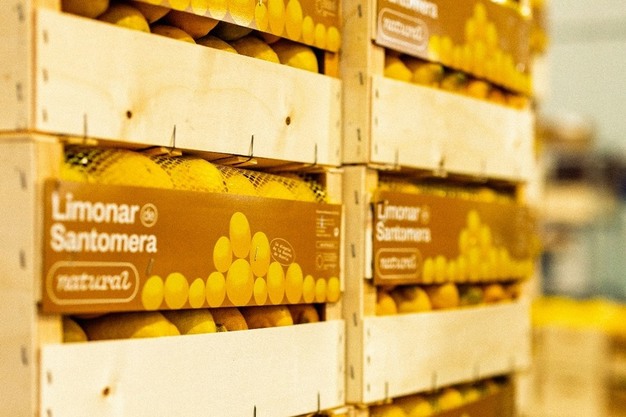 © El Limonar de Santomera
As its name suggests, the cooperative mainly produces and markets lemons. "Lemons have allowed us to consolidate our position in the market with significant growth, especially in the organic range, although products such as organic oranges and tangerines are increasingly important in our product range," Moreno stated. "Our goal for the next five seasons is to consolidate our current market position with sustainable and balanced growth that adds value."
The cooperative provides a continuous supply of citrus fruits throughout the year. "As a supplier, our goal is to supply customers all year round, to close the cycle with our own and/or imported products. As such, in the summer months, when domestic produce is scarce or unavailable, we source conventional and organic citrus from the southern hemisphere," he stated.
The cooperative's natural market is Europe. Germany, the United Kingdom, France, Scandinavia, Italy, and Poland are its most important destination markets. "We also have a significant and increasingly important presence in the domestic market. We are not looking for specific countries to grow in, but rather for customers who are able to provide us with added value as a company and, therefore, profitability for our partners," Moreno said.
The director of the cooperative also stressed that the importance of competition from Turkey and Egypt in the first part of the season, as well as from South Africa and Argentina at the end of the Verna season, should not be overlooked, but that the sector's greatest challenges lie in Spanish production itself.
"We have to be able to control new pests in a context where producers have fewer and fewer phytosanitary treatment options because EU authorities are continuously banning active substances. We must apply economic, social, and environmental sustainability criteria in production and, of course, continue to offer a quality product. If we as a sector can meet these challenges, the leadership of Spanish lemons will be unquestionable," Antonio José Moreno stressed.
 For more information:
Antonio José Moreno
El Limonar de Santomera
Ctra. de Abanilla, km2, nº35.
30140 Santomera, Murcia. España
Email: [email protected]
el-limonar.com