For as long as anyone remembers, Belgian fresh produce has been shipped from Sint-Katelijne-Waver to Germany. Frans Michiels Belgium (FMB) delivers tomatoes, lettuce, fruit, and open-field vegetables from there to cities like Berlin and Munich every day. FMB, which turned 100 in February, can rightly be called an established name in fruit and vegetable logistics. Jonathan Vandesande, its commercial manager, gives an overview of recent developments in the German destination market and the Flemish supplier landscape.
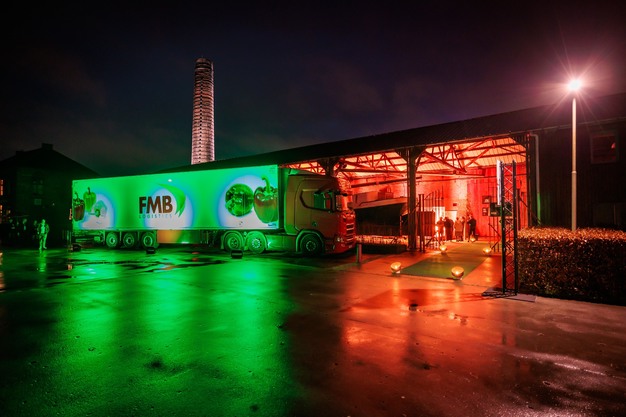 © FMB
© FMB
Not long before the pandemic, this Belgian company joined the Calsa group as part of a broader integration process for independent exporters. "Integration is a logical development. It ensures greater efficiency," says Jonathan, who joined the FMB as sales manager during that period. "Sales channels-wise, FMB - like every other fresh produce exporter - used to focus on Germany's wholesale markets. These days, we have a healthy balance between wholesalers – some of loyal, decades-old customers – and retailers. We don't sell to the really big retailers' distribution centers. We do, though, supply their suppliers, especially to the medium-sized chains. As a pure trading company, we prefer somewhat more limited volume and the negotiation dynamics."
The advantages of a trading company
According to Jonathan, a trading company like FMB benefits retail clients because it can feel out the market and, so, offer fair prices and terms. "In that sense, we're a kind of commercial lubricant between the suppliers in Belgium and the supermarkets in Germany," he says. FMB means something for wholesalers and early market buyers in that it arranges goods collection and order picking.
"We get fruit and vegetables from a wide range of suppliers: the three large cooperatives, straight from growers, and supplemental volumes from importers and fellow traders. That mix of origins is necessary. Otherwise, you risk being unable to fill your often very diverse orders. A flexible organization is a must if you have customers who sometimes order two pallets of 30 different items."
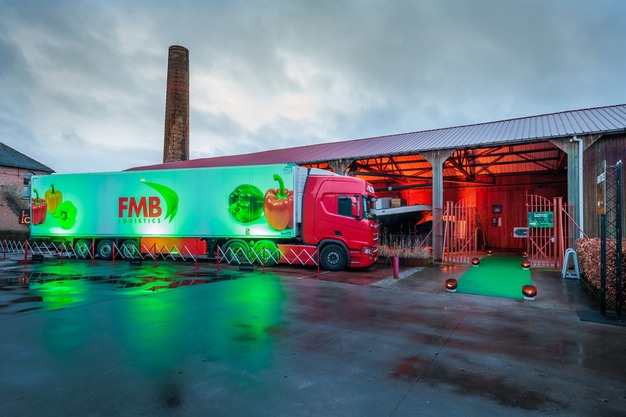 © FMB
© FMB
"Order picking, in addition to broad sourcing, is one of FMB's strengths. With such a wide assortment of products, automation doesn't get you very far. Order picking is, therefore, done manually in the morning, which is laborious. Then, in the afternoon, everything has to be loaded quickly so the various German buyers, some as far as 800 km away, receive their orders the next day, on time and in good condition," says Jonathan.
Blood red tomatoes in East Germany
As a specialist in Germany, he is well-placed to shed some light on some regional preferences in that vast market. "Most unusually, unlike the rest of the country, in the east, the former GDR, people want deep red tomatoes. That's caused us trouble more than once. They reject shipments if the tomatoes aren't quite colored yet, even if they're about to ripen. Explaining that doesn't help. There are a few instances like that, although generally, the Germans have some kind of universal sense of quality. Freshness is the most important thing," explains Jonathan.
Origin as a mark of quality
Belgian and Dutch fresh produce is a fixture on the German market. Something that, says Jonathan, will not change any time soon, despite the expansion of local cultivation initiatives and the advance of other origins, including neighboring Poland. "Greenhouses are being built in Germany, but often with varying success. From my contact with German growers' cooperatives, I sense a trend towards hydroponic lettuce cultivation. That works well with tri-color or multicolor lettuce, but for head lettuce, there still seems sometimes to be a lack of knowledge regarding growing techniques. Then, growers call us, asking if they can quickly buy some product. After all, they must fill their programs."
Also, for some products, Belgium and the Netherlands, as origins, are marks of quality in themselves. "That's particularly true for tomatoes, lettuce, and some open-field vegetables. German customers will pay slightly more for consistent quality products. Flandria as a label helps enormously with that, as do independent growers and the three large cooperatives' brands. However, Belgium and the Netherlands existing as suppliers have a deeper reason. Germany is far from self-sufficient. The greenhouse projects are undoubtedly expanding, but perhaps, economically, that country considers importing some products as more efficient. It can then use its available labor force for other things," the commercial manager points out.
He is not losing any sleep over the increasing competition from Eastern Europe, where greenhouse cultivation is rising in countries like Poland. "At the peak of summer, when there's plenty of supply everywhere, some produce, especially bell peppers, comes from Poland to Germany. However, prices must differ significantly before our customers choose Polish products."
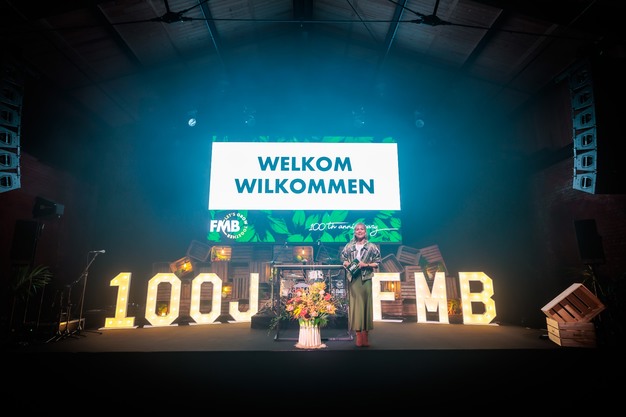 © FMB
© FMB
"Quality and a good name are still decisive. It's only when we have shortages and prices rise sharply that German importers turn to Poland. That country has successfully asserted itself in the apple market, though. There, Belgian and Dutch growers have had to reorient themselves under pressure from their Polish colleagues. And after a dip, they've noticeably regained some past successes over the past two or three years," Jonathan continues.
Too few drivers
What, until recently, kept him awake was the staff shortage. "Until 18 months ago, the situation was worrying. It was hard even to find office staff. As soon as young people start families, they're no longer willing to get up early, regularly work weekends, and be available at night if drivers have problems on the road. The worst thing, though, is finding competent drivers for international transportation. You leave around noon and drive for 12 hours straight."
"Then you make two or three early morning stops, in the dark, at markets where you must unload the cargo yourself with a hand pallet jack. Only then can you find somewhere to sleep in the area, around Munich, Nuremberg, or Berlin. Many of our drivers are approaching retirement age," Jonathan admits. "Yet we still manage to offer this logistical service that sets us apart. And since early 2024, I've seen a bit of easing in the labor market. Perhaps because the economy isn't doing so well in certain other sectors, such as construction."
Passionate
General costs are another challenge. "Transportation is becoming incredibly expensive, especially in Germany. It seems they're constantly inventing new taxes to deal with road freight traffic while expecting fresh produce to reach every corner of the country. But I sometimes say that if our job were very easy, anyone could do it. We still make money, too. And above all, we love what we do. Fruit and vegetables are a special business, you do it with passion. Despite all the challenges, you've come to the wrong place if you want a gloomy outlook. The future looks really positive for exports to Germany," Jonathan concludes.
For more information Frans Michiels & Zn (FMB)
Tel: +32 15 560600
[email protected]
www.fmb.be