The Mexican mango season is now in full swing. "We started at the beginning of February, and things are looking very good. Volumes have increased compared to last year, giving us a steady supply of high-quality Ataulfo mangoes. Moreover, demand has remained stable," says Rodolfo Meza of the exporter group, which has a sales office in Leuven, Belgium.
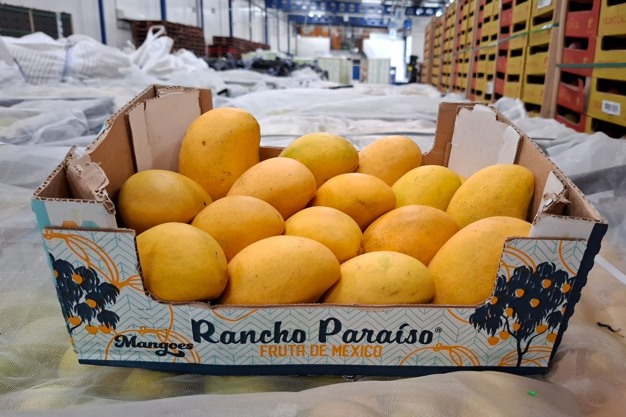 © Aztec Fruits
This year, the company launched a project with a major partner, allowing it to make significant progress in accessing the European market. "As a result, we've been able to reach several new customers and markets this season. We're very pleased about that. This partnership enables us to expand much more deeply into the European market, which is a great reward for all the hard work over the years. We've seen interest from supermarkets and traders who normally wouldn't have considered our Mexican mangoes. We're also entering new markets like Scandinavia, Poland, and Greece. Of course, we still have many steps to take in logistics and organization to scale up further. You don't get to a million boxes overnight. Everything moves step by step, and we aim to steadily grow our presence."
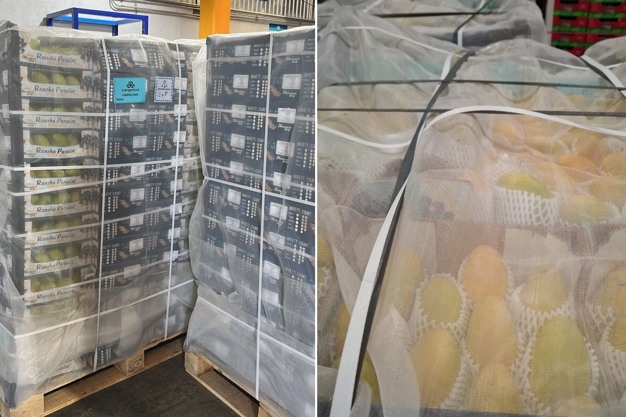
Currently, Aztec Fruits' exports primarily consist of ready-to-eat mangoes, which are transported to Europe by air freight. "However, this year we'll also begin testing sea freight for the first time. That would allow us to bring mangoes to the European market at more competitive prices, whereas they're currently still marketed as premium products. The question is whether it makes sense to target mass consumption or maintain exclusivity. That's something we'll need to find out, but this season we're experimenting with it, and it may allow us to increase volumes."
 © Aztec Fruits
European market challenging, but worthwhile
Could the situation in the U.S. give another boost to exports to Europe? "That's hard to say. The U.S. remains one of Mexico's most important trading partners, but there's growing interest in diversification. Europe currently represents only a very small share of Mexico's agri-food exports, so there's still significant potential to be tapped. Europe is such a large market, and with this collaboration, I believe we can firmly establish our products there in the coming years, creating a stable offtake."
"This goes not only for mangoes but also for papayas," Rodolfo continues. "We'll start with those next month, and we see the same potential as with mangoes. We specifically targeted this product because we're working with a variety that isn't commonly eaten in Mexico but is popular in Europe. Starting next month, we'll begin weekly shipments of those, under the same partnership we have for mangoes. So we're hopeful about realizing that potential as well."
"As a country, Mexico holds a very small share of the global papaya market, but with our climate and growing conditions, we believe there's significant growth potential. A new partnership brings new opportunities. It does require meeting certain certifications and quality standards. Five years ago, we wouldn't have been able to meet those, but we've learned a great deal in recent years. We still have many steps to take, but we're heading in the right direction. The standards and requirements in Europe differ greatly from those in Mexico and other regions. That sometimes makes it tempting to focus exports on other parts of the world, but once you're able to meet all the European requirements, it opens the door to one of the largest and most stable markets in the world. That's the reward for all the effort."
For more information:
Rodolfo Meza
Aztec Fruits
Interleuvenlaan 62,
3001 Hevrelee, Belgium
Tel: +32 456 18 4982
[email protected]
www.aztecfruits.com