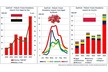
The Chinese blueberry market has transformed over the last two decades, with Peru being the main player. In 2024, China imported 38,743 tons of blueberries, 89% of which originated from Peru. This shift addresses the growing trend toward healthy eating in China's urban and upper-middle-class areas, where blueberries are associated with wellness and nutrition.
Chinese consumers seek large, sweet, firm, and well-presented fruits. Peruvian producers took note and invested in varieties that fulfill these expectations. Two decades ago, the blueberry trade in China was marginal: in 2005, the country imported only 665 tons of blueberries from Sweden and South Korea. By 2024, China imported 39,000 tons from Peru, Chile, the United States, and Canada.
Peru has established itself as the leading exporter to China, capturing 89% of the market. This progress reflects both the growing interest of the Chinese market and Peru's ability to position itself within the international blueberry trade. Since 2005, the volume of blueberries imported by China has grown at a 43% compound annual growth rate, indicating a structural change in its supply chain.
Peru's entry into the Chinese market became official in 2016, following a phytosanitary agreement between SENASA and AQSIQ, which allowed the country to begin shipping blueberries to China. Since then, Peru has evolved from an emerging supplier to China's main blueberry supplier, with exports of 35,000 tons in 2024, growing at an average annual rate of 21%.
Peru's success is based on ideal agro-climatic conditions, investment in genetic innovation, and a rigorous quality control system. These factors have enabled the Peruvian blueberry to meet the requirements of Chinese consumers, earning a reputation as a reliable and globally competitive product.
Source: infomercado.pe