The stone fruit season in Spain's Levante region has been delayed by about 8-10 days compared to last year; "however, this delay, accompanied by temperatures that are not very high, is helping the fruit gain size and ripen little by little, so we are expecting very good quality," says Fernando Martí, of Morondo.
 © Morondo
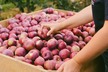
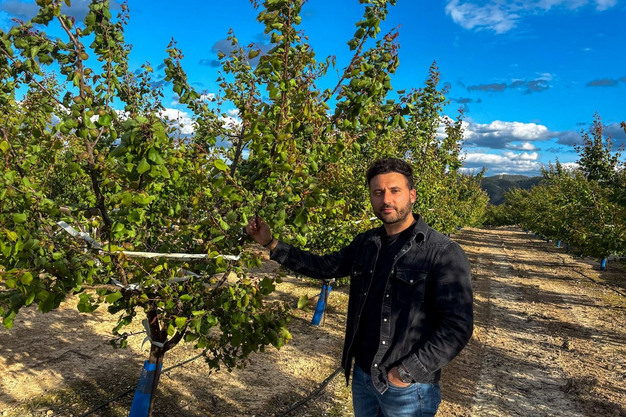
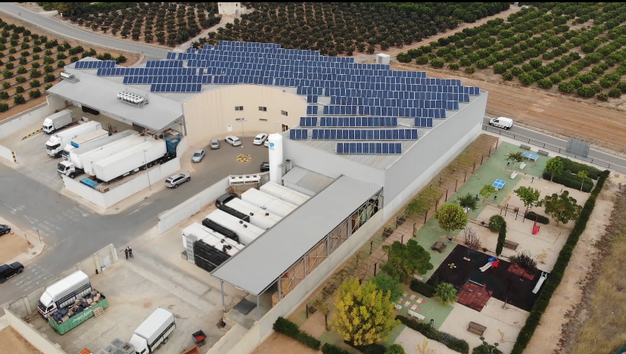
The company, based in La Granja de la Costera, Valencia, specializes in apricot and Paraguayo peach production within the stone fruit segment, which, together with kakis, are its main products.
"As far as apricots are concerned, it's worth noting that this year there has been a generalized decline of 30-35% in the Region of Murcia, but this percentage rises to 80% for some specific semi-early varieties prior to the Flopria," says Fernando.
 © Morondo
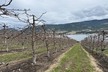
"The cause of this drop in the production is the rains in March, which lasted 2-3 weeks. When the rainy period started, the extra-early varieties were already in the process of setting, but the semi-early ones were in full blossom, so they were the ones suffering the greatest impact," says Fernando. "Later apricot varieties will also suffer losses, but they will be much less severe thanks to their later flowering periods, which has minimized losses."
 © Morondo
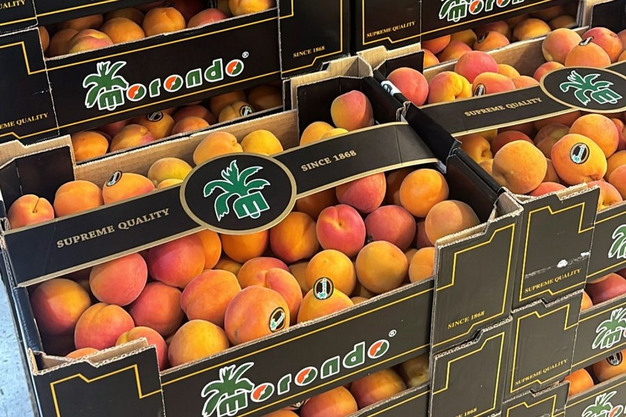
"It should be pointed out that while these rains have had a considerable impact on the production, they have not caused quality problems, because in the following weeks there have been no heat waves. In fact, both in our apricot plantations and in those of early Paraguayo peaches - where there is no notable decline - we are seeing exceptional quality this season."
"Prices are expected to remain stable throughout the Spanish season"
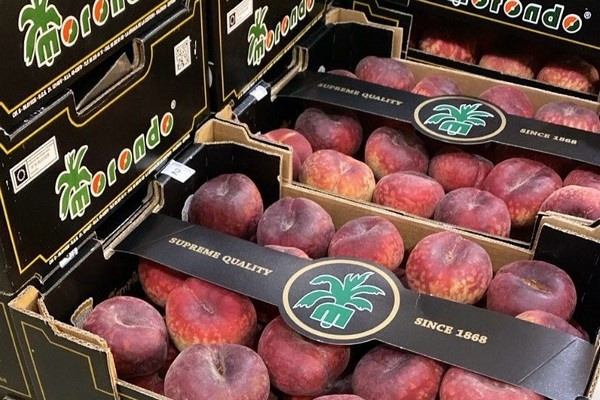
Morondo will start marketing its apricots in week 17 and, just one week later, it will have Paraguayo peaches ready to supply the European markets and supermarkets, for which the start of the Spanish stone fruit season is already eagerly anticipated.
 © Morondo
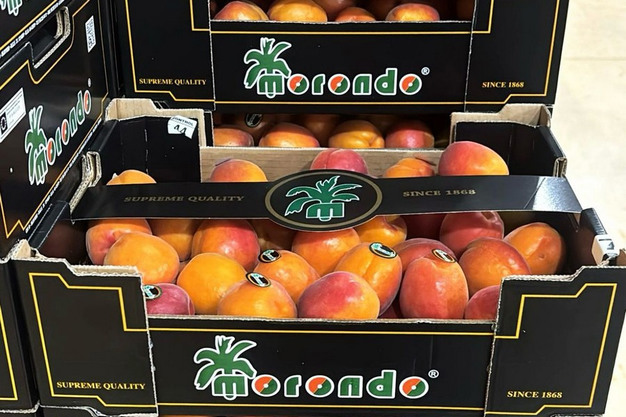
"As for the first apricot varieties, the extra-early ones, volumes will be good, and in spite of a significant drop in the semi-early fruit, this smaller supply will help prevent the price drops that usually occur due to market saturation after the start of the season," says Fernando.
"This year, we should also take into account that there have been frosts in Greece, Turkey and other stone fruit growing countries that have caused significant losses in their productions, so we are expecting a more comfortable situation for Spanish fruit in the European market. Many destinations that have traditionally been supplied with Greek or Turkish stone fruit, generally with lower and very competitive prices, are going to have to resort to Spanish fruit to meet their market needs and this will help in maintaining price stability throughout the Spanish season."
 © Morondo
"This year, in addition to the apricot and Paraguayo peach season, we are also starting with the overseas kaki campaign with the import of fruit from Peru, so that our European clients will also have the opportunity to have this product on their shelves, with the freshness and quality guaranteed by all Morondo products."
 For more information:
Morondo
Sector Industrial I-1 PM 2-3
46814 La Granja de la Costera, Valencia, Spain
[email protected]
www.morondo.es