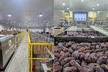
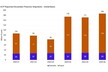
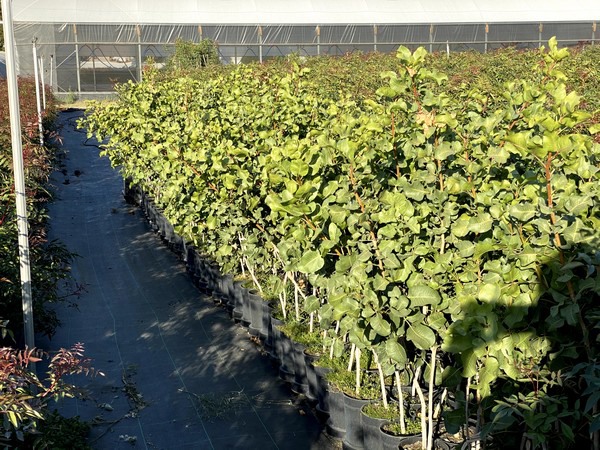
Figures shared by the Spanish Ministry of Agriculture confirm a further expansion of the pistachio acreage in Spain, which in 2022 exceeded 70,200 hectares after increasing by 9,000 since 2021. Of these, almost 7,600 - 84% of the new hectares in 2022 - have been planted this past year in Castile-La Mancha.
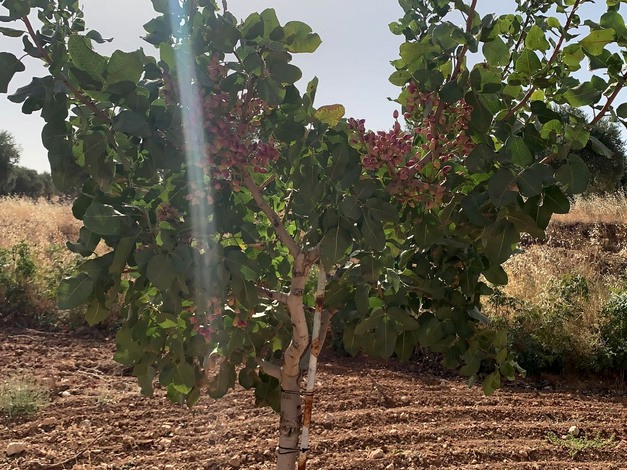
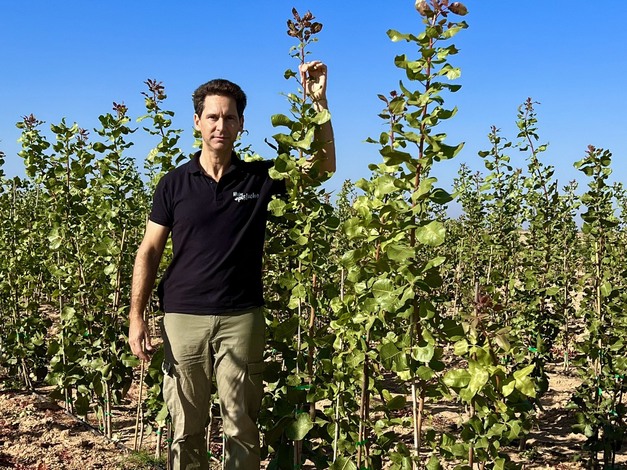
"This is a young market that is growing very fast with new plantations becoming productive. Pistachio, like olive trees, needs about five years of irrigation and then another year in a rainfed regime before it starts producing fruit, so it is estimated that Spain will become the world's fourth largest pistachio producer in about ten years." It should be noted that, in 2022, the number of hectares in production stood at about 23,300, which is a third of the planted area. Yields are also low, since most of them are young plantations, so it's easy to imagine the exponential growth that Spanish pistachio crops will experience in the short and medium term. "In the meantime, the acreage continues to expand," says Javier Moreno, manager of Mister Pistachio. "Growth is being observed in all of Spain, although most particularly in the provinces of Toledo, Ciudad Real and Albacete."
"On the one hand, there are large investors and agri-food companies that are investing in pistachio plantations; on the other, there are also agricultural producers with traditional olive groves, vineyards or cereals that are converting their plantations to pistachio cultivation seeking a higher profitability and a crop that can be automated." Also, pistachio offers an important advantage over other fruit and nut crops. "It is highly resistant to adverse climatic factors and since it is native to semi-desert areas, it withstands heat waves and drought very well. As for the cold, it resists frost better than olive trees, and since it has a fairly late flowering, there is a lower risk of spring frosts affecting its production, as it usually happens with almond trees."
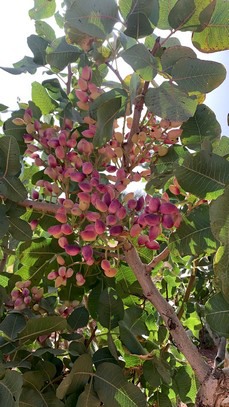
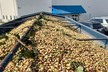
"This year, in fact, despite the drought we've been experiencing, the harvest is coming along very nicely, and as with many other fruit trees, it started about 15 days in advance; in fact, some producers are already harvesting the early Larnaka variety," says Javier. "The first prices at origin that are being reported are quite good, better than those of only a few years ago." We should not forget that, despite the crops being quite young, pistachio cultivation in Spain has certainly gone through a convulsive stage in which prices were the main cause for controversy.
"In just one year, processing plants decided to implement a system of guaranteed minimum prices"
"Until about 6 years ago, the prices paid to the growers were very high, because Spanish pistachio is hugely demanded and highly appreciated in the markets of northern Europe, and that translated into prices that averaged 9 Euro per kilo. However, about 5 years ago, something happened that the sector did not like at all."
"We cannot forget that, after they are harvested, you only have 48 hours to peel and dry the pistachios in the processing plants to prevent them from becoming contaminated by aflatoxins. At that time, there were only 8 plants in Spain to process the country's entire harvest, and in just one year, they decided to implement a system of guaranteed minimum purchase prices for the producer; and not shockingly, they all set the same prices."
"Suddenly, prices at origin went from 9 Euro per kilo to an average starting price of 2.80 Euro. It is true that later the price improved based on the prices at which the processing plants had sold the product, but they remained at around 5-6 Euro, well below the prices that used to be paid before and which never went down on the store shelves of our customers in Europe."
"Given this unnecessary and absurd situation, producers started to organize themselves in cooperatives or SAT, and new processing plants were set up that did not impose a minimum guaranteed price. In these 2-3 years, Spain has gone from having 8 plants to 44 in both a first and a second stage. It is safe to say that the pistachio sector has undergone a true revolution."
"There being stocks available or a large harvest in the United States or Iran does not really affect the market position of the Spanish production"
The United States is the largest pistachio producer in the world, even though global variations in the weather do not seem to be facilitating its cultivation. "Most of the country's production is in California, in the San Joaquin Valley area. Due to climate change, the amount of hours of cold there is falling, and this is taking a toll on the quality of the production; therefore, whether or not there are stocks available in the United States does not really affect the price in the Spanish market, unlike what is happening, for example, with almonds, which are currently trading at the lowest prices ever seen."
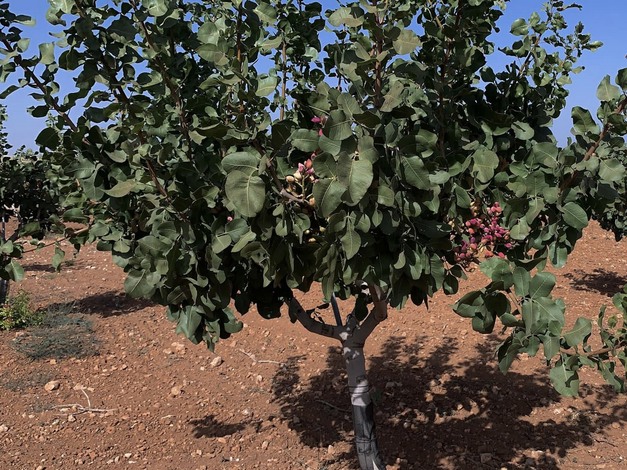
"Spanish pistachio is of indisputably superior quality and, unlike the American or Iranian, it is also strongly demanded in Europe, and that is reflected in the prices. Last year, Spanish pistachio kernel prices rose to 23 Euro per kilo. Just to compare, almond kernels currently cost 3 Euro per kilo," said Javier Moreno.
 For more information:
Mister Pistacho
Camino de Hontanilla, 1
45360 Villarrubia de Santiago, Toledo. Spain
Tel.: +34 667 35 90 48
[email protected]
https://misterpistacho.es