Northern Spain is increasingly emerging as an option for growing avocados. In fact, Asturias already ranks fourth within the regions with the largest area of avocados in Spain, only behind Andalusia, the Canary Islands, and the Valencian Community, and regions such as Cantabria or Galicia exceed in hectares areas of the Levante that are more associated with tropical conditions, such as Murcia.
“As a result of climate change and the water issues there are in Malaga and Granada, especially in the Axarquia, avocado producers are contemplating the alternative of going north,” stated Mari Luz Iglesias of Iberian Exotics.
“The crop is already being tested on the Cantabrian coast with very good results. For example, we are collaborating with some tests that the Agricultural Research and Training Center (CIFA), which belongs to the Ministry of Rural Development, Livestock, Fisheries, and Food of the Government of Cantabria, is conducting regarding the evolution of different varieties and rootstocks in the province.”
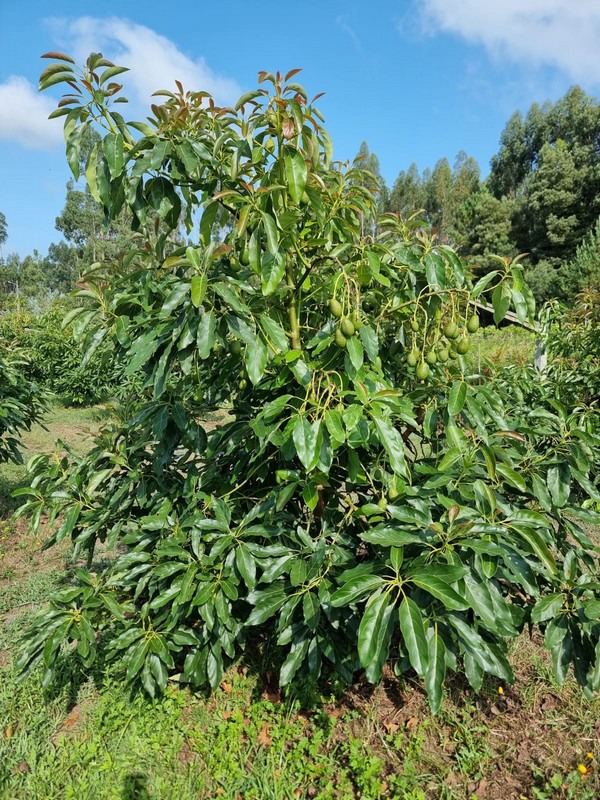
“The results of the tests in some areas of Cantabria that have microclimates are very positive. The avocado's vegetative growth in these areas is spectacular: in only two years the plants are fully formed.”
“Passion fruit and physalis are two other alternative crops that could be grown in the area”
Avocado is a subtropical fruit and its natural growth area is located in the tropical region. However, thanks to its great genetic diversity, it can adapt to very diverse climates and requirements. Thus, it can be grown from sea level to 2,800 meters above sea level. The American breed, for example, can tolerate temperatures as low as -4 ºC.
“The rootstock is a very important factor in their adaptation to northern climatic conditions. Since the areas where the avocado is being grown in Asturias, Cantabria, and Galicia are very close to the sea, there's not much risk of frost. However, using rootstocks such as Zutano, producers can obtain trees that withstand the cold very well.”
“At the moment, we are collaborating with Viveros Camagüey, which has acquired 11 hectares in Llanes, Asturias, for the cultivation of avocados, and we are also studying cooperating with a new 25-hectare plantation in Cambados, Pontevedra.”
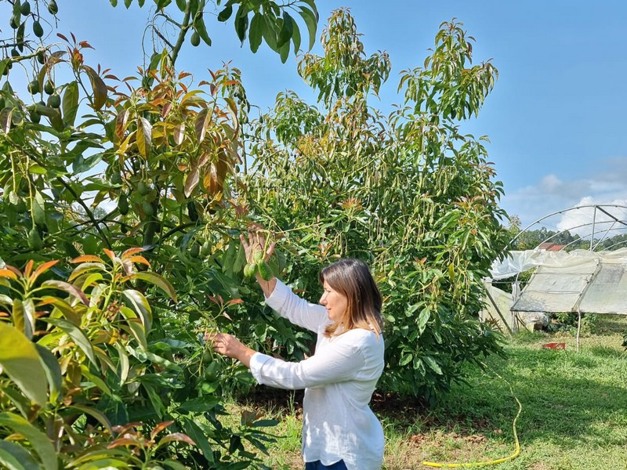
Avocado is not the only tropical species that has the potential to grow on Spain's Cantabrian coast, Mari Luz stated. “Passion fruit and physalis are two other alternative crops that could be grown in the area. Passion fruit is already being cultivated in northern Portugal, where it is harvested from July to November, but its multi-tunnel cultivation would allow a second harvest in December-January; a very interesting date commercially.”
“Chayote is also an alternative for outdoor cultivation and it would be possible to grow mangoes in greenhouses,” stated Mari Luz, who will soon launch an Iberian Exotics office in Gijón.
"Climate change is a reality"
It is a reality, as proven by agriculture, Mari Luz stressed. “These crops couldn't be grown in this area before. Temperatures will continue to rise and we'll have more droughts. This will affect agricultural production. Portugal has already banned growing more avocados and raspberries in the south of the country due to the lack of water.”
“Andalusia hasn't reached this point yet, but the difficult moment that tropical producers in the Axarquía are experiencing suggests that it may be necessary to look for a new option, and the Cantabrian coast could be that option.”
For more information:
Iberian Exotics
Lisboa (Portugal)
Mari Luz Iglesias (+34) 637 319 656
Hugo Leitao (+351) 961 301 952
[email protected]
https://iberianexotics.com/
Viveros Camagüey
Antonio Ruiz +34 665 21 44 78
[email protected]
https://viveroscamaguey.com