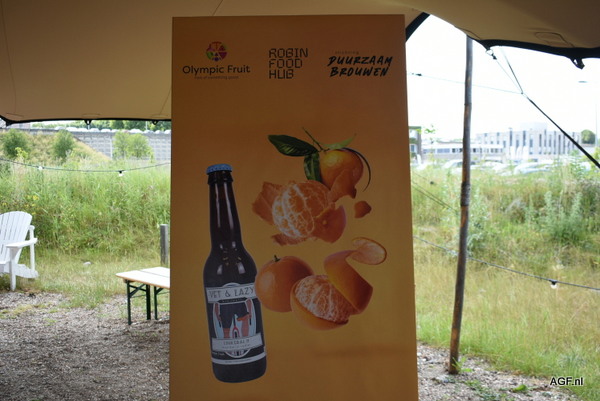
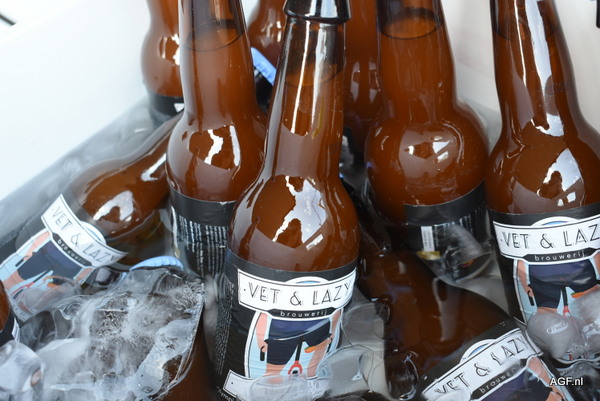
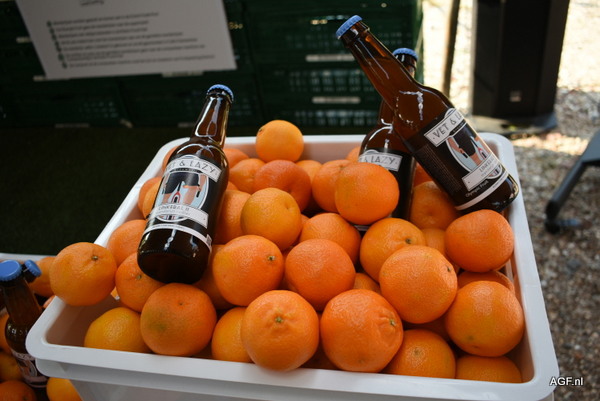
"This is how a lazy afternoon can lead to great things." This statement by Olympic Fruit's Lennart van den Heuvel says a lot about the creation of Linkebal II, a mandarin shandy from the Vet & Lazy brewery. This Dutch brewery uses rejected mandarins from Olympic Fruit for this beverage. On Thursday, June 15, the three partners, Olympic Fruit, Vet & Lazy, and Compostandig, launched the circular beer shandy in the presence of the Dutch town, Barendrecht, alderman Lennart van der Linden.
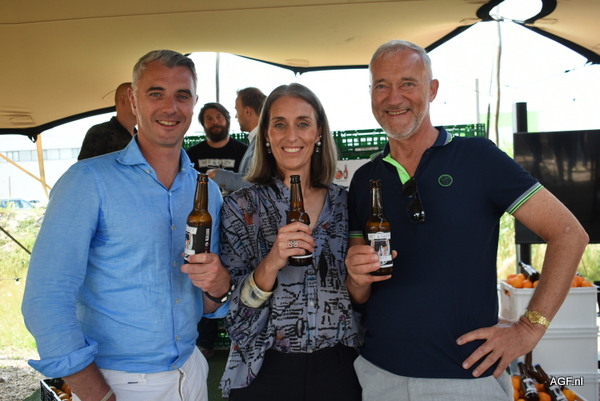
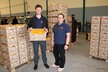
Lennart van den Heuvel (Olympic Fruit), Dineke van Meeuwen (Fruitpacking District) and Thijs van den Heuvel (Olympic Fruit).
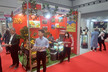
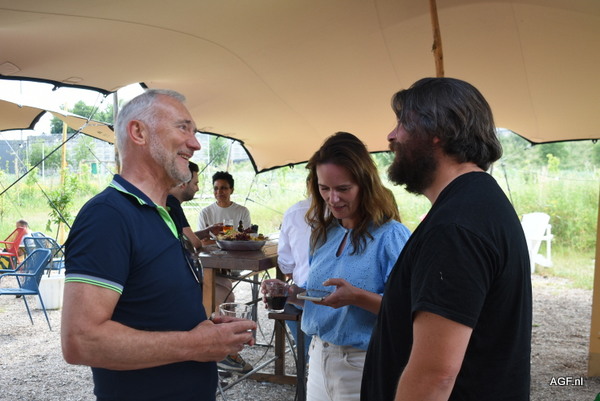
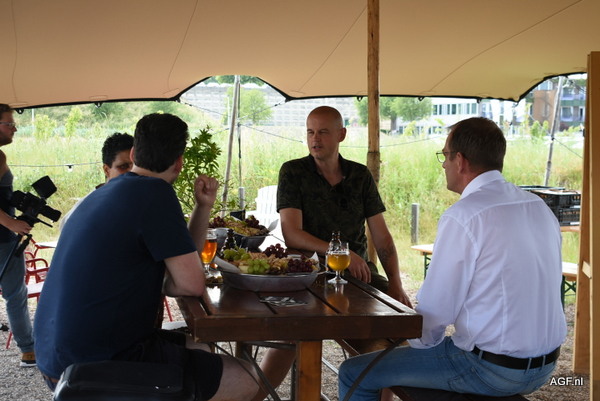
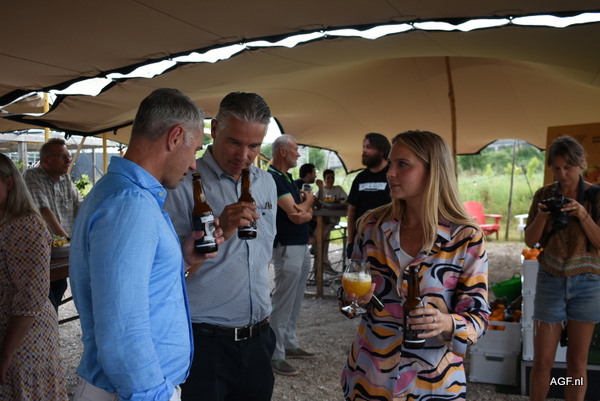
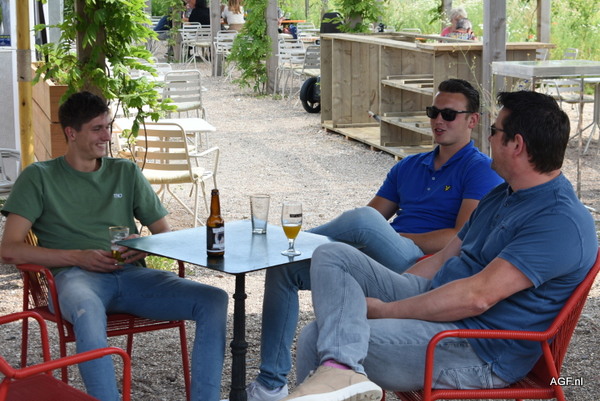
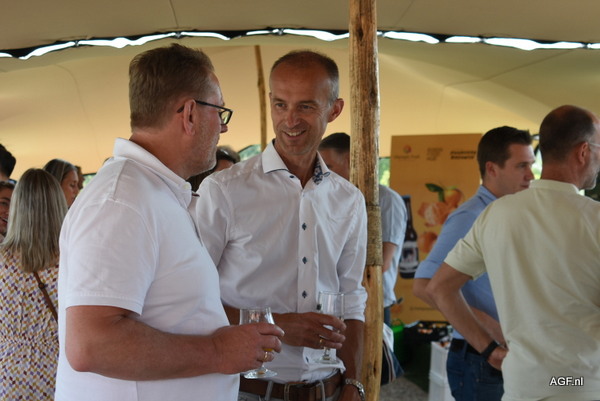
On a lovely, sunny afternoon, retailers, co-workers, and other interested parties gathered at a local café, Café Clementine, to taste this first and, so far, only batch of shandy. The collaboration's establishment, thanks to Fruitpacking District, was also explained. "We specialize in fruit," begins Olympic Fruit's Lennart.
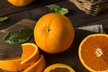
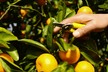
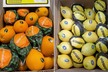
"We always have products that aren't good enough to sell. Green, soft, not-pretty-enough mandarins are often thrown away. But, these days, sustainability is the magic word, so we wanted to do something with those residual streams,"
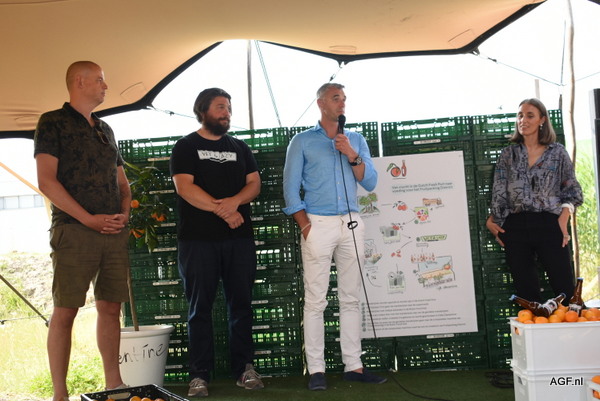
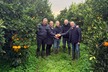
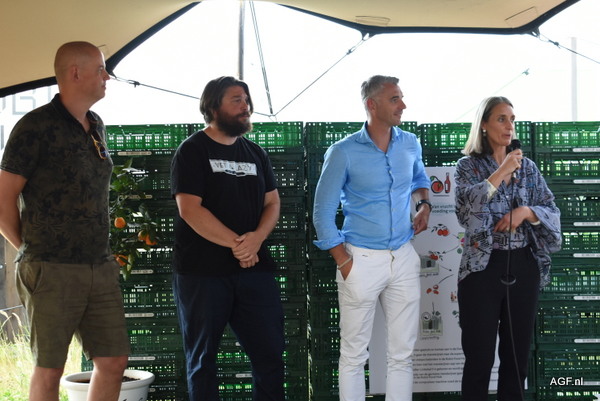
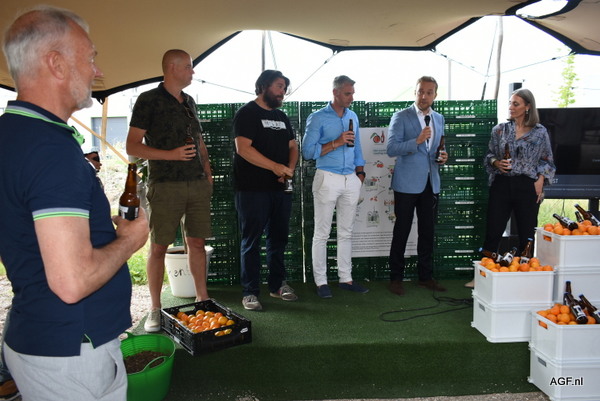
Initiative partners Siemen Cox (Compostandig), Okke van Beuge (Vet & Lazy), Lennart van den Heuvel (Olympic Fruit), and Dineke van Meeuwen of Fruitpacking District that enabled this partnership.
"There's much being said about sustainability, but I'm more of a doer. So when Siemen Cox (Compostandig) contacted me, I thought, 'Here comes another one. Are we going to talk again'? Not this time, though. He brought Okke van Beuge (Vet & Lazy) along, and we got talking about what was possible. Siemen is into composting, and Okke into beer, so I asked, "Can you do it with mandarins? That turned out to be possible, and a short time later, Linkebal II was born."
"It's, of course, a shame that these mandarins are rejected on their appearance because they still taste fantastic. This project shows that sustainability can be made truly tangible. That energizes us, and we're, therefore, committed to more such circular projects that contribute to our sustainability strategy," says Lennart.
Dineke van Meeuwen, a driving force behind Fruitpacking District that made this collaboration possible, agrees: "We're convinced that by working together, we can positively impact reducing waste streams and promote a circular economy. This project demonstrates that well."
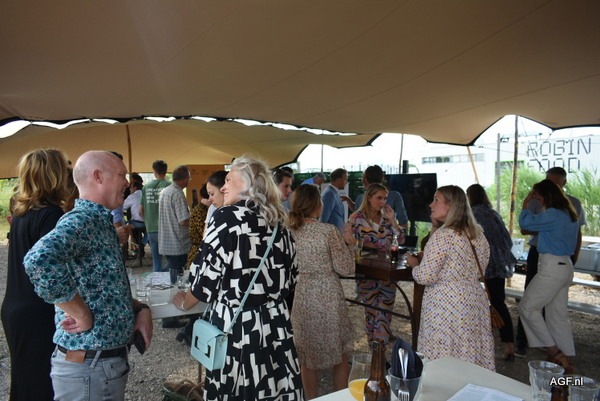
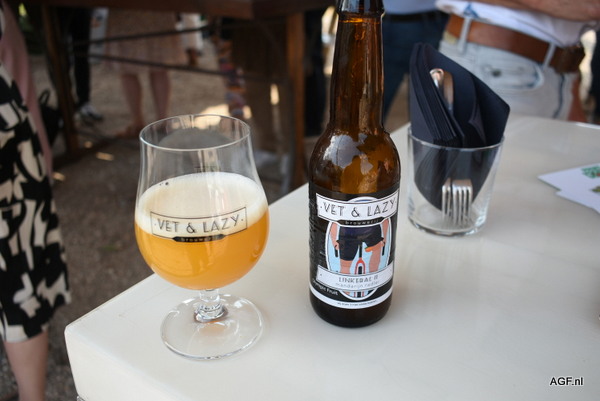
How does this mandarin shandy taste? Okke van Beuge of Fat & Lazy explains. "You know a mimosa, orange juice with champagne? It's similar to that. Fresh and smooth with a nice tang from the beer," he says. The brewery had worked with rejected fruit before, but a collaboration of this size was a nice challenge for them.
"It's still a one-off batch, but 2,000 liters of the first 3,000-liter batch is already gone, so it definitely tastes like more." How did the name come about? "Linkebal is a [Dutch] cycling term that refers to taking advantage of other people's qualities. I think this partnership represents that well," says Okke.
To come full circle, though, something had to be done with the pulp and peels. That is usually a bit trickier, but Compostandig knew just what to do. The company builds and develops energy-efficient composting machines for SMEs and nonprofits. In this case, they were looking at citrus waste streams.
"We often hear that citrus isn't compostable. However, anything that's briefly part of a composting process can be turned into compost. So also mandarin pulp," says Siemen, who also demonstrated the process. The event's host, Café Clementine, uses this particular project's compost.
In closing, local alderman Van der Linden toasted the initiative. "We refer to Barendrecht as a town with a global streak. We're already the Netherlands' fruit and vegetable capital; maybe now we'll become the country's circular beer capital too," he says.
Is this a once-off? "No," Olympic Fruit's Lennart answers firmly. "This was a first batch, and seeing what it triggered is wonderful. I honestly didn't expect this reaction. We must consider whether we can tackle it on a large, long-term scale with perhaps a residual stream hub. We'd also like to see if it's possible to do more types of fruit, like oranges, lemons, limes, and grapes."
"Only local establishments, such as Café Clementine, sell Linkebal II. But we've already received several requests asking if we have more. There's a world of possibilities that we're happily going to explore with these partners," Lennart concludes.
For more information: Olympic Fruit
40a Handelscentrum ZHZ
2991 LD, Barendrecht, NL
Tel: +31 (0) 180 646 200
Email: [email protected]
Website: www.olympicfruit.com