The European Commission's new proposal on packaging, which aims to reduce excessive packaging and make everything else reusable or recyclable by 2030, has generated a lot of debate recently. We gathered some feedback from Carton Pack, a company specialized in the production of packaging for the fruit and vegetable industry.
"By providing for the elimination of all single-use packaging weighing less than 1.5 kg, regulation 2022/1616 will have a direct impact on the fruit and vegetable sector, hitting the weakest link in the food chain and risking the disappearance of many products from the market", the company points out, "This weight limit does not take into account an entire segment of the fruit and vegetable sector, like berries, cherries, apricots, aromatic herbs, grapes. These are products that require minimal packaging, not only for reasons of transport and storage, but above all, to protect the food product and ensure its hygiene."
Fruit and vegetables will perhaps be the last to be affected by these regulations. "All other types of packaging can be optimized and reduced without causing too much impact on the product. Just think of the cosmetics and pharmaceutical industries. But to interfere with the fruit and vegetable aisle means a major impact on waste management and goes against the United Nations' Sustainable Development Goals (SDGs). We must also take into account the differences between the economies of the countries involved. Italy, for example, is the leading exporter and would be the hardest hit, economically speaking, by this measure. Rather than tackling the problem by eliminating packaging, we must try to manage the life cycle of materials as best as we can."
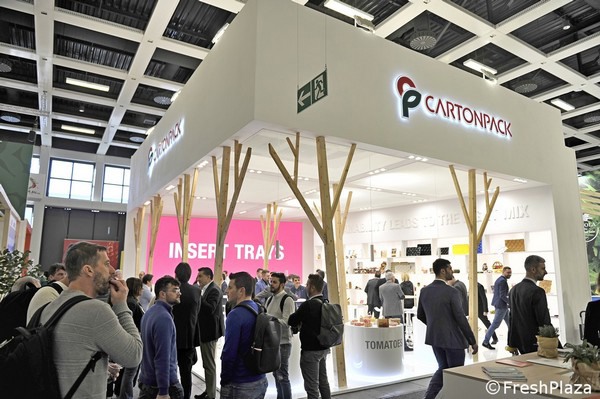
According to Carton Pack, a constructive approach could be to consider the supply chain in a circular way, through agreements with supermarket groups to recuperate packaging, helping to sort post-consumer waste and allowing the packaging to be returned to the industry.
"Today, all packaging manufacturers have the opportunity to both provide technical advice and also to highlight any critical issues in the supply chain, thanks to certain representative organizations, such as ProFood, of which Carton Pack is a member. ProFood participates in important technical review groups, involving some of the world's largest plastics producers and converters, as well as leading companies in the fruit and vegetable packaging sector. Working groups have been set up for different material categories such as PET, PP, PE, PS, XPS, which aim to provide, for the plastics and synthetic resins sectors - production, processing, use, recovery, recycling - initiatives for projects and solutions to be forwarded to UNI/UNIPLAST, for verification and subsequent proposal within the CEN European Standardization Committee."
The study is carried out with the participation of all interested parties, in particular UNI Technical Commissions and federated organizations, in accordance with UNI statutes and regulations. UNI/UNIPLAST therefore collects information, indications and projects from companies, in order to support the European Commission's standardization departments, particularly through the activities of the CEN.
Promoting the right product-material combination
In terms of assortment, Carton Pack continues to promote the right product-material mix, i.e. selecting the right type of packaging in a balanced way, including and selecting the right material and the most appropriate structure for each application, taking into account the shelf life and the protection of the product during shipping and shelf display.
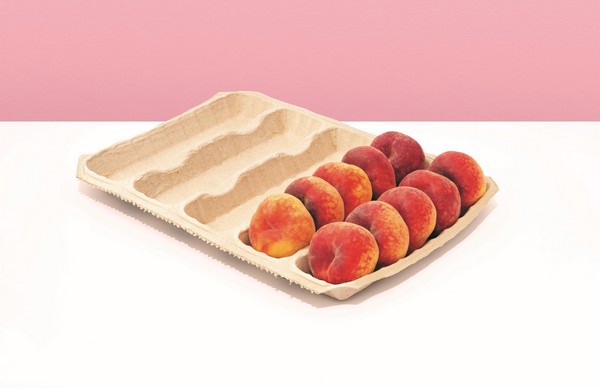 Fully recycled and biodegradable trays for flat peaches in up to 5 lines of fruit sizes B to AA (Photo supplied by Carton Pack)
"Sustainability also means avoiding food waste and reducing CO2 emissions by optimizing transport. We're expanding our industrial network to further enhance our commitment to a sustainable economy by embarking on innovative technologies," says the company, which has acquired a majority stake in Decapulp, a Spanish packaging company that uses technology based on the reuse of paper, cardboard and virgin cellulose from FSC-certified, environmentally-controlled plantations.
In fact, the company has recently launched a new alveolar packaging for flat peaches (see photo above), in 4 or 5 rows, perfectly adapted to B and AA fruit gauges, entirely recycled and biodegradable. These solutions are designed to offer maximum protection and impermeability, as well as attractive presentation. The trays can be used either in a cardboard tray, or in an RPC resealable box, 40x30 or 2 in 60x40 cm.
"This approach is in line with the Carton Pack Group's strategy of being recognized as a European packaging specialist for the fruit and vegetable sector, offering a wide range of solutions and multi-material products," concludes the company.
For more information:
[email protected]
www.cartonpack.com