Belgian leeks have been pricey all season. "That market's good at the moment. Trade's going quite well, and the high prices should continue until late February," says Pol Dendauw of Calsa.
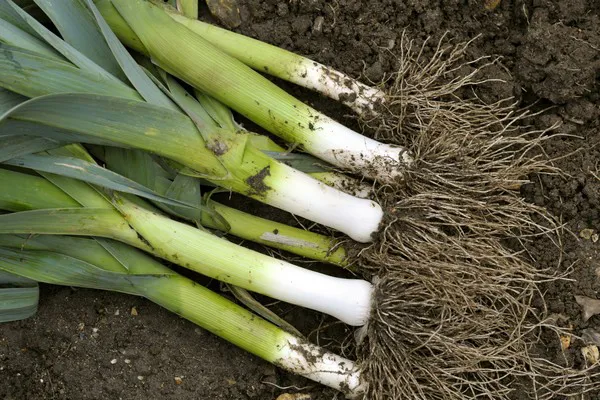
After a very tough year, it seems the leek market is recovering reasonably well. This winter vegetable is one of Calsa's main products in its assortment. There was plenty of supply on the market last season; however, demand was generally dismal. "That resulted in irresponsible prices. Growers sold their leeks at a true loss."
"But this season, prices have been around the euro mark for about a month," Pol explains. He sees several reasons for the leek market improvement. "Last year, the leeks were priced at about €0.25. That bad year led to somewhat less planting. Also, the summer was dry, so the yield/hectare is much lower."
Prices have, thus, remained higher, something Pol does not see changing very soon. "Supply will stay fairly limited at least until early March, so leeks will be expensive until the end of February. Nevertheless, trading's going well with these stable prices. When the market fluctuates wildly, no one dares buy," he continues.
"Now, people are used to the high prices, so everything's going well. I think prices will gradually begin falling in mid-March. That's when demand usually slows down again. We then move toward the warm summer months, and, for many, leeks will always be a typical winter vegetable."
At present, Calsa exports its leeks to much of Europe. "We do a lot of business with Germany. Italy and Spain are running pretty smoothly, and Poland and the Czech Republic are buying a bit too. The only country that's not currently buying as much is France. That's mainly because they have a lot of their own production, so they're fairly self-sufficient. Other than that, we certainly can't complain about demand," Pol concludes.
For more information: Pol Dendauw
Calsa
9B Roeselaarse Street
8850, Ardooie, Belgium
Tel: +32 (0) 517 47 374
Email: [email protected]
Website: www.calsa.be