Family business Jurassic Fruit from Essen is an online store, specializing in the sale of exotic fruits. Managing Director Geoffrey Mazuy shared with us which fruits are among the most popular this season and what they look for when selecting their fruits.

Sonja Grotkasten and Geoffrey Mazuy. Photo: Jurassic Fruit
Which exotic fruits are among the most popular?
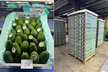
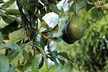
Mangoes are by far the most popular with our customers. We offer them in season year-round and deliver them on average three to five days after harvest. If you consider avocado as a fruit (botanically, it is a fruit of the avocado tree), it is one of the most popular, along with papaya and cherimoya.
Who are among your buyers?
We don't sell to supermarkets. We have about 20 retail customers, so that's our main focus right now. Our focus is on expanding our online store, through which we deliver our fruit directly to the end consumer. Our customers are fruit lovers, particularly exotic fruits. Most of them are also health-conscious and have opted for a diet as natural as possible, with lots of unprocessed food as nature offers. They are also people who care about the environment, the welfare of living species, and direct connections with growers.
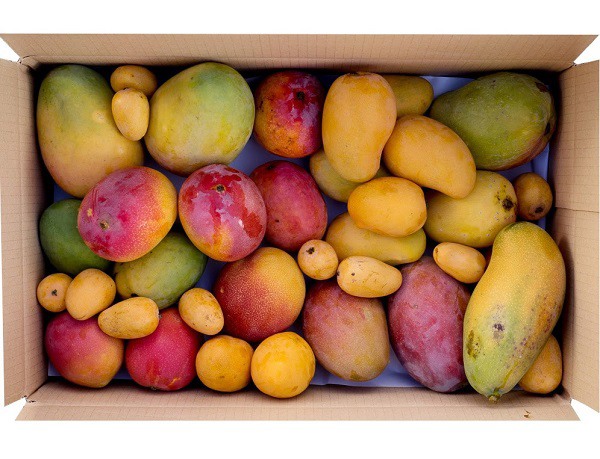
Photo: Jurassic Fruit
What kind of packaging is used for the products?
We ship our fruits in cardboard boxes and they are padded with paper. Our nuts, dates and dried fruits are packaged in our 100% biodegradable organic packaging. Our goal is to be completely plastic free in a few years. We still have some delicate fresh products like sliced ripe jackfruits or durian (fragrant fruits) that we need to vacuum pack and for which we do not yet have a plastic-free solution.
How has the sale of kiwifruit been going or is going?
Kiwis are not an overly popular product with our customers. The most common variety of green kiwifruit, Hayward, usually comes from New Zealand when it is not in season in Europe (i.e. New Zealand kiwifruit from June to November). At Jurassic Fruit, we prefer to wait until the European season for green kiwifruit begins, before offering them again.
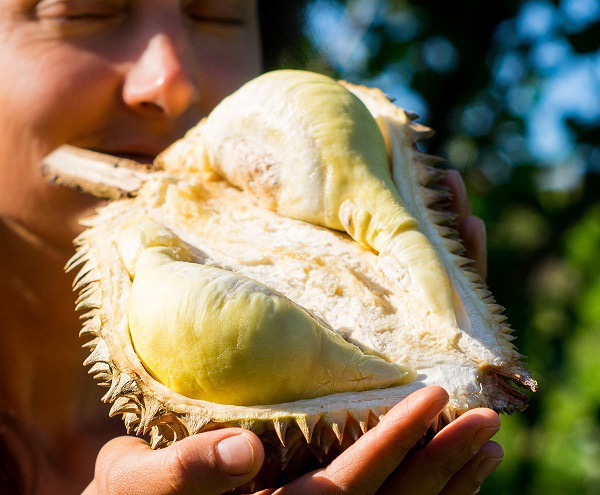
Photo: Jurassic Fruit
Where does the fruit come from; who are the growers?
The fruit comes from many countries: Thailand, Peru, Mexico, Indonesia, Cameroon or Spain, to name a few. We work with small growers (or collectives of small growers as in Thailand) who work in an environmentally friendly way and do not use synthetic chemicals.
Have there been Covid- or weather-related supply shortages or other problems?
The health crisis did indeed cause significant supply disruptions in the first few weeks, especially from Asia, where many flights were canceled. The situation has since recovered, but the cost of transporting fruit to Europe has increased considerably. As for weather problems, they can indeed have a significant impact. But it is not so much the transport that is disrupted, but the crops that are affected and sometimes afterwards. For example, June was very hot in Andalusia this year, bringing the mango season forward and shortening the avocado season.

Photo: Jurassic Fruit
What does Jurassic Fruit emphasize in its products?
The quality of the cultivation and the quality of the taste are paramount in the selection of the offer. It is important that the fruits are grown in the most natural conditions possible, i.e. organic if possible, or untreated. We also prefer the planting of polycultures, so that problems rarely arise because the fields do not consist of only one species. We also prefer to manage older trees because they have a larger root system, especially for avocados, and therefore require much less irrigation than industrial plantings. Taste quality is also an essential point, and to achieve it, it is important to choose the right varieties and the right soil, but also to take great care to harvest at the right time of ripeness.
For more information:  Geoffrey Mazuy
Coconnect Solutions GmbH
Lützowstr. 28 a
45141 Essen
Deutschland
Tel: +49 201 75 89 96 50
Email: [email protected]
Internet: www.jurassicfruit.com