Due to Corona, 2020 was a challenging year for all cultivation areas of Fairfruit, which specialises in stone fruit. "Official requirements had to be met in all areas, whether in production, in the transport of personnel or in the packing stations - which caused additional organisational and cost efforts," Pascal Felley from Fair Fruit says.
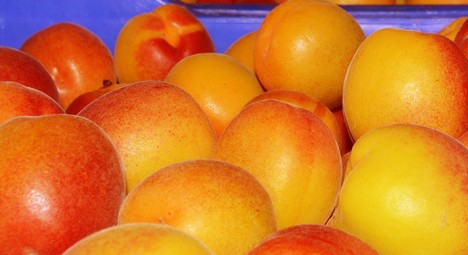
Fresh apricots: Managing director and company founder Pascal Felley grew up in the Swiss apricot stronghold of Valais and is firmly anchored in the stone fruit industry.
Not just Corona, but the weather caprices European production areas has also caused problems for the stone fruit industry. "In some cases there was an increased demand that we could not always cover with regional production or goods from the southern production areas. In turn, we then had to discuss and communicate these events accordingly with our food retail customers in advance."
Continuous expansion of production capacity
Stone fruits grown regionally or in neighbouring countries (such as Hungary) are increasingly in demand in German-speaking countries. Plums are traditionally available in Germany and the variety selection as well as the cultivation area is being expanded step by step. The same applies to German apricots, explains Felley.
"In 2016, we sent the first varieties to three trial stations, and two years later the first plantings took place. In 2020, we also set up a company in Germany to be closer to the market and production. This autumn, the next areas will be prepared and planted."
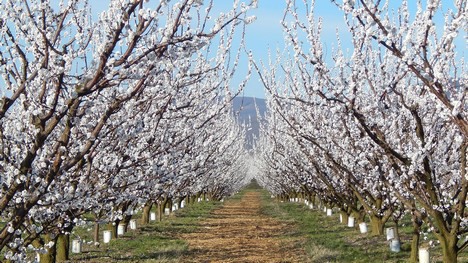
Flowering in Hungary
In addition, they are involved in a cultivation trial in Randwijk, the Netherlands, where stone fruit is grown in a foil tunnel due to the weather. "The first results already show which varieties could work under certain circumstances. However, we will continue to support the whole thing in the future, so that trees are currently being delivered there again. There are already initial enquiries from Dutch growers who want to get into stone fruit production," Felley says.
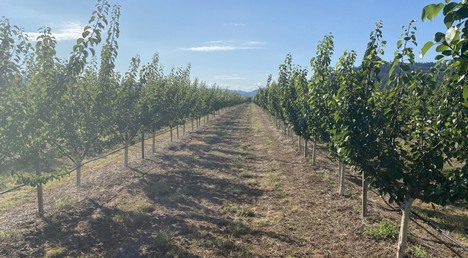
The Fairfruit Group has its own production facilities in Portugal, Spain, Germany (pictured here), Austria and Hungary.
Development of variety diversity
Plums, apricots, peaches and the like have developed over the years from a classic summer fruit into a year-round product. In the meantime, the stone fruit selection has also expanded considerably. Felley: "Flat peaches and nectarines are in greater demand every year. Retail buyers even do not rule out that flat peaches will partly replace the tried and tested round fruit in the long run. The availability of flat peaches is now good, and there is also a lot of interest in nectarines."
Nevertheless, there are considerable differences between the individual sales markets and countries. "One example is the red-fleshed apricot varieties, which are well received in certain European markets, but are hardly in demand in other countries. In addition, the trade demands tasty, ripe stone fruits. Producers have to be prepared for this in their choice of varieties and during the cultivation process in order to meet the requirements and processing."
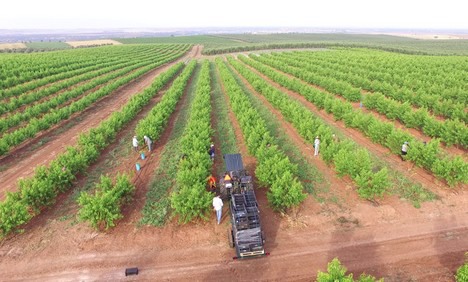
Nectarine cultivation in Portugal
Full utilisation of production
Due to the aforementioned increase in consumption, Fair Fruit would also like to further expand its southern European production. In Beja, Portugal, a new packing house with an area of 8000m² will be put into operation in April of this year in order to be able to sort and pack the yields there. In a second step, a processing plant will be added, so that all yields can be processed accordingly (seeded, sliced, diced, dried, frozen, etc.).
"Also, in April we will start up a packing station in Spain. This packing station is located in the middle of an apricot plant, which is why we are able to cool down and process the fruit quickly. In Hungary, we are also working on an expansion of our existing packing station at Lake Balaton."
For more information:
Fairfruit Group  Pascal Felley
+41 76 440 10 74
[email protected]
www.fairfruit.com