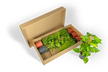
At Interpack 2026, Poly-clip System will highlight solutions that effectively combine efficiency, scalability, and sustainability. Under the motto "The packaging company with less packaging," the South Hesse-based company demonstrates how clip-based packaging systems significantly reduce material usage while enabling cost-effective, stable processes. "A particular focus is on applications where the packaging component of the overall product can be deliberately minimized," says Dr. Alexander Giehl, CEO of Poly-clip System.
Often, clip solutions require only 1–2 per cent packaging material, thereby making a demonstrably measurable contribution to resource conservation—especially when compared to more volume- and material-intensive packaging concepts. "Our target groups are correspondingly broad, ranging from industrial food producers to the fresh produce segment and industrial applications. We are seeing growing demand, particularly in the fruit and vegetable sector, for packaging solutions that combine sustainability, product protection, and flexibility while also being adaptable to varying production volumes and levels of automation," Giehl continues.
Interpack as a key industry gathering
For the Poly-clip System team, Interpack ranks among the world's most important leading trade fairs for the packaging industry. "It is far more than just a technology exhibition—it serves as an international meeting place for strategic exchange across the entire value chain and thus also acts as a catalyst for investment decisions. Unlike more specialized trade fairs, Interpack stands out for its exceptional thematic breadth. A wide variety of industries come together here—from food and fresh produce to non-food and industrial applications. This diversity gives us the opportunity to think about technologies across sectors and tap into new fields of application for existing solutions."
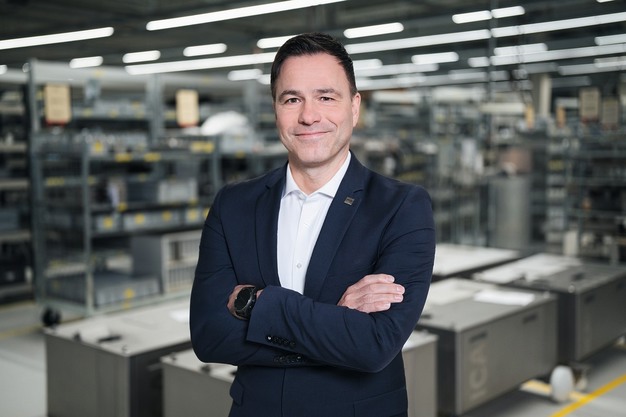 © CBC Communication/PolyclipIn recent years, Interpack has evolved significantly. Topics such as sustainability, the circular economy, and automation are now clearly in focus and are increasingly shaping the innovation agenda of the entire sector, according to Dr. Alexander Giehl (pictured).
Sustainability, product protection, and cost-effectiveness
The European Packaging and Packaging Waste Regulation (PPWR) is currently on everyone's lips and, according to Poly-clip System's management, represents an important step toward a more circular packaging economy. The goal is to reduce packaging waste, improve recyclability, and create uniform framework conditions across Europe. "The proposed requirements for material reduction and recyclability, as well as potential restrictions on certain single-use packaging, are particularly relevant for the fruit and vegetable industry. At the same time, we are currently still in a phase of concretization and implementation, in which many companies are critically reviewing their existing packaging concepts and evaluating alternative solutions," explains the CEO.
From the Poly-clip System's perspective, the central challenge lies in balancing sustainability, product protection, and cost-effectiveness. Especially for fresh products, packaging plays a decisive role in shelf life, product safety, and logistics. "We therefore view the PPWR not solely as a regulatory obligation but also as a catalyst for innovation. It accelerates the development of material-efficient packaging solutions that can support the regulation's key objectives—and this is precisely where we see a major strength of clip-based packaging systems," says Giehl.
Energy consumption, process stability, and output performance
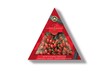
Interest in the net-pak® system, which took center stage at this year's Fruit Logistica, is developing very positively. Following the world's leading trade fair, there is a growing demand for holistic packaging solutions that replace individual components and optimize the entire packaging process. "net-pak is based on a fully coordinated system consisting of a net, clip, and label. This system utilizes, among other things, cellulose nets, paper labels, and—depending on the application and regional infrastructure—biodegradable clips. In addition to the sustainability aspect, production efficiency plays a central role: The cold-formed clip eliminates the need for an energy-intensive welding process, which has a positive impact on energy consumption, process stability, and output performance."
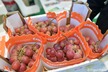
Against the backdrop of the PPWR, Giehl sees growing interest, particularly in traditional net products such as onions, potatoes, citrus fruits, and avocados. "At the same time, we recognize potential for new product categories where other packaging forms have not been used until now. In the long term, we expect demand for integrated, system-oriented packaging solutions to continue to grow—especially where sustainability and cost-effectiveness are considered together."
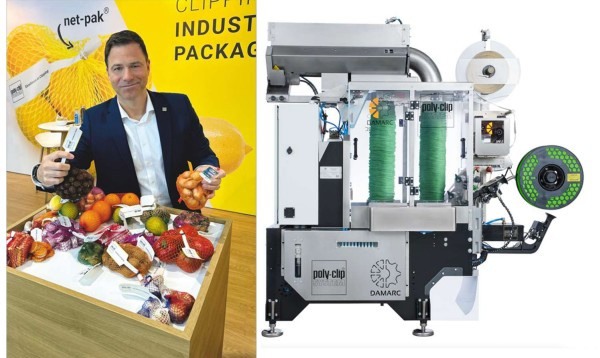 © CBC Communication/Polyclip
Dr. Alexander Giehl (left) presented the new Somi Net Clipper, among other innovations, at Fruit Logistica.
Product packaging as an integrated system
Especially in the fresh produce segment, it is becoming clear that packaging must be understood even more strongly as an integrated system in the future, with the goal of simultaneously optimizing product protection, logistics, automation, and resource use. According to Giehl, no single material will prevail, but rather different solutions depending on the product, market requirements, and infrastructure.
A recent holistic sustainability assessment of final packaging, conducted by the independent institute Circular Analytics (Vienna) on behalf of Poly-clip System, underscores the potential of clip-based packaging systems across various applications. The study compares different packaging concepts in realistic application scenarios and shows that—depending on the respective comparison system—significant savings potential can be achieved in both material use and CO₂ emissions. In particularly material-intensive comparison applications reductions of up to 90 per cent were determined, as the analysis shows.
In addition to environmental requirements, economic pressure continues to grow. "Rising energy, raw material, and labor costs are increasing the demand for automated, stable, and efficient packaging systems. As a technology provider, we see our role as bringing these requirements together: developing scalable solutions that meet varying market conditions and are both economically and environmentally sustainable in the long term," he concludes.
Visit the company at Interpack Düsseldorf: Hall 11 - E19.
For more information:
Dr. Alexander Giehl
Poly-clip System GmbH & Co. KG
Niedeckerstraße 1
65795 Hattersheim a. M.
Phone: +49 6190 8886-0
[email protected]
www.polyclip.de