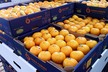
Inside a packing facility in Egypt's citrus production region, Valencia oranges are sorted, checked, and packed for export. The site is operated by Magrabi Agriculture (MAFA), an exporter with integrated orchards, warehouses, and packing lines.
China has expanded its zero-tariff policy to include 53 African countries with diplomatic ties, a framework running through April 2028. The expansion adds 20 countries, including Egypt and South Africa, following the introduction of zero-tariff treatment on May 1, 2026.
"This decision will certainly help Egyptian exports become more competitive inside the Chinese market," said Ibrahim El-Banna, export manager at MAFA.
Egypt exports around 2 million tons of citrus annually. Access to China requires compliance with phytosanitary protocols, including farm and facility accreditation and cold treatment during transit. Fruit must be held below 1.6 degrees Celsius for 16 to 18 consecutive days to manage fruit fly risk.
"Those with higher quality and stronger capabilities will be able to achieve the required gains and the required connection with the Chinese market," said Ahmed Fikry, a citrus packhouse assistant manager at MAFA.
MAFA processes between 70,000 and 90,000 tons of citrus per year, with around 70 per cent exported. China already receives oranges, along with smaller volumes of lemons, grapefruit, and mandarins.
The policy marks the first time a major economy has introduced full zero-tariff treatment for African countries with diplomatic ties. China had already removed tariffs for 33 least-developed countries in December 2024, with the current expansion covering additional markets such as Egypt, Nigeria, and South Africa.
South African apples were among the first shipments under the new terms. A 24-ton consignment cleared customs in Shenzhen, with tariffs reduced from 10 per cent to zero. The shipment is now distributed across retail and wholesale markets.
In Shanghai, a 516-ton shipment of Egyptian oranges also entered under the scheme, benefiting from a tariff exemption of 320,000 yuan (US$46,900). Additional shipments included 24 tons of Kenyan avocados, with tariff exemptions of 26,000 yuan (US$3,800).
China's commerce ministry indicated that the policy will support competitiveness for African agricultural products, including citrus from Egypt and South Africa, avocados from Kenya, and products such as pineapples and chili peppers.
"The expansion of the zero-tariff policy will significantly reduce import costs for enterprises," said Zhang Xin, chairman of Hunan Express Wisdom Information Technology Co., Ltd., who added that final prices of imported products could drop by around 15 per cent to 20 per cent.
Exporters indicate that compliance requirements for the Chinese market are influencing production, packing, and cold chain practices, while the policy is expected to facilitate trade flows between China and African suppliers.
Sources: Xinhua / Dtic / The Tanzania Times