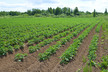
Potato seed production is gaining attention in China as a factor in agricultural output and food supply. In Qinghai, located on the Qinghai Xizang Plateau, natural conditions support seed potato production, including high altitude, solar radiation, low temperatures, and low levels of soil-borne diseases.
The region is positioned as a production zone for seed potatoes supplying winter cropping areas in southern China. However, production volumes remain below national demand, with increasing reliance on disease-free and high-yielding seed varieties.
Qinghai has developed a four-tier seed propagation system covering provincial, county, township, and village levels. Constraints remain, including a limited range of varieties and reliance on conventional breeding methods. While varieties such as Qingshu 9 are in use, there is a shortage of specialised varieties for fresh consumption, processing, and other segments. The use of molecular breeding and genomic selection remains limited.
Infrastructure also presents challenges. Many facilities were built before the 14th Five-Year Plan period and are facing equipment deterioration and capacity limits. This contributes to higher production costs and post-harvest losses.
Environmental factors are central to production in Qinghai, which includes areas such as the Three River Source and Qinghai Lake. The region's ecological conditions are being considered in development planning, with a focus on integrating environmental protection with production systems.
Future development includes the use of green electricity resources for controlled environment systems such as greenhouses, plant factories, and cold chain storage. Digital tools are also being considered to support breeding, water and fertiliser management, and traceability across the supply chain.
Low-carbon farming practices, including conservation tillage and ecological recycling systems, are being applied to support soil and water management.
Policy planning and research support are expected to influence further development. As China approaches the 2026 to 2030 planning period, seed supply remains a focus, with Qinghai positioned as a production area within the national seed system.
Source: potatoPRO