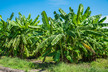
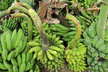
Embrapa Meio-Norte, in partnership with the Government of the State of Piauí, has launched a technical guide focused on irrigated banana production. The publication provides guidelines for technicians and growers, with a focus on productivity, fruit quality, and returns.
The guide is available for free download and forms part of a technology transfer initiative targeting irrigated fruit production in the semi-arid Northeast region.
Brazil ranks as the world's largest consumer of bananas and the fourth largest producer, with production of around 6.85 million tons across approximately 458,000 hectares. In the Northeast, Bahia and Pernambuco are key producing states.
The guide includes recommendations on cultivar selection, seedling production, soil preparation, planting practices, irrigation and fertigation, pest and disease control, and post-harvest handling. It also covers transport and value addition within the supply chain.
Cultivars outlined include Prata, Pacovan, Prata Anã, Maçã, Terra, and D'Angola for the domestic market, and Nanica, Nanicão, Williams, and Grand Naine for export. Embrapa also lists Dwarf, Nanicão, FHIA 18, BRS Platinum, BRS Conquista, BRS Vitória, and Banana Terra BRS PL03 for different production systems.
The publication highlights irrigation management, use of adapted cultivars, and application of production practices as factors influencing output in regions with irregular rainfall. It also notes that the adoption of these practices contributes to employment and income in fruit production areas.
The guide brings together technical recommendations covering the full production cycle, from planting to marketing, within irrigated banana systems.
Source: Agribusiness Portal / Abrafrutas