For industry players across the value chain in the fruit and vegetable sector, it is becoming increasingly difficult to find qualified, well-trained professionals. "Our sector is very specialized and demanding, if only because of the perishable goods we work with every day and the fast pace of the sector," emphasizes Thomas Dickes, buyer and training manager at the Rosenbaum Group in Cologne. These challenges in recruiting staff are felt at every level of the company, whether in the warehouse or in the administrative department, adds Dickes.
Challenges are particularly evident in recruiting warehouse staff, the most labor-intensive area of the established company. "Finding order pickers for the night shift is no problem at all, primarily thanks to the attractive night and holiday pay. Recruiting warehouse specialists for the day shift, however, is significantly more difficult," HR representative Joelina Peters sums up.
In addition to traditional recruitment, the Rosenbaum Group has been increasingly focusing on promoting young talent for several years. Both social media and regional career fairs play an important role in this effort. "We've been exhibiting at the IHK career fairs for two years now and are taking it a step further by actively visiting schools," reports Peters. The goal is to contact potential apprentices early on. "Those who are late often miss out on the best talent. In our view, the days when 30 to 40 applicants competed for a single apprenticeship position are a thing of the past."
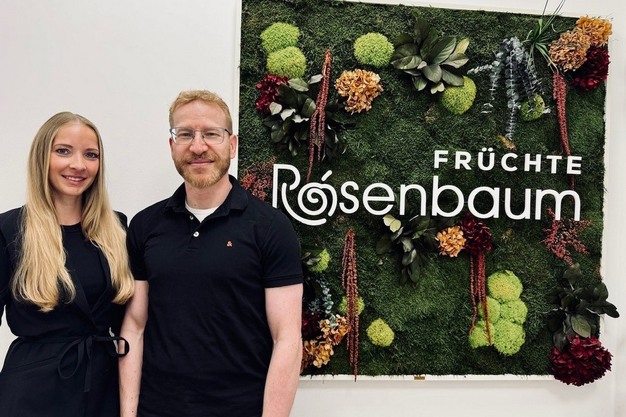 © RosenbaumgruppeJoelina Peters and Thomas Dickes. Peters has been a human resources officer at the Rosenbaum Group since the summer of 2025.
Non-binding, informal conversations
The measures taken so far are already showing promising results and creating benefits for both sides, the duo explains. "Unlike in the past, when applicants first had to submit cover letters, resumes, and transcripts, today we engage with them directly and straightforwardly," they explain. These trade show visits eliminate a major hurdle—instead, they lead to brief, informal initial conversations on equal footing.
Another project is already in the planning stages: the development of an app designed to connect apprenticeship seekers with companies. Here, too, the Rosenbaum Group expressed interest early on and is in discussions with a university. "We are fundamentally open to all channels," emphasize the company representatives.
New applicants first go through a two-day, intensive orientation program during which they briefly get to know all departments of the company. Only then is the final decision made—an approach that has a positive impact on efficiency and success rates. The commercial apprenticeship typically lasts three years but can be shortened to two and a half years. In total, the apprentices get to know eleven departments, including eight internal areas such as purchasing and sales, warehousing, and accounting.
For the external component, the company collaborates with established partners, including producers, freight forwarders, and food retail partners. The goal is for apprentices to have familiarized themselves with the entire value chain—from the field to the point of sale—by the end of their apprenticeship. The Rosenbaum Group currently employs four apprentices in the commercial sector. In warehouse logistics, however, the apprentices undergo a more compact, practice-oriented version of the apprenticeship program.
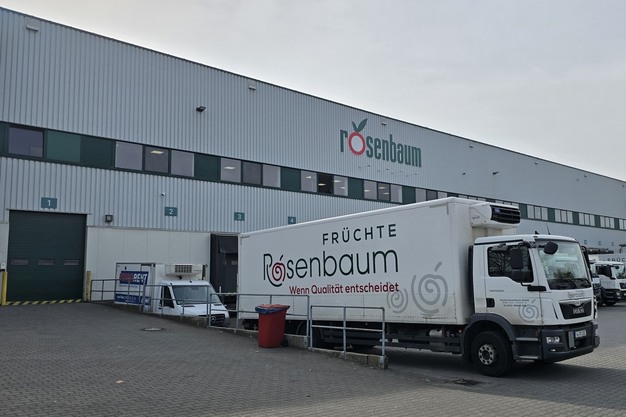 © Hugo Huijbers | FreshPlaza.comFrüchte Rosenbaum GmbH is part of the Rosenbaum Group and is based in the Eifeltor Business Park. Thanks to the establishment of Rosenbaum Frische Logistik GmbH, efficiency and effectiveness at the logistics level have been increased.
Forward-looking investment instead of a cost factor
In times of exponential cost increases, every investment is considered and evaluated more carefully than ever before. "However, we are firmly convinced that every euro we invest in apprenticeships will ultimately pay for itself two or three times over. We also do not view the apprenticeship as a cost factor but rather as an investment in the future. This is also reflected in day-to-day practice: typically, apprentices take on their first tasks after only a short time. By the second year of their apprenticeship at the latest, they are working independently in specific areas. It is important to us that we can hire them after their apprenticeship or place them in the sector without any problems. In the end, we all benefit when young talent remains in the sector," they conclude.
For more information:
Joelina Peters and Thomas Dickes
Rosenbaumgruppe
Am Eifeltor 16
D-50997 Cologne
Phone: +49-221-988 888 72
[email protected]
www.rosenbaumgruppe.eu
www.fruechte-rosenbaum.de