Pineapple sales in Spain and other European countries are currently marked by greater pressure on costs, logistical uncertainty, and a demand that remains firm, but is also more price-sensitive.
"In the first quarter of 2026, volumes have perhaps fallen a little short, as is usually the case in that period, but in general terms, supply remains within the levels expected for the season. Still, the global situation has caused some uncertainty, mainly due to climatic and logistical factors."
At the moment, the company continues to rely exclusively on Costa Rica's supply. "It is the country that guarantees us the quality standards demanded by our clients," says Antón. Prices, however, continue to be high due to various factors.
"Costa Rican pineapple prices remain high after annual programs have closed, with increases of more than 20%. The higher production costs, together with the global economic context, have been a determining factor," says Antón. "Added to this is the increase in logistical costs, aggravated by geopolitical tensions such as the war in Iran, which has caused fuel to become more expensive.
"These increases in prices and logistical costs have led to added pressure on sales, although we have tried to adapt as best we could, seeking alternative solutions to remain competitive and meet the demand," he says.
Despite all this, consumption is holding up. "Demand remains strong both domestically and in the export market, although price increases are having an impact on purchasing volumes. International markets continue to show interest in pineapples, especially in Europe and the United States; however, the high prices could lead some consumers to look for alternatives," says Patricia Antón.
On a commercial level, the analysis shows that prices and quality are increasingly relevant for consumers. "When it comes to prices, competition is strong, but the quality of Costa Rican pineapple is still appreciated, and demand remains stable. However, the war in Iran and other external factors are causing instability in prices and logistics, and that could lead to uncertainty in the coming months," says Antón.
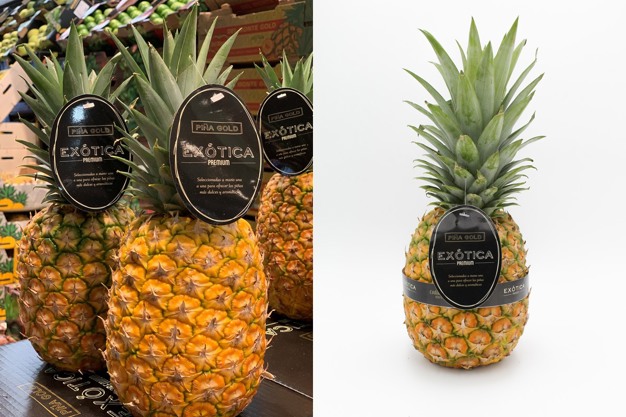
Competition is fierce, but differentiation remains key. Thus, Cultivar has launched new products, such as air freight pineapples under the brand name Exótica, which, according to Patricia Antón, allow a better presentation and bring added freshness. "We are strongly focused on the development of the Exotica-branded Gold pineapples. We have carried out a rigorous selection of suppliers, collaborating with the main specialist producers of Gold pineapple in Costa Rica. This allows us to guarantee consistent quality and a differentiated product in the market."
Cultivar closed the last financial year with 8 million kilos sold. For the current season, forecasts point to moderate growth, reaching up to 8.5 million kilos, in line with a demand that is cautiously rising.
Looking ahead, there are still significant challenges. "Logistics costs and fuel prices are increasing due to external factors, such as the war in Iran, and this remains a major challenge. Moreover, there is uncertainty in international demand, as high prices may cause some markets to look for alternatives, which could have an impact on sales volumes.
The growing competition in the market is forcing us to offer excellent value for money in order to remain competitive," says Patricia Antón. "We work daily to tackle these challenges by finding more efficient logistics solutions and constantly improving product quality so that we can continue offering value to our customers."
 For more information:
Patricia Antón
Cultivate
Longitudinal 9 n.º 30
08040 Barcelona, Spain
Tel.: +34 911 44 10 80
[email protected]
www.cultivar.net