After three good celeriac years, that crop's acreage grew by about 10% in the Netherlands and Europe in 2025. Despite a record dry growing season, irrigation and rain at crucial moments ensured sufficient growth and good yields. As a result, stored celeriac volumes are unusually high.
According to Kees Vrolijk, chairperson of the Dutch celeriac growers association, and a grower himself, this explains the market slump. "In late January, fresh market prices were around €0.06, while the cost price was about €0.20. Supply has consistently exceeded demand, and as long as that continues, there won't be much movement in the market," he says.
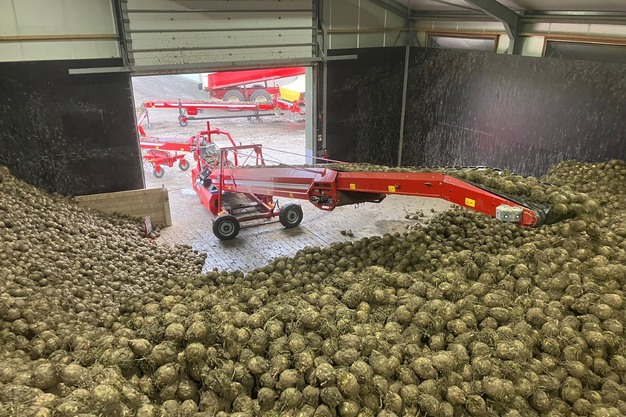 © Vrolijk Landbouw
Kees Vrolijk reports that the 2025 celeriac harvest was bountiful
On the demand side, the situation is fairly normal, says Kees. Most Dutch celeriac is exported, with January and February traditionally weaker because local Eastern European production hits the market. "We're selling the usual volumes, but to reach standard sales volumes, we'll have to shift up a gear in March and another in April."
Things can always change
Current prices are very different from those of last season. The 2024 harvest began with high prices that rose to around €0.60/kg. That, Kees admits, has affected the current market. "High prices mean fewer celeriac exports, especially to Eastern Europe," he explains.
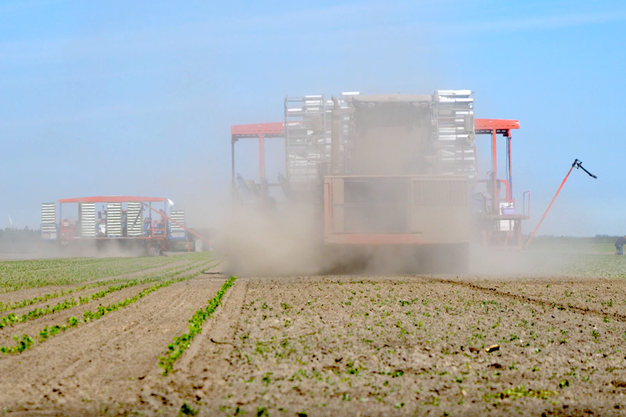 © Vrolijk Landbouw
In 2025, about 10 percent more celeriac was planted in Europe
"That led to an unusual situation where both old stock from 2024 and the new harvest from 2025 were on the market." That could, however, change. It was cold in December, so the last of Europe's celeriac has been harvested, meaning no new supply is coming in. "Celeriac is best harvested at low temperatures when growth, fungi, and bacteria have slowed down," says Kees.
"Due to the warm fall, that didn't always happen. That could lead to quality issues and a shorter storage life, which might put pressure on the market until April," says Vrolijk, "It could perhaps provide some breathing room for the rest of the storage season. The cards seem to have been dealt, but the game's not over yet."
Less acreage in 2026?
These low prices hit growers hard, Kees knows. "A year like this is part of the cycle, but rarely do all crops face poor pricing at once," he concludes. Kees thinks most of the acreage expansion of 2025 will disappear again in 2026.
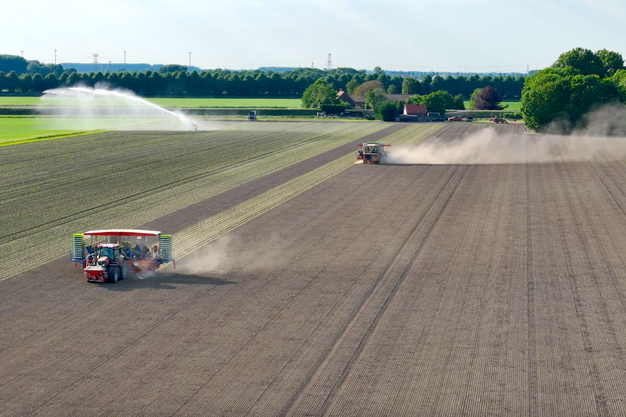 © Vrolijk Landbouw
Despite the dry growing season of 2025, Kees Vrolijk notes that the harvest was very good
Seed stock, planting, and storage costs make celeriac quite an expensive crop. That could be a reason to reduce acreage, particularly in Eastern Europe. Still, it is hard to say how European acreage will develop, as many crops currently struggle with low prices. Geopolitical developments and rising energy prices also influence the cost of vegetables. (MW)
For more information:
Vrolijk Landbouw
Tel: 06 - 51 83 40 62
[email protected]
www.vrolijklandbouw.nl