The fresh produce market in Saudi Arabia and the wider Gulf region continues to face notable uncertainty due to the ongoing regional conflict. The instability has caused major disruptions to global shipping routes, with many vessels being rerouted and others still lacking clarity on their final destinations. Despite these challenges, Saudi Arabia currently maintains sufficient stock levels to stabilize the market in the short term, even if operations remain far from normal, and the overall supply chain remains under pressure. This is according to Kashif Shahzad, Head of Procurement at the Saudi company Global Star.
Shahzad notes that the timing of the war exacerbates its cost to the fresh produce industry. He explains: "War is painful in any circumstance, but its impact becomes even more distressing during the holy month of Ramadan, a period in which people traditionally focus on worship, charity, and family gatherings. Ramadan usually brings a peak in fresh fruit movement, driven by increased household consumption and retail demand. This year, however, the uncertainty surrounding supply routes has pushed the prices of many items to unusually high levels. Shortly afterward, the market experienced an unexpected decline in movement, creating further volatility and confusion for traders and importers."
Sharp price hikes were recorded immediately after the war broke out, according to Shahzad. "The sharpest immediate impact has been felt in many items supplied from China, Pakistan, India, Australia, Thailand, and South Africa. South Africa, in particular, plays a critical role in supplying the Gulf with fresh produce year-round, especially pome fruits, stone fruits, grapes, and citrus. It is one of the few origins that consistently balances market demand with stable and predictable supply. Any disruption in South African shipments, therefore, has a direct effect on pricing, availability, and market stability," he adds.
Shipping lines remain the backbone of the fresh produce supply chain. Many have temporarily halted services to Middle Eastern destinations, while others have added war-risk surcharges, increasing the cost of freight. These additional charges are expected to influence market prices further," he continues.
Importers of fresh produce, such as Global Star, quickly adapted their logistics and maintained supply through alternative channels to prevent shortages. Shahzad explains, "At present, Saudi Arabia can still receive shipments smoothly through Jeddah Islamic Port and King Abdullah Port. In the wider Gulf region, alternative workable entry points include Sohar Port in Oman and Khorfakkan Port in the UAE. If the conflict persists, temporary shortages cannot be ruled out. Nevertheless, we remain optimistic that alternative logistics solutions can be identified and deployed to protect supply continuity."
 © Global Star
In this context, "Saudi Arabia is emerging as the main alternative logistics corridor in the Gulf during wartime and a lifeline for other GCC countries," according to Shahzad. He adds, "Saudi Arabia's Red Sea ports remain fully operational, and its road network allows fast, reliable deliveries to Qatar, Bahrain, Kuwait, and Oman, especially now that customs procedures for Qatar‑bound trucks have been eased. This shift reduces dependence on UAE ports and positions the Kingdom as the region's stabilizing gateway for food and fresh produce."
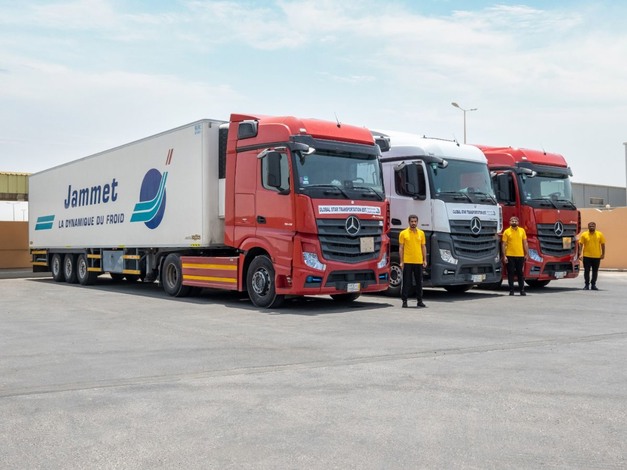
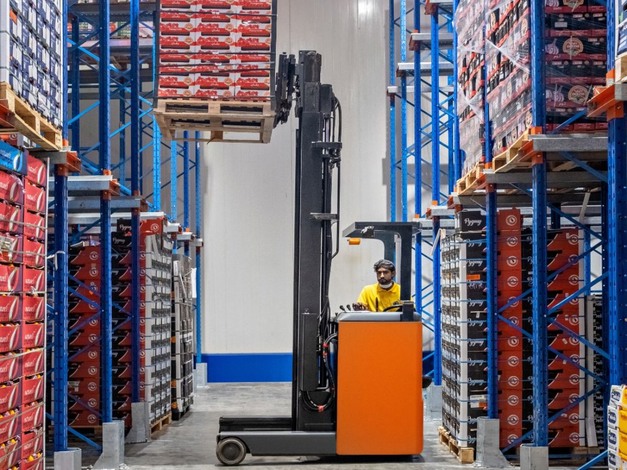
For Global Star, this translates into a stronger focus on routing cargo through Saudi ports, expanding overland reefer trucking to neighboring GCC markets, and using Saudi Arabia as a consolidation and redistribution hub to ensure uninterrupted supply even when maritime routes are disrupted. We have a strong presence in Saudi Arabia and can handle the whole supply chain process independently," Shahzad concludes.
For more information:
Kashif Shahzad
Global Star
Tel: +966 54 788 8332
Email: [email protected]
www.globalstar-group.com