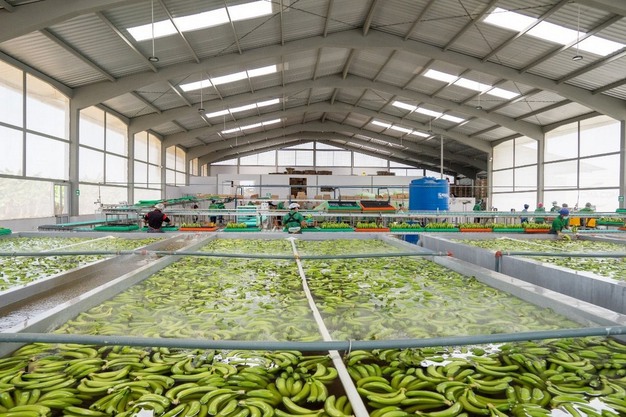
The Ecuadorian banana industry is facing a challenging situation due to the conflict in the Middle East, which is already impacting export logistics to that region. "We have been monitoring the situation since day one of the conflict," stated Richard Salazar, executive director of Acorbanec.
 © ACORBANEC
In January, Ecuador exported 36.6 million boxes of bananas, marking a 9.66% increase from the same month last year. The primary markets remained unchanged: the European Union led with a 32.61% market share (+16%), Russia at 22% (+25%), and the United States at 14.7% (+15%).
11.37% of all exports went to the Middle East, totaling about 4.15 million boxes, with nearly 10% growth. However, the current situation would directly impact around 2.3 million boxes of this total.
"This will affect 2,374,000 boxes," Salazar warned.
 © ACORBANEC
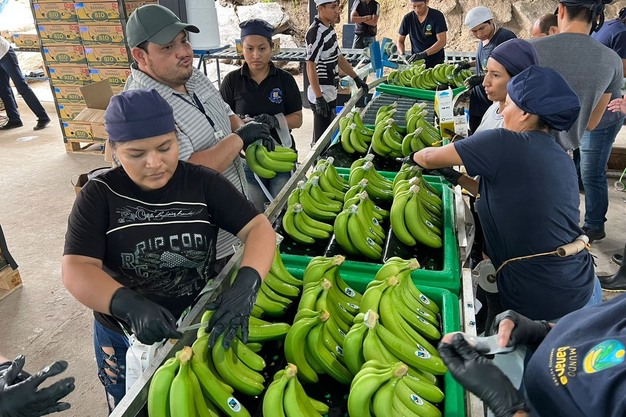
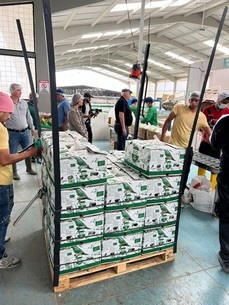
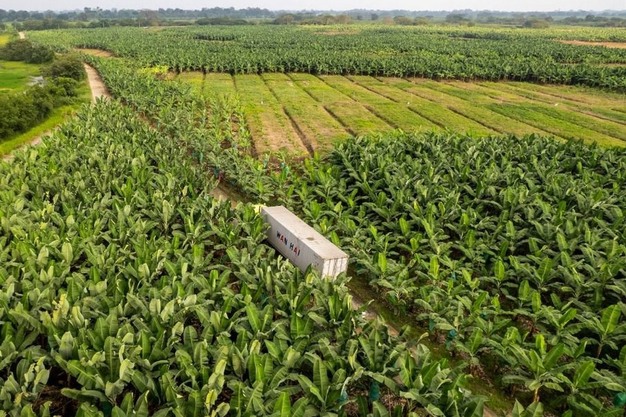
The situation deteriorated after the major international shipping lines announced they would halt cargo transport to several destinations within the conflict zone. As a result, roughly 500 containers per week will be blocked, amounting to over 2 million boxes each month.
In economic terms, the impact could amount to about $ 50 million a month for the export sector, according to Acorbanec's estimates.
Salazar stressed that the issue isn't caused by a supply-and-demand imbalance. "It is not a problem of supply and demand, because the demand exists and so does the supply. The issue is a logistical problem," he said.
 © ACORBANECSeveral ships have either suspended calls in the region or altered their routes, leading to reduced availability and longer transit times. Moreover, the conflict affects an area through which about 28% of the world's oil exports pass, impacting crude oil prices and increasing maritime freight and insurance costs.
Given this situation, exporters are attempting to redirect fruit to alternative markets like the European Union, the United States, and Russia. Nevertheless, their options are constrained since most volumes are already contracted, and there is a danger of oversaturating these markets.
"We are trying to fulfill the contracts, and if we can't send to these destinations, we will try to send to others so that if there is a fall in prices, it will be much smaller," he said.
 © ACORBANEC
In the short term, the sector is considering logistical options, including unloading fruit at strategic ports and transporting it by land to neighboring countries. The conflict's evolution will be decisive. "We have to monitor the situation and evaluate our options on a daily basis," Salazar concluded.
Currently, the panorama highlights a worldwide logistical challenge impacting not only Ecuadorian bananas but also all exports to a region heavily reliant on food imports.
 For more information:
Richard Salazar Veloz
Acorbanec
Ecuador
Tel: +593 98 985 7025
Email: [email protected]
www.acorbanec.com