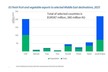
The South African agricultural sector is navigating a combination of global geopolitical developments and domestic fiscal adjustments. As of 4 March 2026, the industry is moving from a period of relative cost stability into a more challenging operating environment. Export volumes for high-value crops remain active, while the economic environment has been affected by conflict in the Middle East and higher domestic fuel costs.
For fruit exporters, one of the immediate challenges is the introduction of what is being referred to as a "war tax." Following the escalation of hostilities in the Persian Gulf and the closure of the Strait of Hormuz, through which 20% of the world's oil and fertilizer volumes pass, shipping companies have implemented Emergency Conflict Surcharges.
For South African refrigerated containers, these surcharges have reached up to US$4,000 (R64,000) per container. This equates to an additional cost of roughly R40 per carton. For citrus and table grape farmers, the surcharge could reduce farm-gate revenue by up to 20%.
Wandile Sihlobo, Chief Economist at Agbiz, said that while the sector continues to move large volumes, geopolitical factors are becoming an operational consideration. "The geopolitics of trade is now a permanent line item in the balance sheet."
Export logistics are also adjusting. Exporters are redirecting shipments away from the Port of Cape Town toward Eastern Cape ports such as Gqeberha and Ngqura.
By shifting shipments to the Eastern Cape, exporters are attempting to avoid delays linked to wind conditions in Table Bay and secure shipping schedules for exports to Asia. South Africa recently signed an agreement providing 0% tariff access to the Chinese market from May 1, 2026. However, trucking fruit from Western Cape farms to Eastern Cape ports has increased logistics costs.
Domestic producers are also facing higher energy costs. Following the 2026 State of the Nation Address, adjustments to the fuel levy, diesel increased by 65 cents per litre.
Data from the Central Energy Fund indicates that a 17% increase in Brent crude oil, which reached US$83 per barrel, could result in a diesel price increase of R3.30 per litre on 1 April. Gavin Kelly, CEO of the Road Freight Association, said the impact could affect logistics costs and food prices. "The consumer will inevitably feel this at the till as food inflation begins to climb."
Financial analysts indicate that global demand for South African produce remains stable, although the rand, trading near R16.00 per US$, is increasing the cost of imported inputs such as fertilizer.
JPMorgan Chase has indicated that continued disruption in the Strait of Hormuz could push oil prices toward US$120 per barrel, which could lead to interest rate adjustments as authorities respond to inflation pressures.
For fruit and grain producers, operational efficiency remains a focus for the remainder of 2026 as exporters adjust logistics routes and manage higher shipping and fuel costs.
Source: Agri News