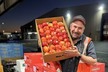
South Korea's strawberry exports reached US$72.01 million in 2025, the highest level on record, according to Korea Agro-Fisheries & Food Trade Corporation. Exports totaled US$4.4 million in 2005, representing a sixteen-fold increase over two decades. Thailand, Singapore, and Hong Kong accounted for the largest share of shipments.
Strawberries handled by NongHyup accounted for about 70 per cent of total exports. The agricultural group reported US$49.04 million in overseas sales in 2025, up 7.8 per cent year on year.
"Strawberries grown in hot and humid countries lack sweetness and tend to taste more sour," a NongHyup representative said. "They struggle to match the sugar content and quality of Korean strawberries."
Domestically, strawberries ranked first in fruit sales at E-Mart, Homeplus, and Lotte Mart for three consecutive years from 2022. Demand has also expanded in food service, including bakery and confectionery applications.
Cold weather has affected the supply. A cold wave in late January reduced shipments and contributed to higher prices. Retail prices averaged 2,278 won per 100 grams in early February, equivalent to about US$6.03 per 100 grams, and approximately US$8 per pound, up 17.8 per cent from a year earlier. A 500-gram pack sold for about 11,400 won, or approximately US$8.02.
The domestic variety Seolhyang, developed in 2005 by the Strawberry Research Institute under the Chungcheongnamdo Agricultural Research and Extension, enabled harvests from November onward and supported winter market supply.
In response to rising demand, the Ministry of Agriculture, Food and Rural Affairs plans to expand smart farm facilities, including greenhouses equipped with sensors, AI-based controls, and automated climate systems. NongHyup increased participation in entry-level smart farm programmes from 14 farms in 2023 to 329 last year.
"Strawberries soften easily depending on temperature and humidity," a NongHyup representative said. "Entry-level smart farms help farmers maintain optimal growing conditions through automated ventilation systems and nutrient solution controllers, even remotely, which improves quality."
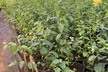
Nearly 98 per cent of strawberries are cultivated in greenhouses. According to the Rural Development Administration, smart farms applying nine core technologies can raise output by up to 83 per cent compared to conventional greenhouses and increase annual net profit by up to 3.5 times.
Investment to adopt all nine technologies is about 660 million won per 3,300 square metres, equivalent to approximately US$464,000 per 0.33 hectares. The Rural Development Administration states that investment costs can be recovered within three to four years if production targets are met.
"To increase income for strawberry farmers, producers must expand winter output, when prices run higher, and that requires precise environmental control," said Cho Yong-bin of the Rural Development Administration. "If we significantly raise productivity in strawberry greenhouses through AI convergence technology, young and startup farmers can expect stable and competitive income comparable to urban workers."
Source: Korea JoongAng Daily