This year's wild garlic harvest has now begun in the forests of Lower Austria. "January was quite cold and delayed the sprouting of wild garlic somewhat, so we are now harvesting the first crop a few days later than usual," reports Heinrich Penz, wholesaler in Melk, Lower Austria, and specialist wild garlic supplier. "So far, forecasts indicate a slight increase in volume compared to last year. However, the weather in the coming weeks will be decisive. Severe temperature fluctuations in particular usually have a major impact on wild garlic and, in the worst case, can even render the product unsaleable."
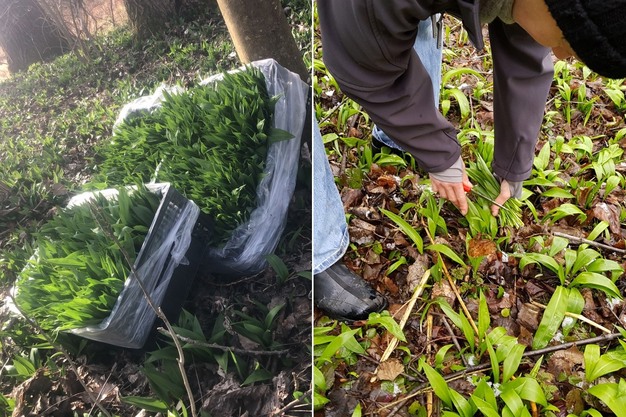 © Pentz Großhandel
At the beginning of the season, demand for wild garlic is usually particularly high, reports Penz, who serves both food retail customers and buyers in the catering and bulk consumption sectors. "During the peak season from the end of March, promotions in food retail are necessary to sell the quantities accordingly." Wild harvesting typically starts in the forests around Melk and moves towards Vienna and the surrounding area later in the season. The season ends around the end of May with the last loads from higher altitudes. The packaging sizes are also adjusted according to the quantities available: it starts with small containers or 50 g cups. From March onwards, larger 100 g packs will also be available in stores, followed by 1 kg bulk packs from the end of March.
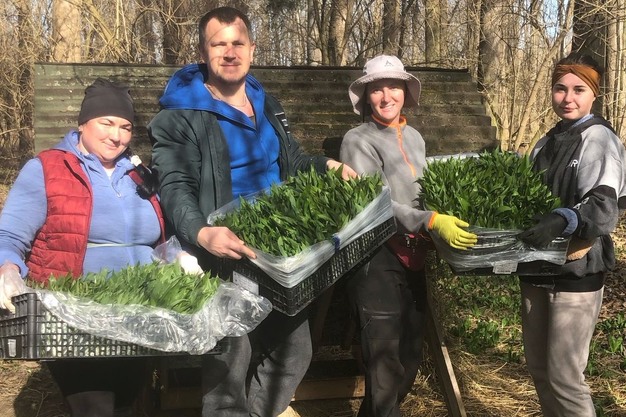 © Pentz Großhandel
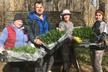
Wild collectors with freshly harvested wild garlic. According to Penz, they have been waiting eight weeks for the visas for the Nepalese seasonal workers to be issued, which means that the process is taking much longer than in previous years.
 © Pentz Großhandel
Minimum wage increase as a cost driver
The wage issue also has a significant impact on wild garlic, Penz continues. "Around 80 percent of the total costs are accounted for by the wages of our collectors. As is well known, the minimum wage was raised again at the turn of the year. These are very different conditions from those in Poland or Hungary, for example, where wage costs are up to half as low. However, the short marketing channels and the resulting freshness of our product continue to set us apart."
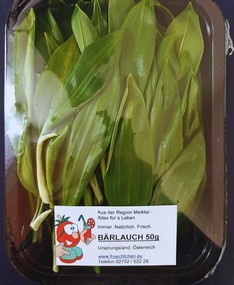
Right: Wild garlic from Austrian wild collection. Imported goods of Hungarian and/or Romanian origin are only offered when necessary.
Wild garlic as a permanent, seasonal part of the product portfolio
Domestic wild garlic continues to gain importance, especially in the gastronomy and large-scale consumption sectors. "Wild garlic is one of the few seasonal items that still exist today, and it is also the first sign of spring in the new year, followed by radishes and lamb's lettuce from our own tunnel cultivation," he concludes.
For more information:
Heinrich Penz
frisches.früchtchen GmbH
Melkerstrasse 10
3393 Matzleinsdorf
Tel.: +43 275 252 229
Mobile: +43 676 847 379 200
[email protected]
www.fruechtchen.eu
https://whatsapp.com/channel/0029ValfLy80LKZD1NU7eJ02