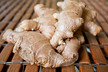
Kerala Agricultural University has held a seminar to launch selected varieties of Cochin Ginger and Alleppey Finger Turmeric, two spice varieties historically traded from Kerala.
The traded names Alleppey Finger Turmeric and Cochin Ginger were documented as early as the 19th century, with defined quality parameters for international markets. Availability of these traditional trade varieties has declined in recent years, affecting their established export niches.
The reduction in production has been linked to the adoption of high-yielding varieties preferred in the domestic market for larger size and productivity. Indiscriminate cultivation and varietal mixing have also contributed to the erosion of the original quality attributes.
The seminar was organised under the MIDH project, "Rejuvenation of Cochin Ginger and Alleppey Finger Turmeric for export promotion," implemented by the Department of Plantation, Spices, Medicinal and Aromatic Crops at the College of Agriculture, Vellanikkara, from 2022 to 2026.
According to Sunil Appukuttan Nair, Principal Investigator of the project, production of these spice varieties is aimed at export markets in the Middle East, Europe, and the U.S. The initiative will identify potential FPOs and spice exporters interested in mass cultivation and production, and token seed kits will be distributed.
Ramkumar Menon, Chairman of the World Spice Organisation, said the estimated annual industry demand is around 20,000 tons of dry Cochin Ginger, equivalent to nearly 100,000 tons of fresh ginger, and close to 50,000 tons of high-curcumin turmeric, comparable to the Alleppey variety. Demand is expected to rise due to interest from the nutraceutical and pharmaceutical sectors linked to immunity-related applications. However, the supply meeting required quality specifications remains limited.
All India Spices Exporters Forum and the World Spice Organisation, the technical arm of AISEF, raised concerns with the Agriculture Ministry and the Spices Board. This led to a project to identify, purify, and multiply authentic Cochin Ginger and Alleppey Finger Turmeric for commercial cultivation.
The current initiative aims to encourage a shift from conventional cultivation to export-oriented production, enabling farmers and exporters to align output with international market requirements.
Source: The Hindu