The South African stone fruit sector is showing continued alignment between export activity and compliance with social and environmental standards as the 2025/26 season progresses.
Early compliance data from the current stone fruit season indicate that producers are maintaining required standards while operating under peak seasonal pressure. The season runs from November to April, in line with the industry calendar set by Hortgro, a period marked by intensive harvesting, packing, and export activity. Data collected by auditors from the SIZA between 1 October and 31 December point to stable compliance outcomes across both social and environmental criteria.
According to SIZA figures, 418 stone fruit suppliers participated in compliance processes during the current season. Most suppliers are located in the Western Cape, which accounts for more than 93 per cent of social and 94 per cent of environmental subscriptions for stone fruit. Additional suppliers operate in Gauteng, the Eastern Cape, Limpopo, and nearby regions, indicating a geographically broad production base.
 © Hortgro
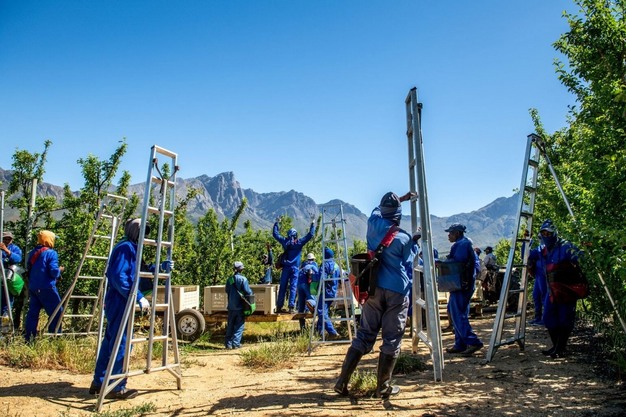
The stone fruit value chain remains a major employer in rural areas. More than 112,000 agricultural workers are employed across stone fruit production and packing operations. Temporary male workers represent the largest group, followed by temporary female workers and permanent male employees. These figures do not include indirect employment linked to logistics, services, or administrative roles.
Compliance monitoring extends beyond formal audits. The Self-Assessment Questionnaire, a component of the SIZA system, is completed annually and is used to track ongoing compliance between audits. During the current season, average Self-Assessment Questionnaire scores reached 97.03 per cent for social compliance and 88.30 per cent for environmental compliance. Social compliance has been in place since 2008, while environmental compliance requirements were introduced more recently, within the past three years.
Audit results to date show consistent outcomes. Fifty-two social audits have been initiated, with 81 per cent completed. Of those completed audits, 71 per cent resulted in Platinum status, 19 per cent Gold, and 5 per cent Silver. Environmental audits show similar results. Of 54 environmental audits initiated, 25 per cent have been completed, and all completed audits achieved Platinum status. Environmental audits typically take longer to conclude due to the nature of corrective actions.
Many suppliers participated in the SIZA CARES program ahead of their environmental audits. This program supports documentation and verification of existing practices related to water use, soil management, energy consumption, and fuel monitoring.
Audit findings continue to occur, most commonly related to occupational health and safety systems on the social side, and to the absence of formal carbon footprint calculations and emissions-reduction targets on the environmental side. Corrective action turnaround times have improved compared with previous seasons. Eight Bridging Letters were issued this season, with 75 per cent already resolved. No audit disputes have been recorded on the MySIZA system.
To view the full report, click here.
 © HortgroFor more information:
Hortgro
Tel: +27 (0) 21 870 2900
Email: [email protected]
www.hortgro.co.za