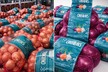
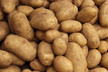
The U.S. Department of Agriculture's Animal and Plant Health Inspection Service has announced expanded market access for U.S. potatoes to South Korea, effective Jan. 23, 2026. Under the agreement, growers in Arizona, California, Colorado, Maine, Michigan, Minnesota, Montana, Nebraska, New Mexico, North Dakota, and Wisconsin are now permitted to export table stock and chipping potatoes to the South Korean market.
Until now, market access for fresh and chipping potatoes was limited to growers in Idaho, Oregon, and Washington. The new agreement broadens eligibility to additional production states, increasing the share of the U.S. potato crop that can be supplied to South Korea.
According to industry data, the South Korean market for U.S. fresh potatoes is currently valued at between US$12 million and US$20 million per year. This segment has been constrained by quota limits and state-level eligibility requirements. Total U.S. potato exports to South Korea exceed US$150 million annually, indicating a larger trade relationship largely driven by processed products.
 © National Potato Council
The expansion includes access for major chipping potato states such as Michigan, North Dakota, and Wisconsin. This aligns with the implementation of year-round duty-free access for U.S. chipping potatoes under the U.S.-Korea Free Trade Agreement, first agreed 15 years ago and fully applied as of 2026.
An economic impact assessment conducted in 2024 by Michigan State University estimated that the expanded access could result in a 10 per cent increase in exports, using a conservative modelling approach.
The change comes amid ongoing financial pressure on U.S. potato growers. Data from the American Farm Bureau Federation indicate that producers are facing elevated input costs and price volatility, contributing to reduced margins across several regions. Additional export outlets may help offset some of these pressures.
International market access remains a focus area for the U.S. potato sector. Trade issues are expected to feature prominently during the 2026 Washington Summit scheduled for Feb. 23 to 26, where industry representatives plan to discuss agricultural trade policy with government officials. The context includes a projected increase in the U.S. agricultural trade deficit and the role of export-oriented industries in supporting farm income and economic activity.
For more information:
National Potato Council
Tel: +1 202 682 9456
Email: [email protected]
www.nationalpotatocouncil.org