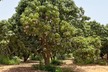
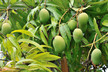
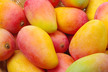
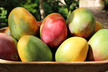
Mango production in the Indian state of Karnataka is expected to rise by nearly 20 per cent this season, supported by favourable weather conditions during the flowering stage. After four consecutive years of erratic climate patterns, growers across the state are reporting improved orchard conditions. In the previous season, mangoes were cultivated on more than two lakh hectares, and total output reached around 10 lakh tons.
Key commercial varieties, including Alphonso, Badami, Mallika, Raspuri, Neelam, and Totapuri, are grown across the main producing districts of Dharwad, Belagavi, Kolar, Ramanagara, and Chikkaballapur.
In recent seasons, irregular weather has disrupted flowering and reduced fruit size, increasing uncertainty for growers. This year, colder conditions during the critical flowering period in December and January resulted in more uniform blossom development. According to officials, fog is typically a risk during flowering, but following Sankranti, the cold subsided and fog conditions cleared.
Horticulture Department deputy director Kashinath Badrannavar said mango output is expected to increase by nearly 20 per cent this year. He noted that improved flowering does not automatically ensure higher yields and advised growers to focus on blossom protection to maximise fruit set. "Protecting the blossoms can ensure maximum fruit set," he said, adding that farmers have been advised to avoid chemical sprays and irrigation during pollination.
Mango is cultivated on roughly 18,000 hectares in Dharwad and about 15,000 hectares in Belagavi, with around 99 per cent of the area under the Alphonso (Aapus) variety. The Horticulture Department forecasts yields of approximately 65,000 tons in Dharwad district and 50,000 tons in Belagavi this season.
In the Kolar district, mango cultivation covers 39,331 hectares. In Srinivaspur taluk, the cropped area amounts to about 52,000 acres, equivalent to approximately 21,044 hectares. Ramanagara is another major production zone, with mango orchards spanning around 27,000 hectares. Kolar, Chikkaballapur, and Ramanagara are known for varieties such as Neelam, Totapuri, Badami, Raspuri, Amarpali, and Mallika.
Following repeated crop failures, some growers had shifted to alternative crops. However, the current season's weather conditions, combined with the absence of major disease pressure so far, have restored a degree of confidence among producers.
Source: Deccan Herald