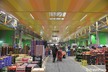
Jordan's Cabinet has approved the extension of government support for agricultural exports of fresh vegetables and fruits, continuing to cover 50 per cent of air freight costs and 25 per cent of maritime shipping costs. The decision was taken during a session chaired by Prime Minister Jaafar Hassan.
The extension follows a study assessing the impact of the export support program on access to non-traditional markets. According to the study, vegetable and fruit exports increased by 38 per cent compared with the same period in 2024. This growth offset a 42 per cent decline in maritime exports compared with 2025.
The Cabinet stated that the measure also aims to broaden export destinations. The number of non-traditional markets rose from 12 in 2024 to about 17 in 2025, linked to lower shipping costs and improved market access.
In addition, the Cabinet approved the program "Local Financing Solutions to Support the Transformation of the Agri-Food System in Jordan", to be implemented in partnership with the Food and Agriculture Organization of the United Nations, the United Nations Industrial Development Organization, and the Office of the United Nations Resident Coordinator in Jordan.
The program aligns with the Economic Modernization Vision and focuses on food security and resource management. It targets the transformation of vegetable and fruit production through production-linked activities, the formation of agricultural alliances, and training initiatives. The plan includes support for 100 sub-projects introducing climate-smart agriculture practices, such as efficient irrigation systems, protected agriculture, and integrated pest management, alongside post-harvest activities.
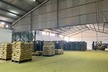
Two centres are scheduled to be established in Deir Alla and Mafraq, each with an annual handling capacity of 30,000 tons. These centres will be equipped with sorting, grading, packing, and digital traceability systems, and will provide training in quality management and operations, as well as linkages to marketing and supply chains.
The Cabinet also approved a regional project titled "Food Coalition Transforming Agri-Food Systems to Become More Resilient to Shocks", in cooperation with the Italian government and the Food and Agriculture Organization. The project focuses on reducing food loss and waste, strengthening farmers' market networks, and improving agri-food system monitoring.
Measures under the project include enhancing agricultural market information systems, updating data infrastructure, and exploring artificial intelligence applications for market monitoring and early warning, with the aim of improving transparency and responses during market disruptions.
These decisions form part of broader government efforts linked to agricultural resilience, export development, and food system management in Jordan.
Source: Jordan News Agency