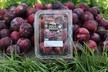
Driving through the Ribera del Xúquer, the agricultural landscape is changing. Oranges remain present, but persimmon, locally known as kaki, is taking up a growing share of planted area. This shift is not the result of a single season, but of gradual replanting driven by farm economics, risk management, and alignment with European retail demand.
Persimmon cultivation has been part of Valencian agriculture for decades, but recent expansion has brought the crop to a different scale. Regional data show that kaki production in the Comunitat Valenciana covered 13,970 hectares in 2024, with output of 440,974 tonnes. The main production area is the Ribera del Xúquer, where Rojo Brillante is the dominant variety. The fruit is marketed under the DOP Kaki Ribera del Xúquer quality scheme, recognised at national and European levels.
Growers point to margin pressure in citrus as a factor behind diversification. While citrus remains an important crop, producers face higher input costs, variable yields, and uncertain market conditions. National forecasts indicate that the 2025/26 citrus season is expected to be the lowest in 16 years, reinforcing the view that production stability can no longer be assumed.
In this context, persimmon has offered an alternative for some farms. The crop fits defined seasonal windows and is supported by branding and export programmes that align with retail planning. For growers, this provides a framework that allows more predictable market access when conditions are met.
Market positioning also plays a role. Persimmons are widely described as a source of fibre and are linked to vitamins such as vitamin A. These attributes support retail communication and influence shelf placement, which is a consideration as competition for space increases across European fruit categories.
Despite the expansion, citrus has not disappeared. The Valencian Community remains Spain's largest citrus-producing region by cultivated area, and oranges continue to underpin employment, exports, and regional identity. What has changed is the approach to risk. For many farms, diversification across crops is becoming part of long-term planning, rather than reliance on a single commodity.
Persimmon production also carries risks. Rapid increases in planted area can lead to supply pressure, and the sector has faced challenges linked to pests and weather in recent seasons. Export dependence adds exposure to market shifts and logistical constraints.
The current pattern in Valencia points toward a mixed model. Citrus remains structurally important, while persimmons and other crops share part of the production base. For growers, the focus is less on replacement and more on building a crop mix that can operate under changing climate conditions, cost structures, and market requirements.
Source: InSpain News