Jonathan Cox has had a long connection with China, having moved to Hong Kong as a child and later living in the country for more than ten years. He studied at a Chinese university and later established Stratforms, a company supporting food and beverage brands entering the Chinese market.
Recently, Cox attended several major Chinese food industry events, including the seafood expo in Qingdao, the China International Import Expo in Shanghai, and the FHC Shanghai Global Food Trade Show. These events featured a range of Australian food and beverage products.
 © APAL
Cox spoke with APAL about opportunities for Australian apples in China, consumer behaviour, and the requirements for operating in the premium segment.
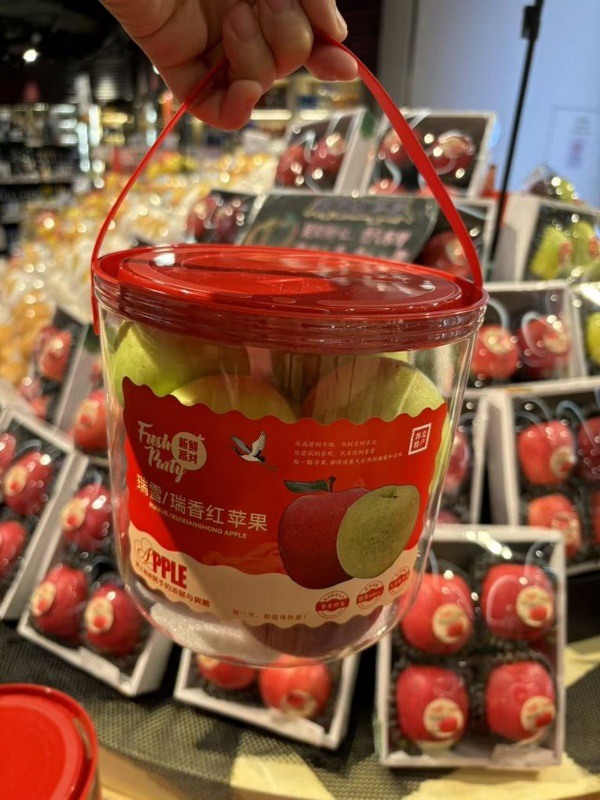
China is the world's largest importer of fresh fruit, but Cox notes that Australian apples and pears are positioned firmly as premium products.
"Australian produce is generally perceived as premium. That brings opportunity, but also higher expectations around quality, consistency, and branding," Cox said.
Despite China's large population, Cox cautions against overestimating market reach. Identifying consumers and outlets able to afford premium imports is key.
"China is often overestimated in terms of potential consumers, while its complexity is underestimated," he said. He referred to research showing that higher input costs can sharply reduce the number of viable sales outlets for imported products.
 © APAL
He also pointed to Tasmanian cherries, where only a limited share of total production is exported to China. Selection focuses on size and appearance to align with premium pricing, rather than volume sales. Demand typically increases around the Chinese New Year due to gift-giving traditions.
Beyond festive periods, Cox said long-term market presence depends on repeat purchases by specific consumer segments. Some imported fruit brands have achieved this by maintaining a consistent supply and clear positioning.
Australian exporters are encouraged to study Chinese apple pricing and domestic harvest timing, which runs from late summer through autumn, depending on the region. Understanding how Australian supply overlaps with this cycle can help identify market windows.
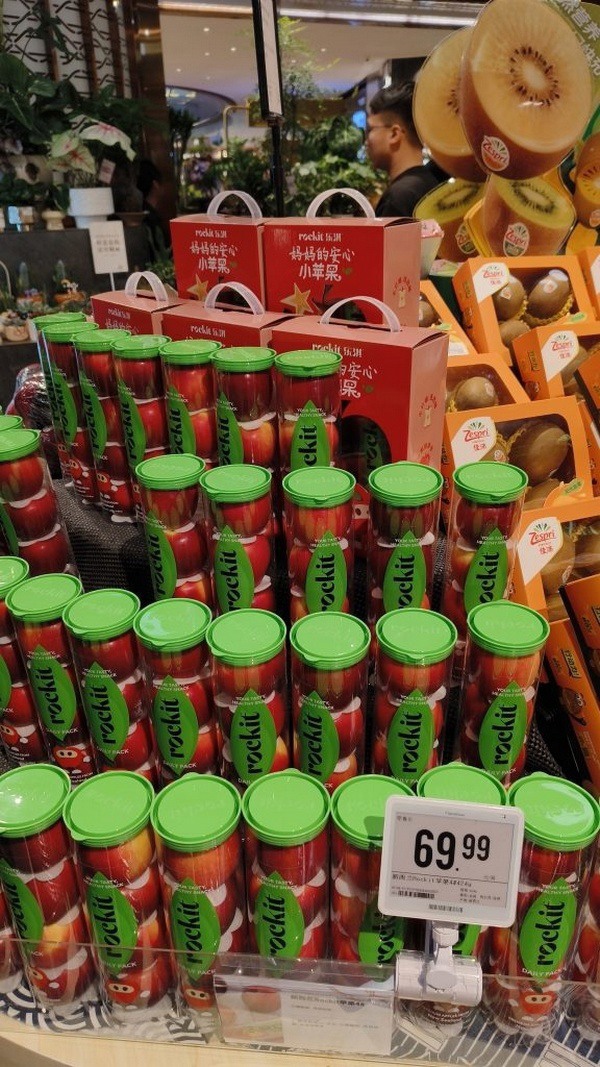
A retail review conducted in November 2025 showed that high-end Chinese supermarkets offer both imported and domestic fruit across a wide range of price points, with premium Chinese apples and pears competing directly with imported produce.
According to Cox, the country of origin is more relevant to Chinese consumers than regional detail.
"Consumers mainly want to know a product is from Australia. State or regional distinctions matter far less," he said. QR codes can support transparency, although usage remains limited.
Cox estimates that only a limited number of importers handle short shelf-life fruit in China. He recommends careful partner selection through industry networks and official trade bodies.
Consistency in supply is essential, he said, as withdrawing from the market even temporarily allows competitors to take over established relationships, making later re-entry difficult.
To view the full report, click here.
 © APALFor more information:
Jenny Van de Meeberg
APAL
Tel: +61 (0) 410 536 269
Email: [email protected]
www.apal.org.au