Apple imports to India are growing steadily, and this year is no different, says Prashant Gidwani, director of fresh fruit importer Fresh Fruit Alliances Pvt. Ltd.: "Imported apples continue as a strong presence in the Indian market. Apple imports have risen sharply in the last few years and continue to do so with an expected 10 to 15 per cent rise this year, as compared to last year. The overall imported apple market share is 15 to 20 per cent of total apple consumption in India, mainly to meet year-round demand when domestic supply is low. Iran, Poland, and the U.S. are currently the largest suppliers, followed by Italy, South Africa, Chile, and New Zealand."
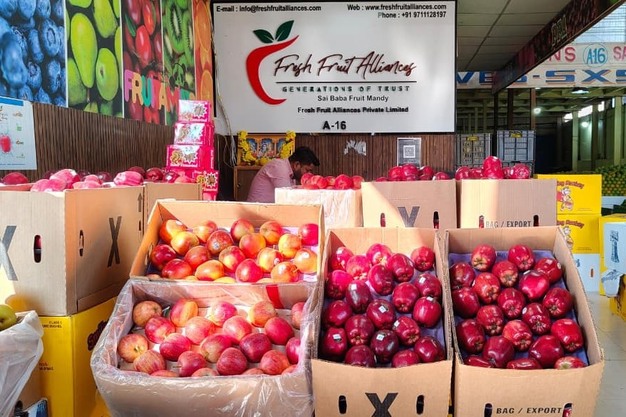 © Fresh Fruit Alliances Pvt. Ltd.
The issues with Turkish apples have resulted in opportunities for several other exporting countries to jump in and try to fill the gap this has created, Gidwani explains. "Turkey, which was one of the major suppliers of imported apples to India last season, isn't supplying much this year, due to crop issues and export constraints. Because of this, the market has lost a big source of volume. At present, most imported apples are coming from Iran, the United States, and Poland. These countries are filling part of the gap, but their combined supply is still lower than what Turkey alone supplied earlier. As a result, total apple availability in the market is slightly lower compared to the same quarter last year. This tighter supply is being felt especially in wholesale markets, leading to firmer prices and limited stock options for traders and retailers."
The falling value of the Indian rupee brings extra costs to the imports of apples, Gidwani states: "Imported apples in India face several challenges. Importers are affected by the falling value of the Indian rupee and changing ocean freight rates, which increase the cost of bringing apples into the country. Since apples are a low-margin FMCG product, these higher costs cannot easily be passed on to buyers, making profits uncertain and forcing importers to buy more cautiously."
"At FFA, we overcome these challenges by building strong local distribution networks across India. We work closely with regional distributors, organized retail chains, and quick-commerce platforms to ensure our apples reach the market quickly. This helps in faster stock rotation, reduces storage time, and lowers the risk of quality loss or excess inventory. We also manage currency risks through hedging and by using shorter payment cycles, which helps protect our margins from exchange rate fluctuations and keeps our buying decisions stable and well planned."
According to Gidwani, the price levels are stable at the moment, but the prices could go down once domestic apples currently held in cold storage hit the market: "At the moment, prices are stable due to the limited availability of both domestic apples and imported shipments. This balance between restricted supply and steady demand is keeping the market prices steady for now. I expect the market to slow down in the coming weeks as Controlled Atmosphere rooms in Kashmir and Himachal begin to open. This domestic supply will meet the current limited demand, which may impact imported apples. If import volumes continue to arrive at the same pace, it could put pressure on prices and lead to a possible decline," he concludes.
For more information:
Prashant Gidwani
Fresh Fruit Alliances Pvt. Ltd.
[email protected]
www.freshfruitalliances.com