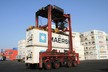
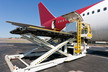
The launch of the Insimbi Ridge logistics precinct at Cato Ridge, KwaZulu-Natal, outlines a plan to divert a portion of the approximately 4,500 road freight trucks that use the Durban-Gauteng N3 corridor daily away from Durban Harbour. The development, valued at a minimum of R10 billion (about US$527 million), will function as a dry port designed to reduce congestion and improve export and import flows, including horticultural products such as citrus.
Insimbi is located along the N3 highway, now the main road freight route after the deterioration of South Africa's rail freight system. Heavy truck movement through Durban Harbour has created delays and added costs across agricultural export supply chains. The site previously housed the Assmang ferromanganese smelter for about 70 years until its closure in July 2025.
KwaZulu-Natal MEC for Economic Development, Tourism and Environmental Affairs Musa Zondi said: "Over its lifespan, the Insimbi Ridge precinct will attract billions in private capital and create up to 10 000 jobs across construction, logistics and manufacturing."
Cold chain demand for citrus and other perishables has exceeded Durban Harbour's available capacity. The Logistics Group's subsidiary, Freight Products and Transport, has become the first anchor tenant at Insimbi. Its planned 33,000 m² cold store and warehouse, costing close to R1 billion (around US$52.7 million), is scheduled to begin operations in February 2027 with capacity for 15,000 pallets.
TLG CEO Anton Potgieter said, "Currently, we're handling all citrus and other exports through our facility at Durban Harbour. This new back-of-port facility will feed the front-of-port facility. Trucks currently sometimes wait for up to 12 hours at Durban Harbour. Our facility at Insimbi will significantly reduce this costly inefficiency."
A 1.7 km private rail siding at Insimbi, linked to Transnet's Durban-Gauteng line, will be rehabilitated. The Rail Development Corporation will oversee the project and facilitate private rail freight operations.
Potgieter said, "South Africa is entering a new dawn where private rail will be allowed on the Transnet rail network. It's the first time ever that private operators can now access the network, so they can then get access to the ports as well."
The Citrus Growers' Association's Mitchell Brooke said the development "holds immense promise for the citrus industry" and that rail access to the port "will be a transformative approach to the value chain".
Project Lead Sibusisiwe Nodada said, "Insimbi Ridge does so much more than just add industrial space. It seeks to create inland capacity to relieve a congested port system. It seeks to move freight from road to rail."
Full build-out of the multimodal precinct is expected to take 20 to 25 years, with investment open to all sectors.
Source: AfricanFarming