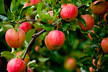
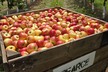
When Finland joined the EU, many growers in Åland expected reduced competitiveness for local apples. Instead, production has continued to expand, and apples were the region's highest-value agricultural product last year. At Grannas Orchard in northern Åland, harvest is nearing completion, with picking starting in August and finishing by late October. Workers collect fruit manually before it is washed, sorted by size, and visually inspected. Juice production operates in an adjacent hall with a 10,000-litre capacity.
According to Jan Mattsson of Grannas, "Last year was extremely good for us. This year, however, the harvest is below normal." The company reports that early growers in the 1940s identified northern Åland as suitable for apple growing due to small fields, light and partly stony soils, and access to irrigation ponds. The region has Finland's warmest climate, long sunlight hours, and an extended autumn because of the surrounding sea.
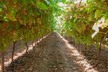
Earlier growers combined apples with sugar beet, onions, and cucumbers, relying on informal labour during harvest. Current operations are larger, specialised, and based on modern orchards. Grannas has expanded from seven hectares in 2000 to 45 hectares today, replacing older trees with closely spaced, trellised trees sourced from Belgium. Fruit previously discarded due to defects is now processed into juice and later into alcoholic cider.
Large growers have invested in ULO storage chambers to extend the marketing season into March and April. The technology requires specialist knowledge, and the sector hires a Dutch consultant to advise on handling and variety suitability.
Grannas employs about 50 seasonal workers, mostly from Lithuania and Ukraine. "We have no problem getting labour. They find us before we find them, and many return year after year," Jan and Ken Mattsson said. Ten staff work year-round on pruning and orchard maintenance.
Regulatory obligations have increased, covering cultivation protocols, employment rules, and customs documentation. "We are regularly subjected to unannounced inspections," said Ken Mattsson.
According to adviser Pernilla Gabrielsson of Ålands hushållningssällskap, "Apple growing has been a success for many Åland farmers, but that doesn't mean anyone can just start up. It requires knowledge, experience, and above all, capital." She noted long payback periods, rising operating costs, and regulatory changes that can increase manual labour needs. Climate change is prompting growers to evaluate new varieties, and trial orchards are being used to test options.
Most Åland apples are marketed through Ålands Trädgårdshall, a grower-owned cooperative supplying Finland. Purchasing manager Tom Sarling said, "Right now, we're happy with the number of apples we deliver and are not encouraging new growers. It's always a balancing act – a too large harvest drives prices down." Some growers have begun producing pears commercially, although volumes remain small at 400 to 500 tons per year.
Source: Nordic Labour Journal