French kiwi production is expected to show a slight upturn, according to the French Interprofessional Kiwi Agency (BIK), which continues to defend the French origin, collectively promotes French kiwis, and carries out research and experimentation.
 © BIK
© BIK
French harvest up by 10%
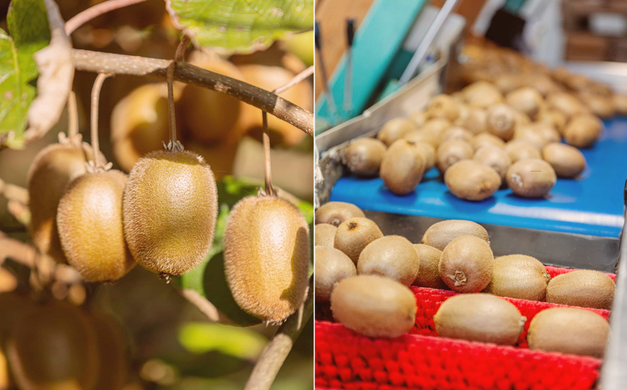
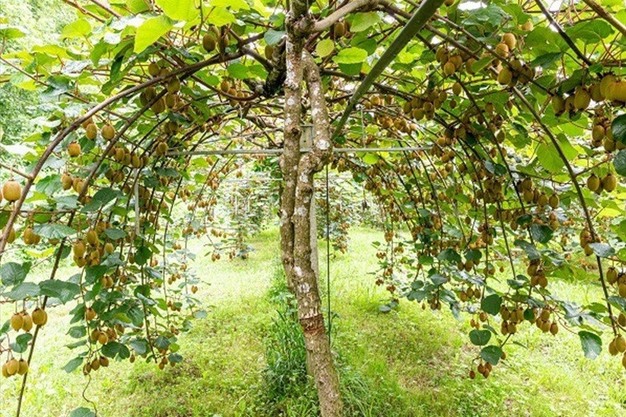
The 2025 French harvest is underway for Hayward kiwis. Production has risen slightly in 2025, despite the difficult winter conditions of 2024/2025, which led to dieback and uneven bud burst. "Production this year is estimated at 48,000 tons, which is 10% more than the previous campaign. We will have more certainty by mid-December, once pre-grading has been carried out," explains Adeline Gachein, BIK manager.
Grades, meanwhile, will vary widely due to the scorching summer temperatures, with wide variations from one microclimate to another. As the harvest is underway, volumes will arrive on the market gradually, with the peak of the season expected between January and March. As far as imports are concerned, New Zealand kiwis are still very much in evidence, while Italian imports have just begun.
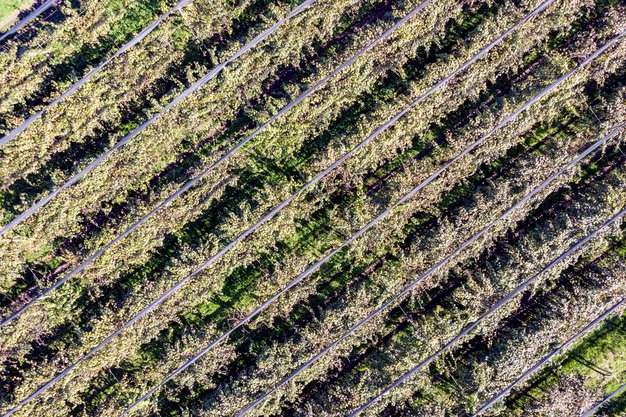 © BIK French kiwis in figures: 1,150 growers, 4,490 hectares, 3 major production areas (Southeast, Southwest, where 75% of national production is grown, and Brittany), France's 8th favorite fruit (with consumption of 4.2 kg per household per year), and 6th most popular fruit species produced in France.
The French Origin Database against Francization
BIK is actively pursuing its fight against francization. As the agency points out, this type of origin fraud destabilizes the production and marketing chain, automatically driving down prices. "Between 2018 and 2021, we were able to calculate that fraudsters were selling 14% to 17% below the market price, which had driven prices down. We also estimated that producers would lose out on €88 million [102 million USD] (simply by increasing prices at the orchard gate)," explains the director. In 2019, two companies were fined by the Valence court: €50,000 [57,806 USD] for the first (including €10,000 [11,561 USD] suspended for its representative) and €40,000 [46,245 USD] for the second (including €8,000 [9,249 USD] suspended). Two other companies were also fined in Privas in 2020.
To reinforce these controls, BIK relies on the French Origin Database, a tool to be launched in 2021, which enables the French origin of kiwis to be characterized by analysis (the limits of French origin have now been consolidated, and the use of the data is deemed reliable for French samples (99% well classified) and foreign samples (72% well classified)).
And in response to "the concerns of certain European colleagues about possible fraud in the origin of kiwis purchased at the orchard," BIK has decided to carry out checks on kiwis from the 2025 harvest. "The results of these analyses will be forwarded as necessary to the DGCCRF inspection services for subsequent inspection and prosecution," according to a BIK press release.
 © BIK
© BIK
A nutritional claim for kiwis
2025 marks a "major step forward" for the kiwi sector. On July 30th, the European Union authorized a health claim for Hayward kiwis. From now on, it can be officially stated that "eating kiwis contributes to normal intestinal function." "This is a rare scientific and regulatory recognition, which opens up new prospects for promoting our fruit," according to BIK. "All kiwi growers will now be able to advertise this health claim, in a European context of insufficient consumption of fresh fruit and vegetables and strong demand for kiwis."
A three-year communication program gets underway
In 2024, BIK obtained European funding to roll out a vast communication program on the French market over a period of 3 years, until April 2028. The program is based on 360° communication, with press relations and partnerships with the media and content creators, digital and advertising campaigns, promotions at points of sale and in restaurants, and not-to-be-missed gourmet events. For the 2025/2026 campaign, chef Christophe Adam, creator of the Éclair de Génie and Dépôt Légal restaurants, will use his image, talent, and creativity to promote French kiwis. He will be proposing exclusive recipes to demonstrate the versatility of kiwis in both sweet and savory creations.
An ever-growing need for kiwi research and experimentation
Faced with climate change, the arrival of new pests, and the elimination of phytosanitary products, technical and agronomic solutions to maintain viable technical itineraries are essential today. To this end, BIK is conducting kiwi research and experimentation. Two research and experimentation engineers were recruited in March 2025. In addition to the French Origin database, the work focuses on kiwi orchard dieback, which continues to spread depending on climatic conditions (the thesis carried out at BIK to define the causes and find solutions has been successfully defended). The work has also demonstrated that it is possible to monitor the development of dieback via satellite surveillance, which has been the subject of a scientific publication.
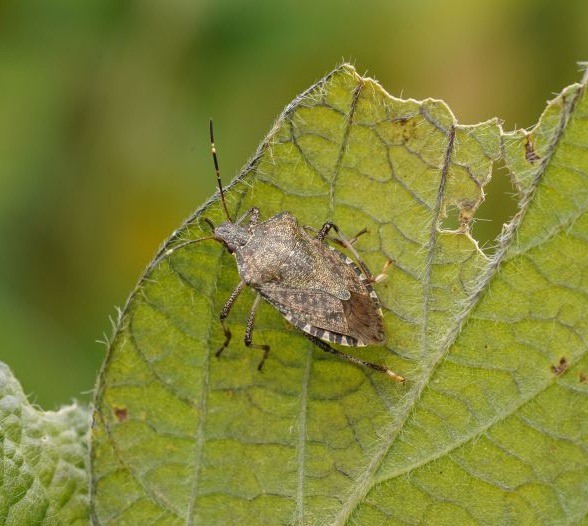 © BIK BIK is also continuing its efforts to combat the devil's bug (Halyomorpha halys), stepped up through the PACTE project (a national research project with 14 partners and a budget of €7.6m [8.79 million USD], PARSADA envelop, 2025-2029), in order to gain a better understanding of the pest and develop agro-ecological control methods.
The PALFRUITSD'OCC research project explores the behavior of Hayward kiwis and vines under dynamic photovoltaic shade. The aim of the experiment, launched in a commercial orchard in Castelsarrasin, is to assess the agronomic and technical-economic effects of these new infrastructures, in order to obtain new scientific references for kiwis.