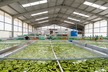
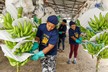
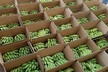
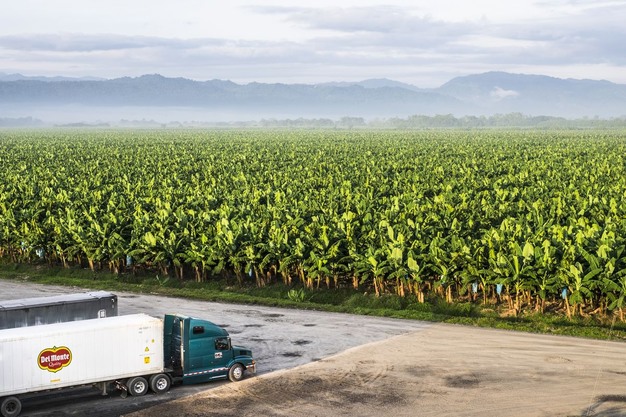
Latin America and the Caribbean are the largest exporting region of bananas, responsible for about 80 percent of exports globally¹. Within Latin America, Ecuador is the largest growing country, producing approximately 285 million 40-lb. boxes of bananas for export. This number far surpasses the combined output of Costa Rica and Guatemala. "For us, Ecuador represents a relatively small production area of our total volume. However, it is an extremely important growing region because it supplies fruit during periods when Central America cannot supply due to adverse weather conditions," says Jorge Pelaez Reyes, Fresh Del Monte's SVP of Central America (CECAB). "This makes Ecuador a critical region for ensuring a consistent and reliable supply of bananas to our customers."
 © Fresh Del Monte
Destructive TR4 disease
Back in September, the first case of TR4 was confirmed in Ecuador, which is of great concern. The soil-borne fungus was first identified in Southeast Asia and has since spread across the Asian continent, the Middle East, and South America. TR4 spreads through infected plant material and soil, reducing yields and fruit quality. The disease invades the plant's vascular system, causing wilting and eventual death. Although the initial progression of the fungus appears slow, this trend can quickly shift into exponential growth. It is very destructive as there is no effective chemical treatment, and the fungus has the ability to persist in the soil for decades. "Once TR4 reaches a farm, the land can no longer produce bananas for decades," commented Pelaez Reyes. "The main concern is that some growers may lack adequate biosecurity measures, or they do not have the economic power to invest in disease control. If these gaps are not addressed promptly, the consequences could be irreversible once the disease becomes more widespread."
Increased costs to fight diseases
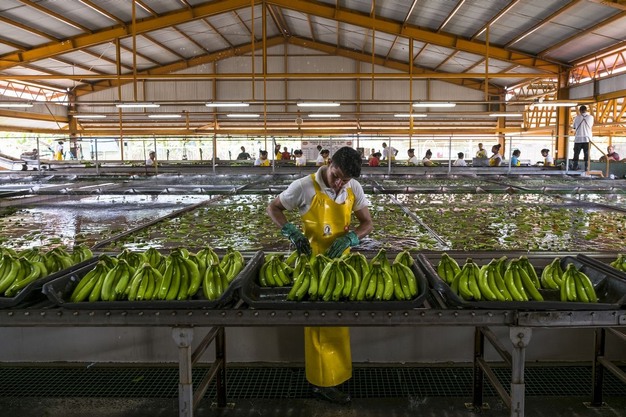
Proactive investment is urgently needed to strengthen disease management and biosecurity protocols. Without immediate action, the banana industry risks facing severe disruptions in the near future. Unfortunately, TR4 is not the only disease heavily impacting the banana industry. Another serious disease affecting banana crops worldwide is Black Sigatoka. While it's also a fungal disease, it's different from TR4 in how it attacks the plant and how it can be managed. Black Sigatoka primarily infects banana leaves, reducing photosynthesis and yield. It spreads rapidly through wind and rain but can be managed with fungicides, resistant varieties, and strong field hygiene. Black Sigatoka weakens the banana plant but doesn't kill the plant outright or render the soil unusable. With consistent management, production can continue, though at significantly higher cost. "It's important to note that resistance to the medication builds, requiring more treatment, which adds to the cost." Black Sigatoka is widespread across nearly all major banana-growing regions, including Latin America, the Caribbean, Africa, Southeast Asia, and the Pacific.
 © Fresh Del Monte
Impact on growers and consumers
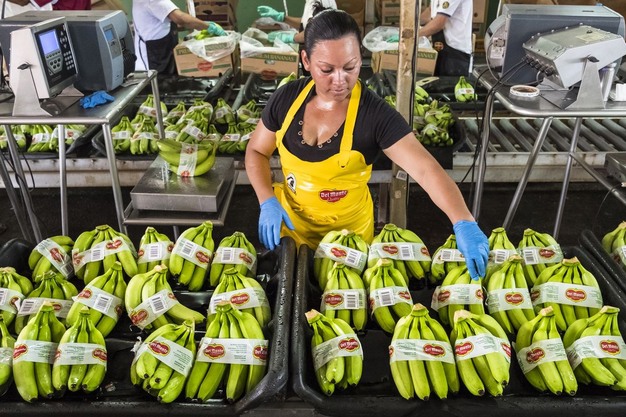
More and more, diseases are posing serious challenges to the banana industry. In Costa Rica, a major banana growing country, the impact of the Sigatoka fungus is substantial, with projected losses reaching over 22 percent by the end of the year. Increasingly, growing regions are impacted by threatening diseases and sustaining the category over the long term will require closer alignment across the value chain, ensuring that pressures in the fields are understood and shared. "Farmers can no longer absorb these rising costs alone and it's crucial to act collectively to support growers and stabilize the supply chain. Otherwise, the banana may disappear," said Pelaez Reyes. In the short term, consumers could see less availability of the fruit coupled with higher prices to account for the cost of disease control.
 © Fresh Del Monte
¹International Institute for Sustainable Development
 For more information:
Claudia Pou
Fresh Del Monte
[email protected]
www.freshdelmonte.com